

The Delicious Joys of South Indian Thali
South Indian Thali are a wonderful way to enjoy a cheap and filling meal which gives you the opportunity to sample loads of different delicious dishes.
What Is A South Indian Thali?
Thali are all about flavours and textures. Think of them as similar to mezze or tapas – you are offered multiple dishes as part of your meal. Many Indians are vegetarian so you will often be offered a vegetable or non-veg thali. The non-veg thali will usually include dishes containing meats such a chicken or mutton.
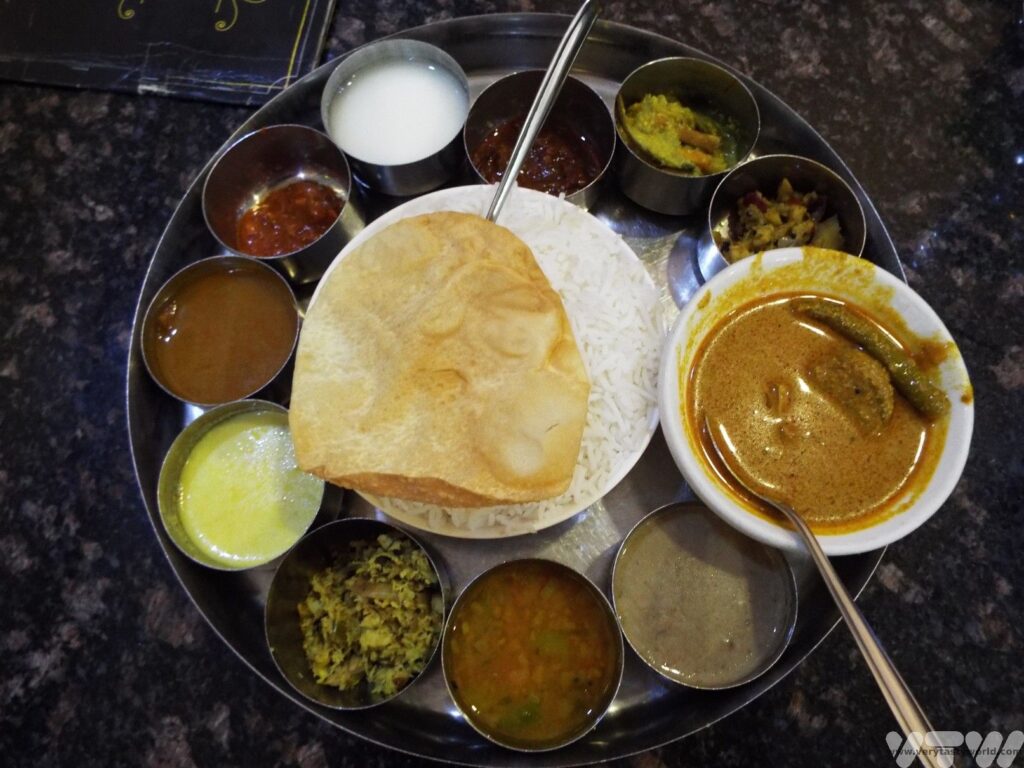
The quintessential thali comprises a round tray with a heap of rice in the centre that is surrounded by small bowls containing a variety of sauces, vegetables and curd. There will be a sweet dish in there too. And, sometimes a crispy poppadom on top.
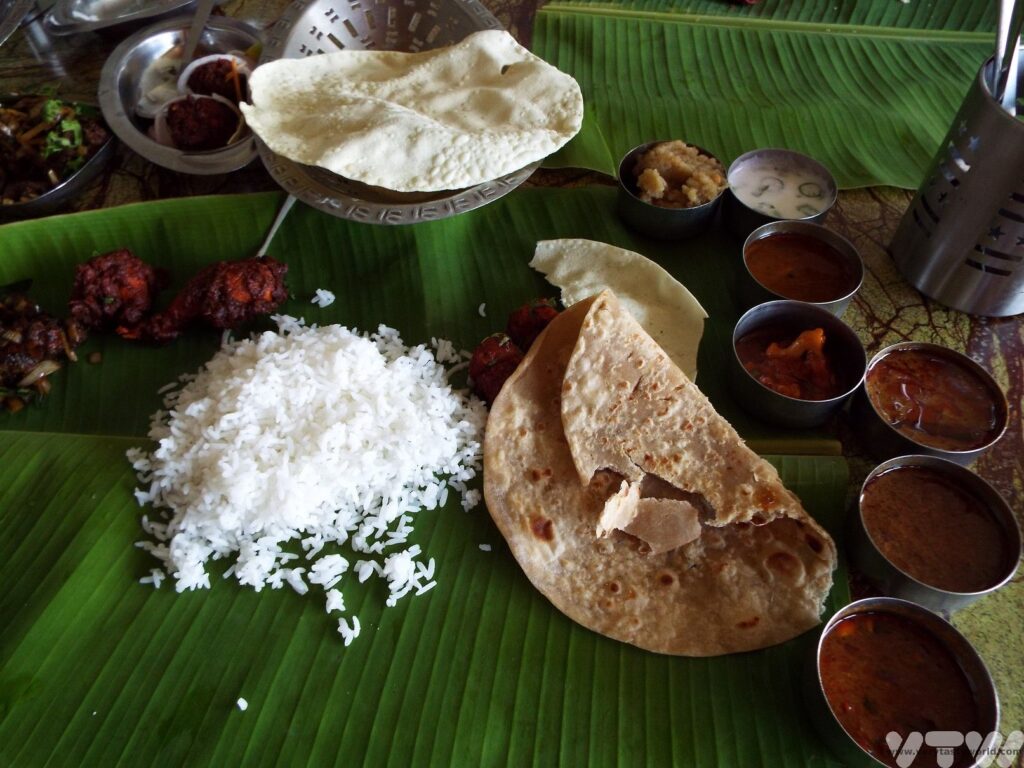
Sometimes the South Indian thali will be served on a banana leaf which is a more traditional approach – in a restaurant the waiters will arrive at each table with a vessel and will spoon the various curries onto the leaf. They will return and return – just nod to request another dollop of something delicious.
How To Eat South Indian Thali
In the states of Kerala and Tamil Nadu people generally eat using their fingers. If you’re dining in South India many restaurants won’t offer you a knife or fork, but there are usually spoons available.
If you’re eating with your fingers, make sure you wash your hands first. Every restaurant has a hand-washing area.

Eating with your fingers can be a bit of a challenge if you aren’t used to it. Separate a bite-sized portion of rice and pour the sauce from the dish or place some of the vegetables onto it. Mix it in. Then scoop up with the fingers of your right hand, pop it into your mouth and savour.
Eat Savoury to Sweet…
There is an order to eating the dishes of the thali, although no one will criticise you if you don’t follow it.

You should start with meat (if you are eating non-veg) and vegetable dishes – both sauced and dry form.
Sambar, a mild lentil and vegetable sauce, comes next. It’s a staple throughout the region, often found at breakfast too – and eaten with idly (a savoury rice cake) or vada (like a savoury doughnut).
Rasam is a thin sauce, almost like a soup, made with tamarind to give a sour note, but spiced up with chilli or black pepper. It is always the last of the sauces to be eaten and it too can be mixed with the rice.
Yoghurt (also known as curd) rounds off the savoury part of the meal. It cools the palette in preparation for the dessert.
There is often a sweet dish in one of the bowls – maybe something like rice with jaggery or sweet vermicelli in a milk-based sauce. If the dessert is liquid based, it’s okay to drink it directly from the container. Sometimes you may be given a piece of fruit. And the fruit, locally grown of course, is delicious.
All You Can Eat?
Many restaurants across India will offer a thali option and often they are available on an endless top-up basis. Even though the portion sizes of the individual dishes don’t seem enormous, the combination of delicious food and rice is guaranteed to fill you up.
We found that whenever we ate in restaurants in Tamil Nadu or Kerala the locals were very happy to see us. They were also quite keen to see how we coped with eating using our hands (a little bit messy, to be honest) but they were also happy to guide us gently with the etiquette. There were a number of occasions when we weren’t really sure in which order to eat the – absolutely delicious – dishes, and were on-hand to offer some friendly suggestions. There was one occasion when we accidentally ate the sweet dish before the savouries had been guzzled with relish!
Related Posts You May Enjoy















One Comment