

A Marvellous 7 Day Tamil Nadu Itinerary
Tamil Nadu is India’s southernmost state. It runs along the east coast’s Bay of Bengal all the way down to the tip of India at Kanyakumari. It is adjacent to the lush green state of Kerala, which is better known as a tourist destination. But Tamil Nadu has a plethora of amazing places to visit. Here is the 7 day Tamil Nadu itinerary that we enjoyed.

Please note that this post contains affiliate links. If you click through and decide to make a purchase we will make a small commission, at no extra cost to you, which will help towards the costs of running this site. Thanks for your support!
Why Visit Tamil Nadu?
Tamil Nadu is a fascinating state. It is very different to northern India and even its neighbour Kerala. Tamil Nadu has a large number of amazing historic and religious sites. And the welcome was the friendliest we’d ever received in India. We’d often visit a site and many people would run up to us and chat. They were also really keen to get a selfie – we felt like celebrities!
The best time to visit Tamil Nadu is between December and March. The weather will be hot – over 30C – all year round, although from April to June the daytime maximum can push 40C. The monsoon season runs from October to December and it will be very wet indeed. It’s worth noting that it can rain heavily any time through the year, so be prepared.
Getting Around Tamil Nadu
It is possible to undertake much of this itinerary using public transport but some of the locations are not easily accessible or quick to reach via public transport. We were travelling to see dear friends who are from Tamil Nadu and they had kindly arranged a car and driver for us. We recommend using a reliable tour operator if you don’t have local connections. This is something that we did in Kerala and it worked very well.
A driver will cost about 30,000 rupees per day (about $35) including use of the car and the driver’s accommodation and meals. We paid for fuel on an as-needed basis. Fuel costs for this trip came in at about 10,000 rupees (~$120) but that included a really long drive from Kanyakumari to Cochin in Kerala, so this itinerary would cost around $90-100. We do recommend hiring a car with a driver because driving in India is challenging, but if you’re feeling brave, go for the rental car!
If you are using public transport, trains and buses are available between the major cities. You can use tuk-tuks to get around and hire a car/driver locally to visit some of the attractions that are out of town. We recommend booking train tickets in advance, especially if you want to travel in the air-conditioned carriages.
Accommodation in Tamil Nadu
Accommodation in Tamil Nadu ranges from the cheap and basic to the luxurious, and hotel prices vary accordingly, from less than $30 for a night in Kanyakumari (perfectly fine, it had a bed and a bathroom and included breakfast) to $90 for a very posh hotel in Madurai. There are plenty of hostels if you’d prefer to stay in these, and they will be much cheaper.
Beware: All the hotels charged our credit card in GBP rather than Rupees. We didn’t realise this at the time. Make sure you are charged in Rupees as the conversion cost to your home currency will be horrendous. We did contact the hotels after our return home to get a refund and a recharge in Rupees, which most did for us. But make sure you check the currency if paying by credit card to save the hassle of having to get refunds.
7 Day Tamil Nadu Itinerary
This itinerary is pretty full on. India is huge and distances between cities can be large. Roads are fast in Tamil Nadu (certainly much faster than Kerala) – indeed some of the highways are so fast that they have concrete blocks in the middle of the road so that drivers have to slow down to navigate around them.
Day 1 Arrive Chennai
Our itinerary starts in Chennai (formerly Madras), the largest city in Tamil Nadu and the state capital. Depending on when you arrive you can spend the first day exploring Chennai. The Kapaleeshwarar Temple and Marina Beach are amongst the top attractions. Marina beach is one of the longest beaches in the world, right on the Bay of Bengal.

Day 2 Chennai to Auroville or Puducherry
Dakshina Chitra Museum
This lovely museum about 25km south of Chennai (SH 49, Muthukadu), is on the way to Mahabalipuram and is well worth a stop. It exhibits traditional buildings, as well as arts and crafts of the region.

There are lots of buildings to explore and demonstrations of crafts throughout the day. We enjoyed watching the weaving and glass sculpture.


Visit Mahabalipuram
Continue along the main road to visit one of India’s greatest tourist attractions. Mahabalipuram is a UNESCO world heritage site which comprises remarkable 7th- and 8th-century Hindu monuments. Located on the Bay of Bengal, this area was a trading place and hence the architecture shows influences from multiple cultures, including Chinese and Roman.
Amongst the most important monuments are:
Arjuna’s Penance, aka Descent of the Ganges – an open-air bas relief carved into two adjacent boulders, which is the second longest in the world. You can see the details of the penance, surrounded by elephants as the sinister snakes look on.

Pancha Rathas (or the Five Rathas) is a complex of five monuments, each carved from a single piece of granite.

They are named for the five Pandavas, brothers of legend who appear in the Mahabharata, the epic Hindu story.

The Shore Temple is located on the Bay of Bengal. There used to be seven of these but only one remains, and that was impacted by the tsunami of 2004.

We recommend getting a guide who will help explain the marvels of the temples and granite reliefs. You can pre-book but there will almost certainly be someone on hand who will offer their services. We paid 1000 rupees (about $11) for a private two hour tour.
Drive Mahabalipuram to Auroville or Puducherry (95 km)
We decided to stay in Auroville but you could choose to visit the colonial coastal town of Puducherry. We arrived in the evening and explored the local area. It’s worth noting that some of the guest houses in Auroville do not have restaurants or dining facilities, and may be quite remote, so you may have to walk to nearby eateries. Take care walking along the roads if it’s dark.
Day 3 Auroville to Chidambaram
Auroville
Auroville was constructed in the late 1960s as a town where people could live together irrespective of nationality, politics or religion. Its aim is to recognise human unity. The visitor’s centre at Auroville includes documentaries about the town, as well as lots of interesting exhibitions. There are restaurants on site too.
The centre of Auroville is the Matrimandir, a place for meditation. If you wish to meditate here, we recommend booking in advance. It is not a tourist site but a place for true contemplation. The Matrimandir viewing point is a short walk from the visitor’s centre.

Drive Auroville to Chidambaram (75km)
Chidambaram Nataraja Temple
This marvellous Hindu temple dates back to the 10th century when Chidambaram was the capital of the Chola dynasty and is dedicated to Nataraja, which is Shiva in the form of lord of the dance. The name Chidambaram means ‘wisdom atmosphere’. The temple represents the connection between spirituality and creativity.

We were lucky to be invited inside this temple with our friends and to join with the ceremony. It was a marvellous experience. We were permitted to enter the inner sanctum and were also introduced to a local pundit (priest) who told us about the construction of the temple and how its design is based around the human body.


As with all Hindu temples, shoes must be removed before entering. Men were expected to remove their shirts when entering the inner sanctum. Women are advised not to visit if they are menstruating.
We spent two nights in Chidambaram. There isn’t a huge range of accommodation options in the town so you might want to consider hotels that are located a few kilometres out of town.
Day 4 Around Chidambaram
Pitchawaram Mangroves
Just 15km from Chidambaram, these are some of the largest mangrove forests in India. You can enjoy a serene boat ride through this lovely area.

Velankanni
Velankanni is a 100km drive away and is a city on the Bay of Bengal which has two Christian churches.
Due to three miracles that occurred in the middle of the 16th century, including an apparition of the Madonna and Child, Velankanni has become a place of pilgrimage and devotion. It is possible to visit both the churches here.

When driving back to Chidambaram we stopped off at Tranquebar, a Danish fort built in 1620, which was a flourishing trade centre. There is a small but interesting museum.

Day 5 Chidambarm to Thanjavur
Set off early to drive to Thanjavur (100km), one of southern India’s most important centres of art and religion.
Brihadeeswara Temple
We were blown away by the Brihadeeswara Temple, built by Rajaraja I, the Chola emperor (985-1014CE). The mediaeval Cholas were the de facto rulers of southern India and Sri Lanka.

This temple was built over the course of 10 years and was completed around 1010 CE. It is a UNESCO site, one of the Great Living Chola Temples. The temple is extensive and has multiple buildings and shrines, all ornately decorated.

It also has one of the largest Nandi bull statues in India. This was carved from a single piece of granite.


The Thanjavur Museum in the centre of the city offers a well-curated history of the region.
Drive Thanjavur to Madurai (190km)
We arrived in Madurai in the evening and stayed at the Gateway Taj hotel, the poshest hotel we visited during the trip. We were welcomed with flower petals falling gently upon us as we walked underneath the balcony, and we enjoyed staying in an enormous room. The brekkie, cooked to order, was amazing!

Day 6 Explore Madurai
Meenakshi Sundareswarar Temple
No visit to Madurai would be complete without visiting the remarkable Meenakshi Sundareswarar temple dedicated to Lord Sundareswarar and Goddess Meenakshi. It is one of the oldest temples in India and adorned with stunningly beautiful, intricate carvings. The temple has five entrances – representing the head, arms and legs.
Tips for Visiting the Temple: You will have to get tickets at the ticket office and security is tight. Shoes need to be removed as do any leather items, such as belts. (If your shoes are not leather, you will still need to remove them.) Dress should be conservative, shorts and sleeveless tops are not acceptable. Photos are not allowed within the temple.
We recommend getting a guide who can explain the temple’s features and describe the festivals celebrated here. The temple even has its own stables where its cows reside. Only Hindus are allowed into the inner sanctum, but the temple is fascinating to visit and we learned a lot.
As you can’t take photos inside, many of the adjacent shops will let you go up to their rooftop balconies so that you can get a nice view of the temple and, particularly, its amazingly intricate carvings.


Did you know? Cows are sacred to Hindus. This is because they provide milk, the most beneficial after a mother’s, so they are known as ‘second mother’. It is common to see cows wandering freely in city streets.
Thirumalai Nayakkar Mahal
King Thirumalai Nayak built this residence in 1635 but, unusually, it was designed by an Italian architect, which explains the style, which seems out of character with the rest of the area. The King not only lived here, but he also held court in the palace.

The building has a theatre, shrine, bandstand and armoury.


Sadly part of the building was removed by Thirumalai Nayak’s grandson, but efforts are being undertaken to preserve what remains.
Drive Madurai to Kanyakumari (245 km)
Kanyakumari is the southernmost point of India – the very tip of the country where the Arabian Sea, the Indian Ocean and the Bay of Bengal meet. We recommend trying to arrive in time for sunset because viewing the sunset is one of the top things to do here.

And then set your alarm for an early start because sunrise viewing is also important. There are plenty of accommodation options in the town.
Day 7 In Kanniyakumari
Get up early to see the sunrise. Our post about visiting Kanniyakumari shows the location of the sunset and sunrise viewing points.
We do like sleeping in when we’re travelling but we got up at 4am and made our way to the viewing point looking out to the Vivekannanda rock memorial. It was definitely worth the effort!

Later in the day, visit the Vivekannanda rock memorial itself. It was constructed over 50 years ago and is dedicated to Swami Vivekananda, a Hindu monk, philosopher and author, who is said to have attained enlightenment while visiting the rock.
You need to go to the harbour to catch the boat. We recommend leaving reasonably early in the morning because you will need to remove your shoes to visit the rock and it will be very hot underfoot.

This concludes the 7 day Tamil Nadu itinerary. We went on to visit Kerala from here (our driver took us to Cochin) but you could catch a train back to one of the major cities or make your way to the Thiruvananthapuram International Airport (90 km in Kerala) to make your onward journey.
Tamil Nadu for Foodies
Indian cuisine is one of the world’s greatest but southern Indian food may be very different to dishes you may have tasted in northern India or in your home country. Many residents of Tamil Nadu are Hindu and do not eat meat or drink alcohol, so a lot of the dishes are vegetarian/vegan, and all are absolutely delicious.
In this area people don’t have cutlery but eat using the fingers of their right hand. There is always a place to wash your hands before eating.
If you are visiting a family, you will be treated as the guest of honour and will be served your food by your hosts, who will not dine with you, but will eat after you have finished. We were blown away by the hospitality and generosity of our friends and their family, who made us feel extremely welcome.
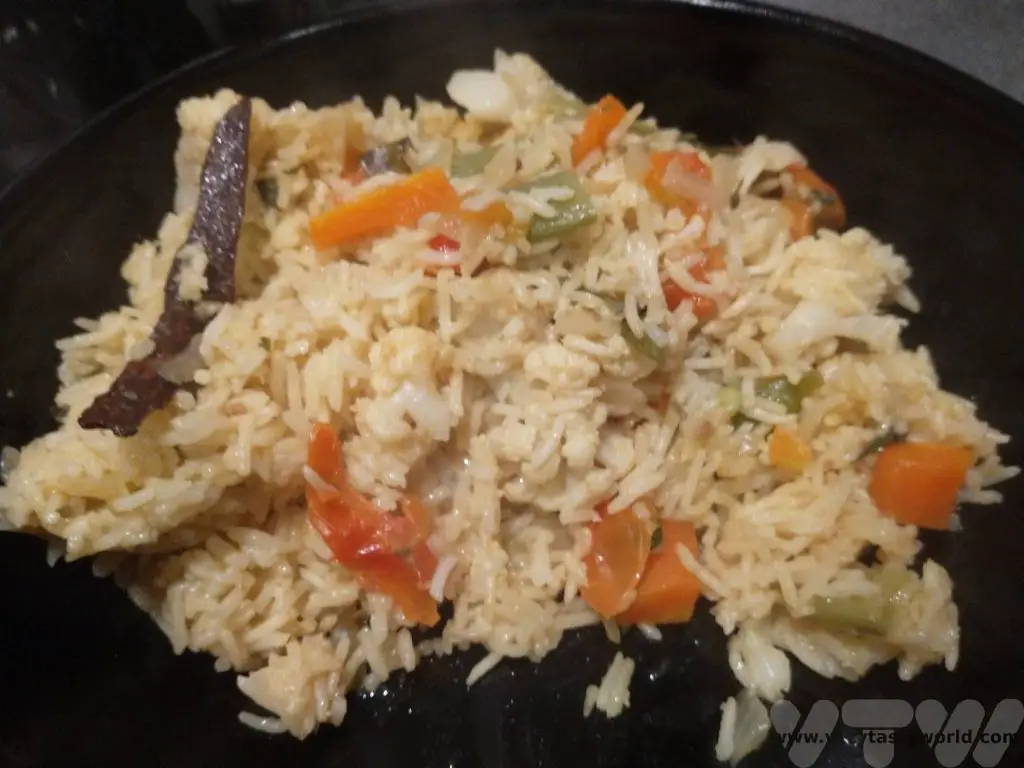
Southern India’s staple food is rice. And it’s always presented in a variety of delicious ways and beautifully spiced. Amongst the many yummy variations, our favourites were lemon rice, rice with coconut and cashew, vegetable rice. One that surprised us was curd rice (like a yoghurt rice).


A biryani in Tamil Nadu may vary slightly to other types of biryani. It is a rice dish that is cooked together with the other ingredients, rather than in layers. Our friend kindly gave us her family recipe for authentic Tamil Nadu vegetable biryani and it is absolutely delicious.
Dosas are another essential dish to try. These are pancakes made from a batter comprising rice and lentils, which is fermented for a few days and then fried. They can be filled with potato curry or served plain with various chutneys.

Idli are steamed rice cakes and vada fluffy doughballs made from urad dal (lentils).

Hello Thali!
Thalis are a lovely way to try multiple dishes. These are platters comprising multiple small dishes which are delightful. You may be served your food on a banana leaf or a tray covered with metal pots.

We have a post about how to enjoy thali in South India. One thing we did notice was that when we were eating in restaurants, local diners were very keen to see how much we were enjoying the food and to offer advice on which dishes we should eat in which order.

In Tamil Nadu many thali will be vegetarian but you may be able to specify a ‘meat’ or a ‘non-meat’ thali. We often ate lunches at random diners along the road. These were fantastic – great food, reasonably priced. And often you can have seconds, as the servers will pass through the restaurant with large pots offering another portion to plop into your dish.
Alcohol is not widely available, even in western-style hotels. Some hotels may have a licence and a special drinking area located somewhere on the premises. We didn’t consume any alcohol during our visit. And that was absolutely fine. There were lots of fruit juices, lassi (a yoghurt based drink) and fresh coconut water to enjoy.
Although Tamil Nadu is not one of the most famous states in India we absolutely recommend a visit. We loved it for the heritage and culture, for the warmth of our welcome and, of course, for the amazing food.
Related Posts You May Enjoy



- A Marvellous 7 Day Tamil Nadu Itinerary

- RECIPE: Vegetable Biryani Tamil Nadu Style
- RECIPE: Biryani Raita Recipe

- The Leh to Manali Highway
- Places to Visit in Munnar, Kerala
- Kumarakom Houseboats on the Kerala Backwaters

- Great Grinds & Best Brews – Coffee Around The World

- Things to Know Before Visiting South Korea

- Things to Do in Kuching – The Charming Cat City

- The Very Best Kuching Food

- A Splendid Three Days in Singapore Itinerary

- RECIPE: How To Make Dakgalbi


Thanks so much for reading. We hope you enjoyed this article. If you’d like to keep up to date with new posts and recipes, please subscribe to our newsletter or follow us on social media – Bluesky, Facebook or Instagram. We always love hearing from you and would be delighted to read your thoughts about this article.



What a great guide for visiting this area, covering all the essentials. I’m blown away by the beauty and intricacy of the architecture, and I know I would spend a lot of time studying all the details of the work.
How blessed you were to have hospitable friends who gave you a deeper experience than most visitors, although it does sound like the locals were extremely welcoming.
I’m curious if there was a language barrier and if so, how did you work around that?
This is such a well-thought-out and detailed itinerary for Tamil Nadu! I love how you’ve highlighted not just the popular spots but also the cultural and culinary experiences that make the trip truly immersive. I’d love to try biryani, I’ve never heard of it but it looks delicious.
What struck me most about the post were the temples, for their grandeur and originality, being so different from the temples we find in northern and central India.
The Chidambaram Nataraja Temple, the Brihadeeswara Temple and the Meenakshi Sundareswarar Temple are absolutely extraordinary, both in terms of size and detail.
The coastal landscapes are spectacular and undoubtedly worth the trip to see.
I liked the food suggestions, with the biryani being in my top favorites in terms of Indian food.
Thanks for providing some important travel insights such as the hotel conversion rate and the specific rules for women when visiting these temples. One can never be too mindful when travelling. Also the tip to check with nearby shop owners who allow you to go up to their roof and let you take pictures is a great insight. The sites that you have visited, are all very intriguing with their elaborate carvings and colours. Having known and read your blog for quite a while now, I am positive that your well structured and detailed itinerary post will be useful for anyone travelling in this part of India.
Carolin | Solo Travel Story
The history seems like one of the best things about traveling to this region of India. Well, that and the food – which all looks and sounds amazing. Loving that there’s so much veggie options. I can’t believe how intricate the carvings on the temples are, they’re so beautiful. I especially like Meenakshi Sundareswarar – I can see why people would want to go to a rooftop for a closer look. What a great itinerary, a fabulous guide to a wonderful looking part of the world
I’m always amazed at the carvings and the level of detail of these carvings, especially the one you show of Pancha Rathas. I totally agree with getting a guided tour. To me, that’s one of the essential aspects of traveling, especially if you can land a local guide who can explain the history of the region and area in a language everyone can understand. With regard to food, I like rice but i’m not sure how I would handle curd rice! I would definitely try if it was part of a thali, which looks like a terrific idea to sample different foods.
http://www.redsolotraveler.com
This is such a helpful and well-planned Tamil Nadu itinerary. I really liked how you included the temples, local food, and cultural experiences along the way. Definitely saving this for a future trip