
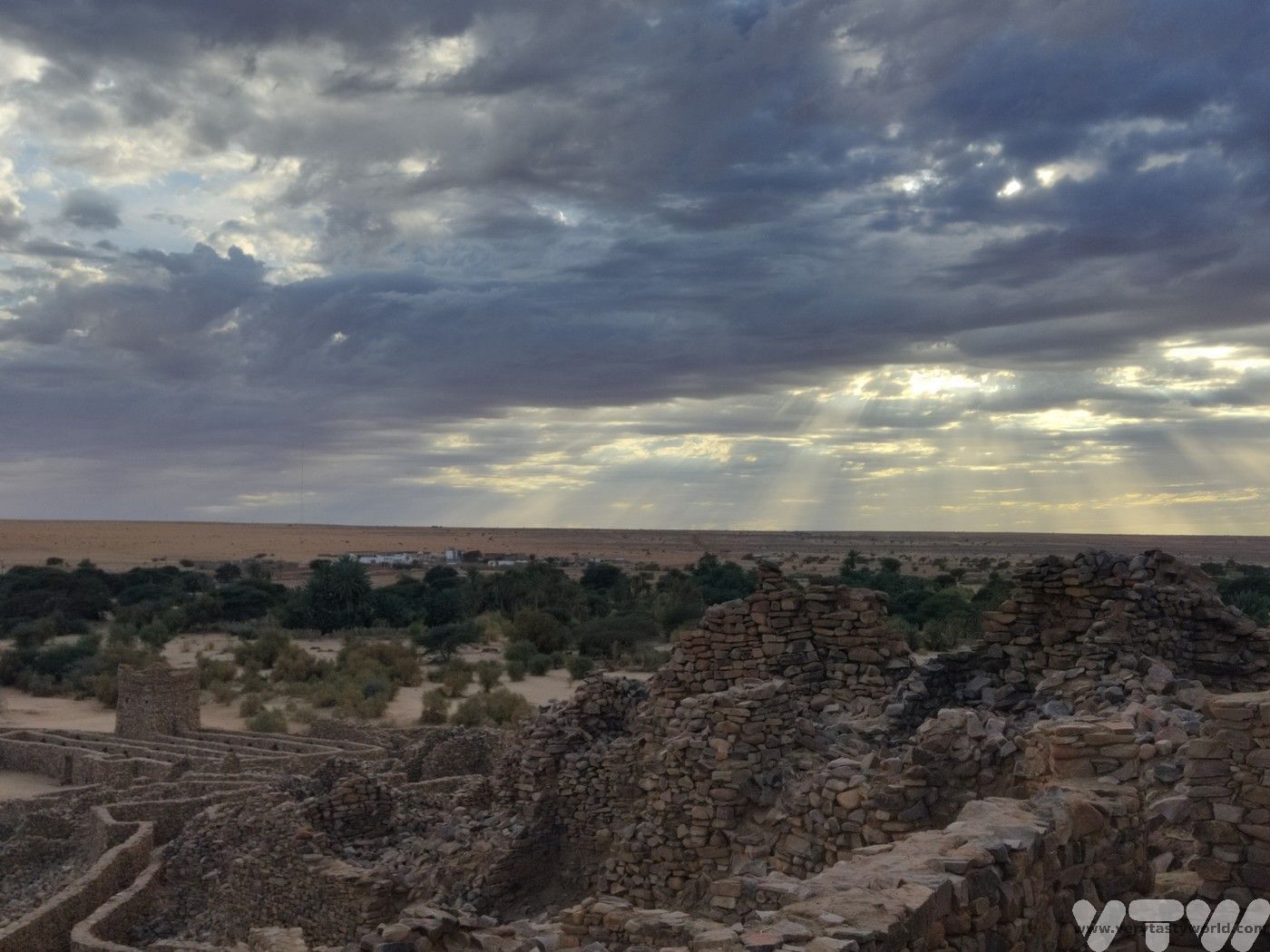
The Food of Mauritania – Cuisine of the Desert
Mauritania, a country which has a landscape dominated by the Sahara Desert, isn’t a place that you might consider to have an amazing cuisine. But much of the food is surprisingly delicious. Because resources are at a premium in this extremely dry country, the local people have learned to make use of the ingredients available and some clever techniques to source food and to preserve it. Our guide to the food of Mauritania will also show you how the landscape has influenced its cuisine.
The Date Palm – The Source of Life
When travelling through the desert water is scarce, but locals know where to find it. If you see date palms within the barren landscape you know there is water because these trees represent the presence of oases. The water may be very deep underground but it will be there. Hence, settlements tend to be established near oases.
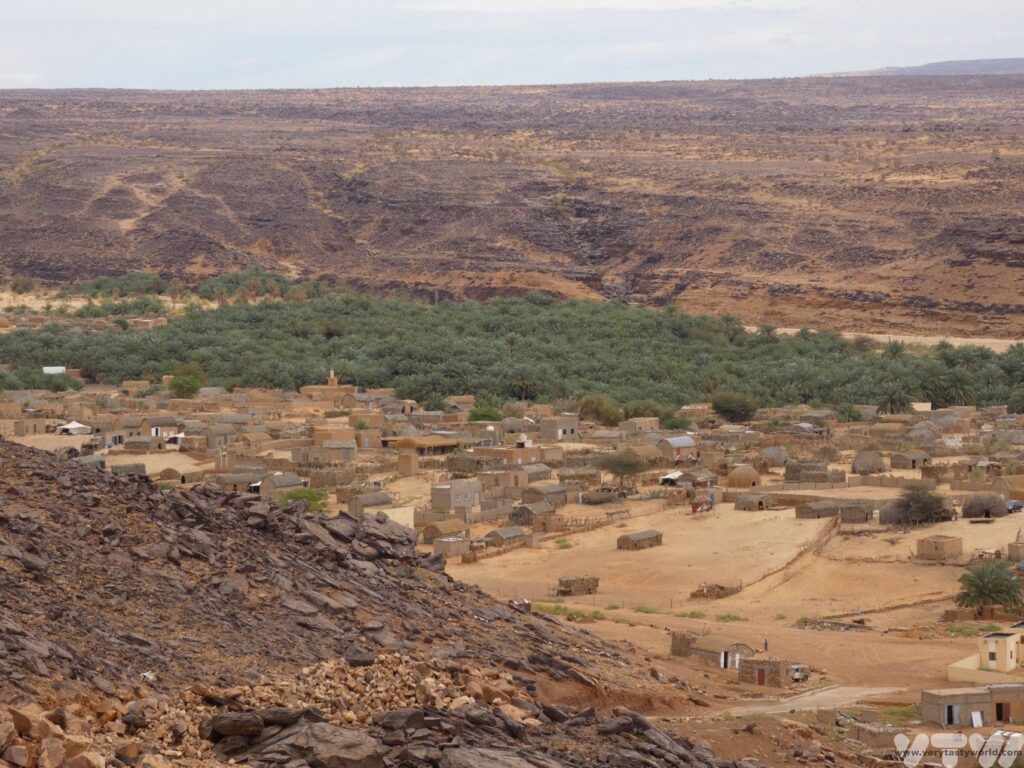
Date palms are also an amazing source of nutrition – as their name suggests they produce dates, a highly nourishing fruit that provides fibre, essential vitamins and minerals as well as lots energy. There are well over a hundred different varieties of date in the country. The dates fruit during the wet season in Mauritania (July to September) and festivals are held at harvest time.
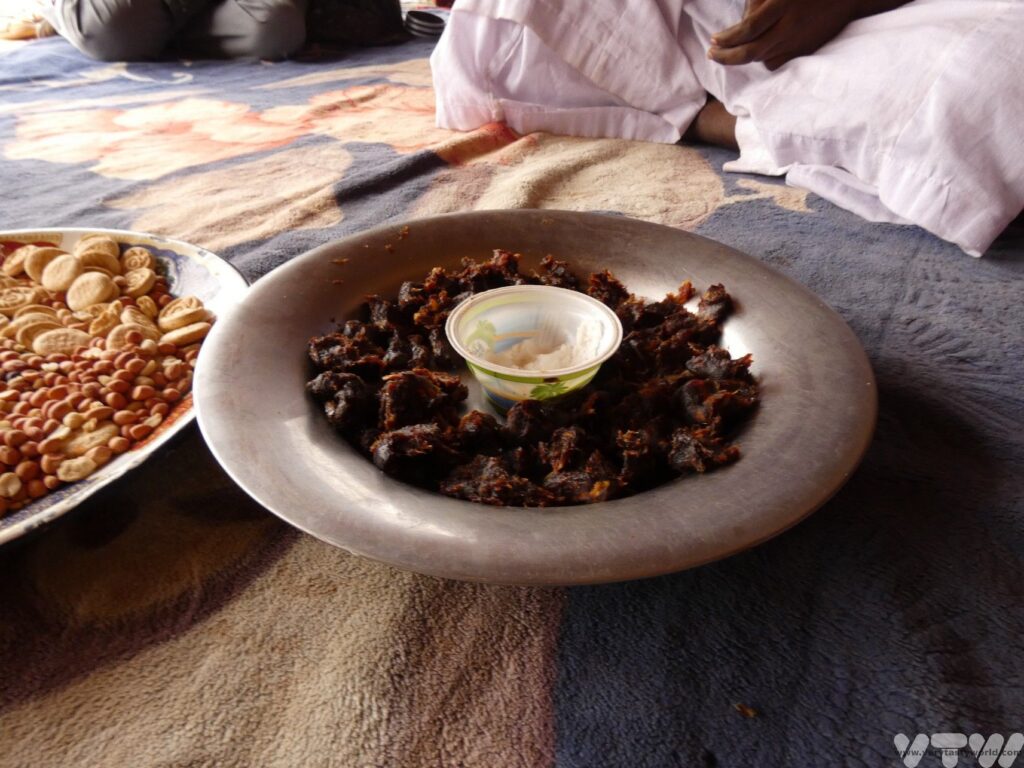
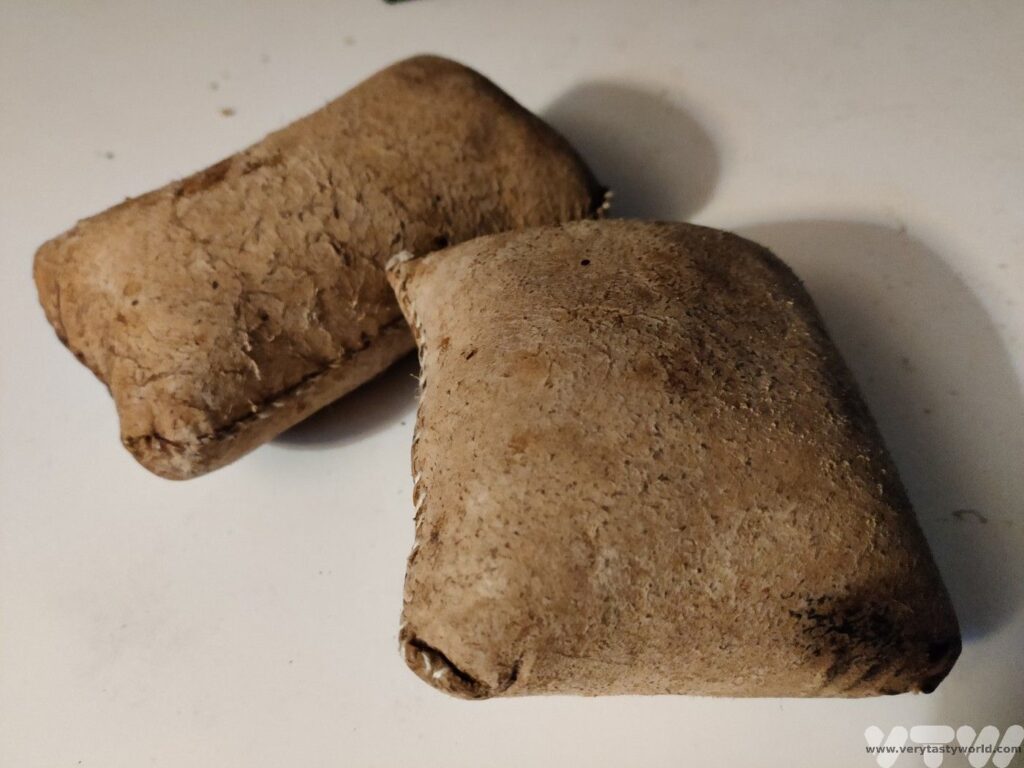
Mauritanians also use traditional ways to preserve them. We were delighted to meet a nomadic family who gave us two interesting looking pouches. These were goat skins which had been stuffed with stoned dates and carefully sewn. The skin is tanned in such a way that it has antibacterial properties which preserve the dates.
Always Time for Tea
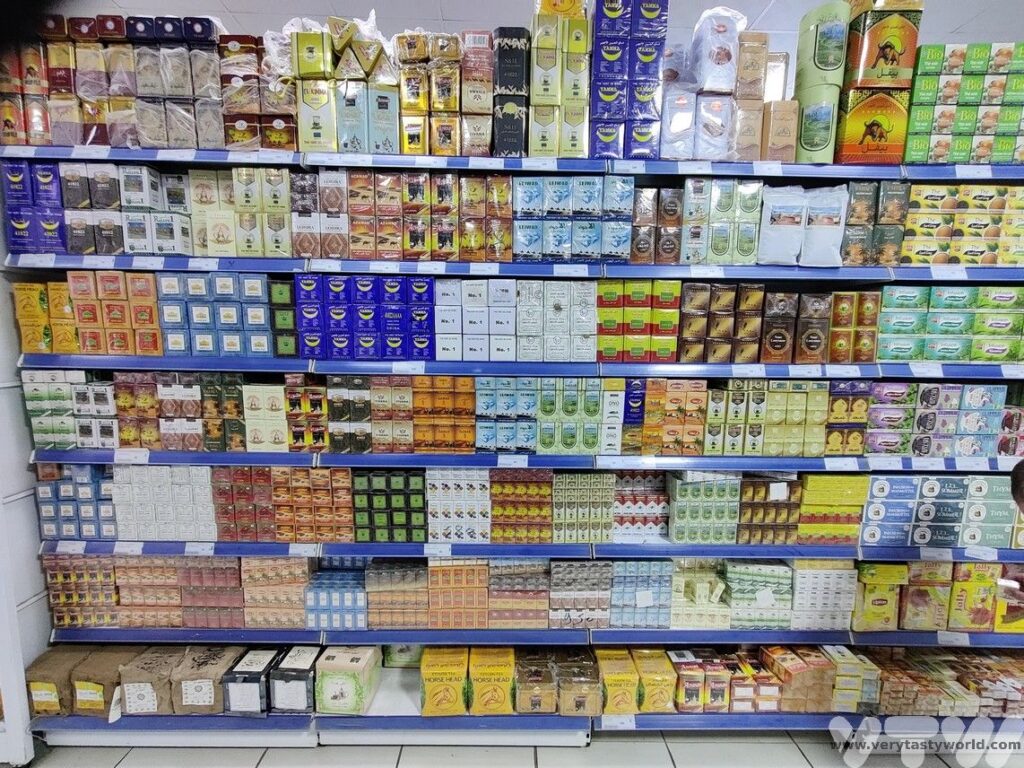
Mauritania is a Muslim country and hence alcohol is not consumed here. Many local people drink tea. Lots of it. Every supermarket and mini-store has a huge range of tea available. The tea comprises a gunpowder green tea, often with fresh mint added, and is a very refreshing drink.
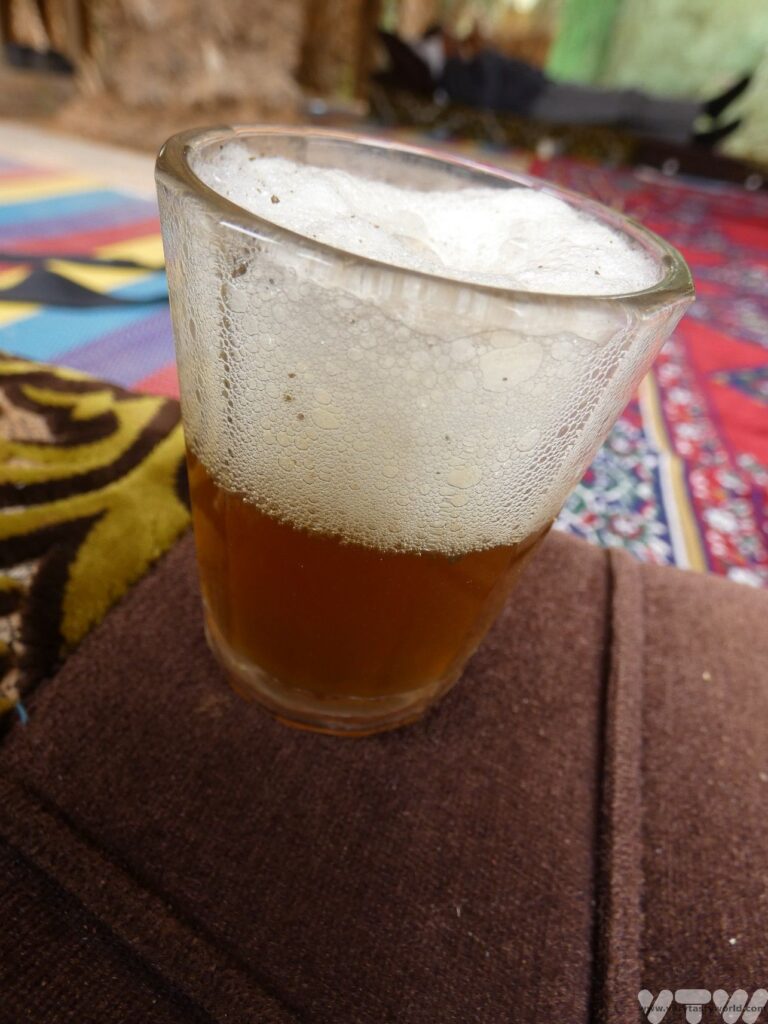
The method for making tea is surprisingly complicated but there’s a very good reason. Tea is served in small glasses and has a distinctive layer of foam on top. The reason for this is that in a desert, the wind can whip up sand and this can blow into your glass. If the sand lands on top of the foam, you can just scoop it off and not have to endure gritty tea.
Mauritanians have a tea ceremony. The foam is produced by pouring the tea from a great height to build up a head atop the tea. The tea is poured from glass to glass then back into the pot. It’s a soothing ritual to watch.
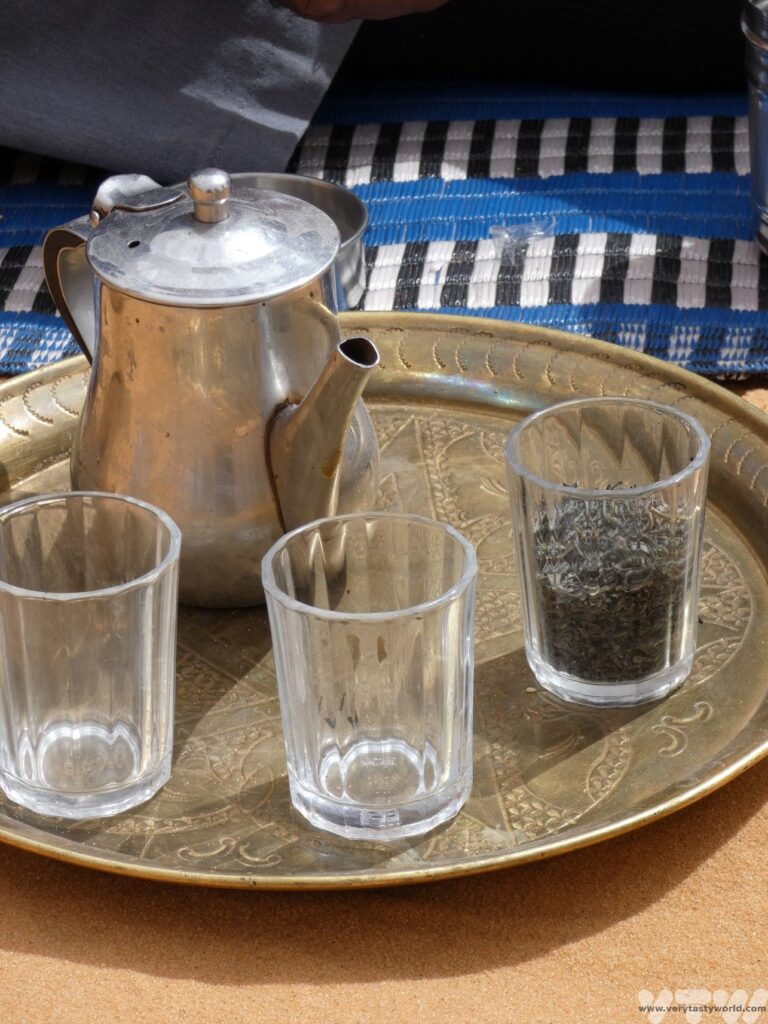
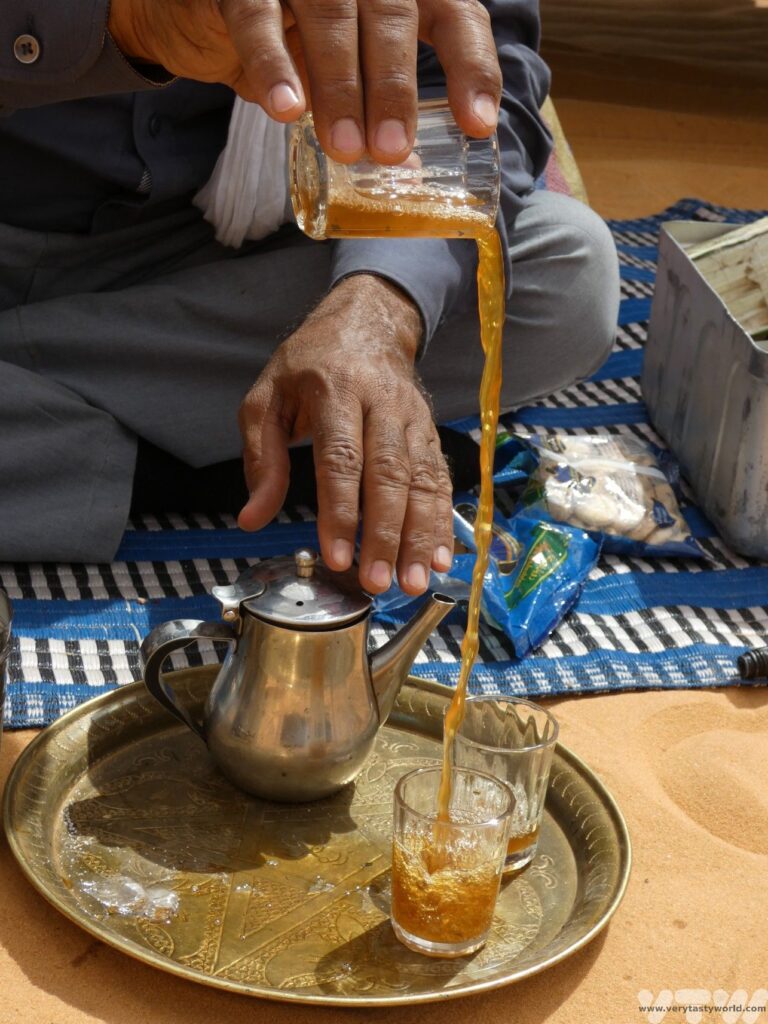
Tea is brewed in a teapot and served in glasses. The tea is sweetened with sugar as part of the brewing process. Three glasses are often served: the first is bitter to reflect the hardships of life, the second is sweet to represent love and friendship, and the third is gentle, apparently sometimes analogous to death (in a nice, peaceful way).
The Ships of the Sahara
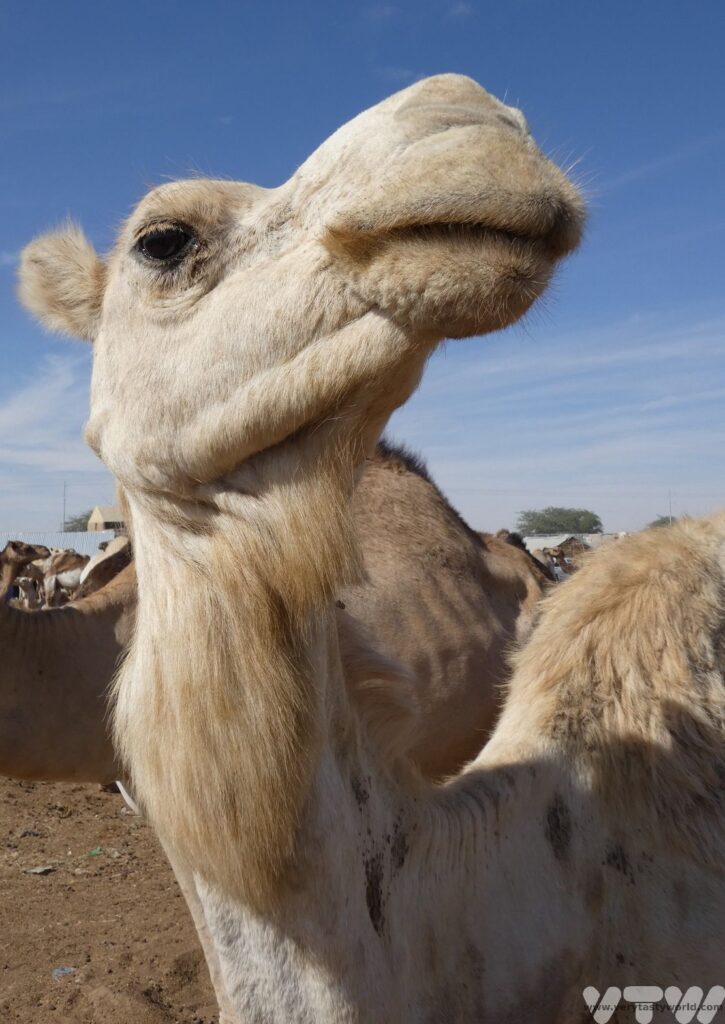
Camels are curious creatures. They are large and ungainly, except when in the desert, where they blend in with the landscape beautifully. They have evolved to live in dry environments – their hooves are broad to easily traverse soft sand and they can survive without drinking water for five days. Oh, and baby camels are utterly adorable!
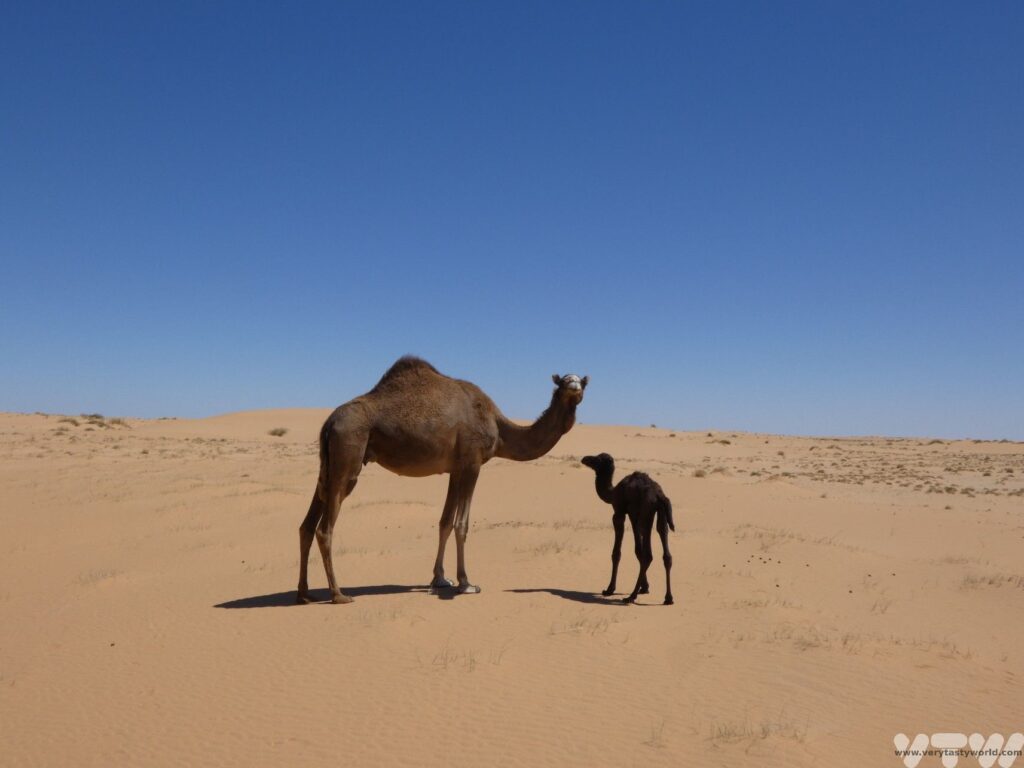
When visiting local people in the Sahara, camel milk is offered to visitors as a sign of hospitality. It is presented in a large wooden bowl.
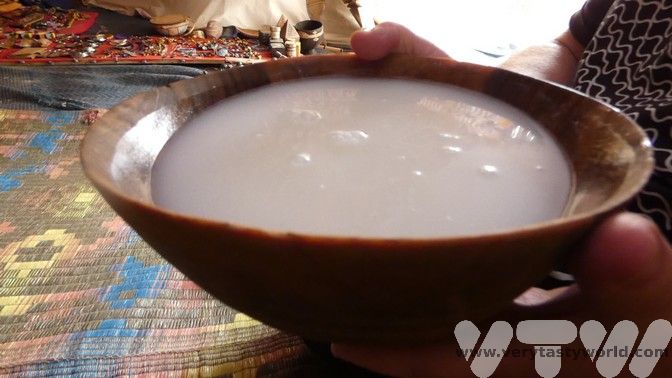
Camel milk is delicious, much sweeter than cows’ milk. The nomads also make butter from camel milk – dates with camel butter is really sumptuous. Apparently camel cheese isn’t a thing though!
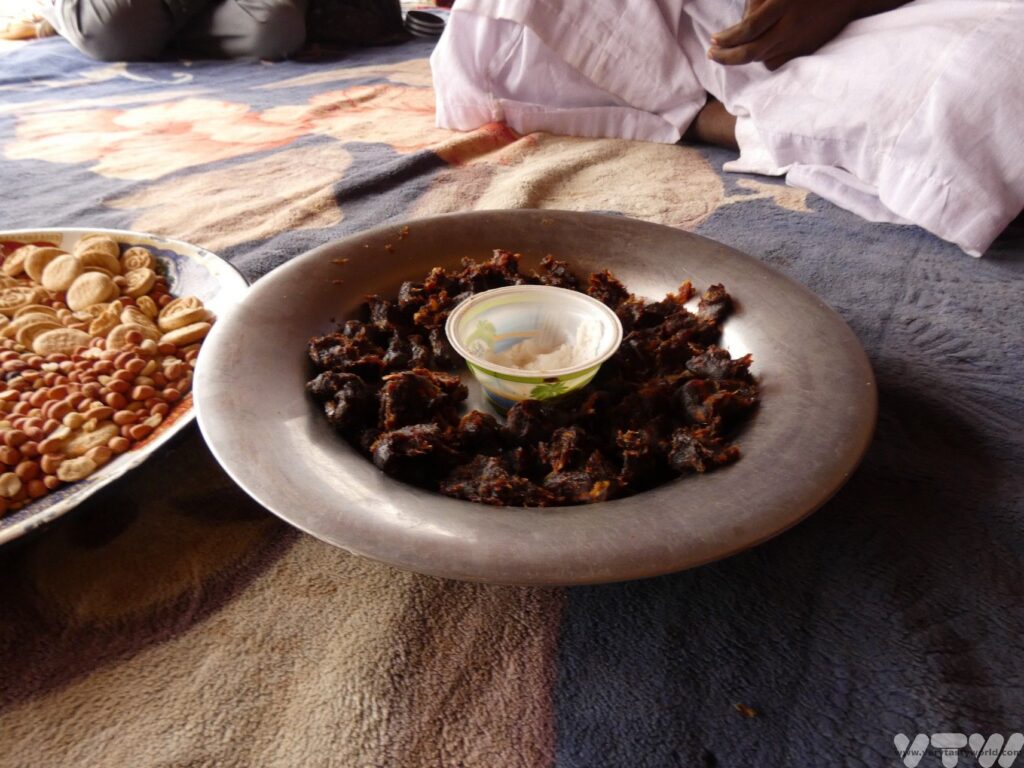
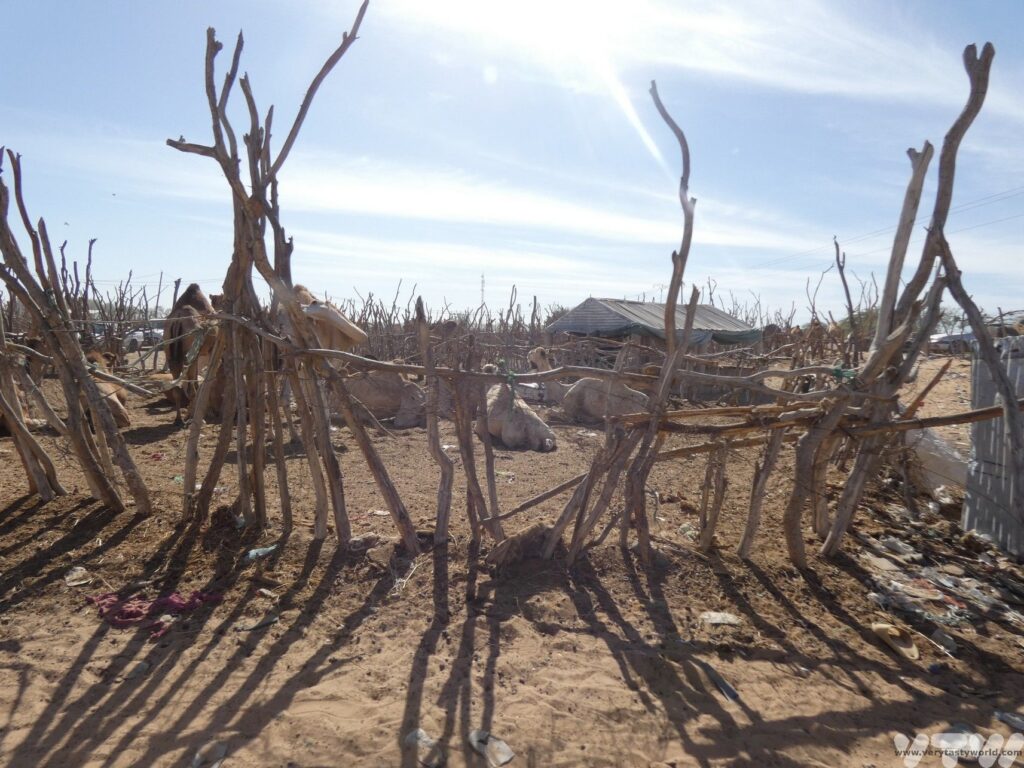
Camels also provide protein and are eaten as meat – usually barbequed over a fire. The camel market in Nouakchott is enormous. It’s the place where nomads come from all over the country to trade camels. It’s probably the most serene livestock market that we’ve ever seen. The largest camels can cost up to $2500.
Staple Carbs
Rice and couscous are common staples. Historically, girls were made to eat a serious amount of couscous with camel milk to make them put on weight. Heavy girls were prestigious, showed wealth in the community and were more difficult to steal on a camel. Fat is beautiful here.
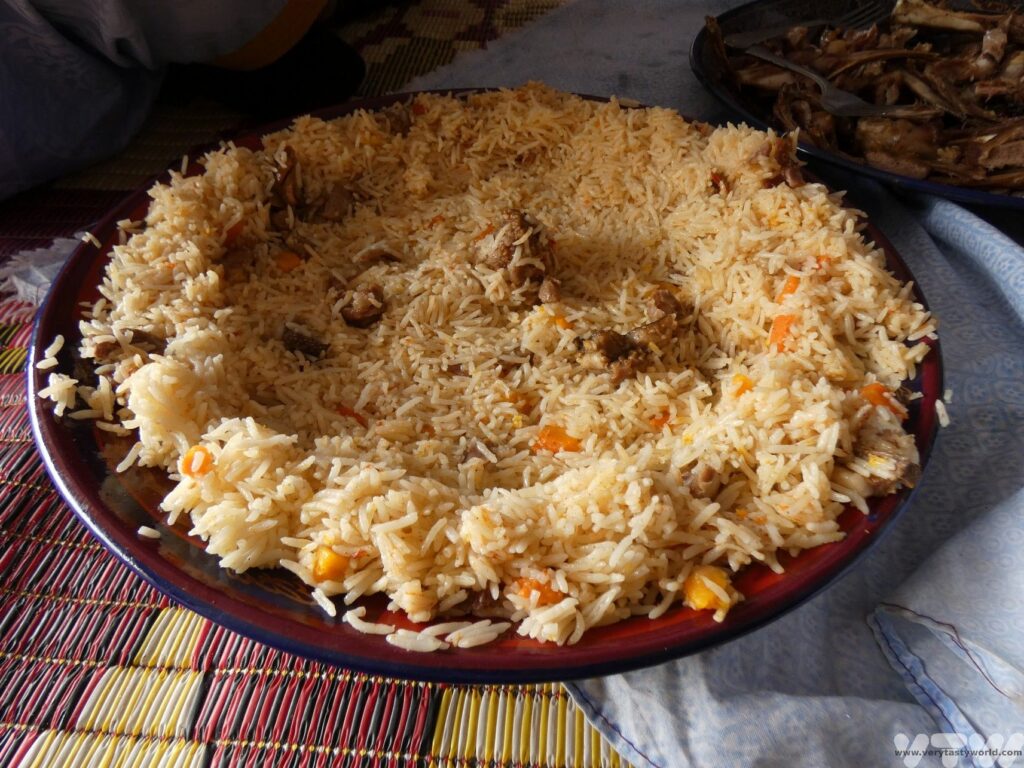
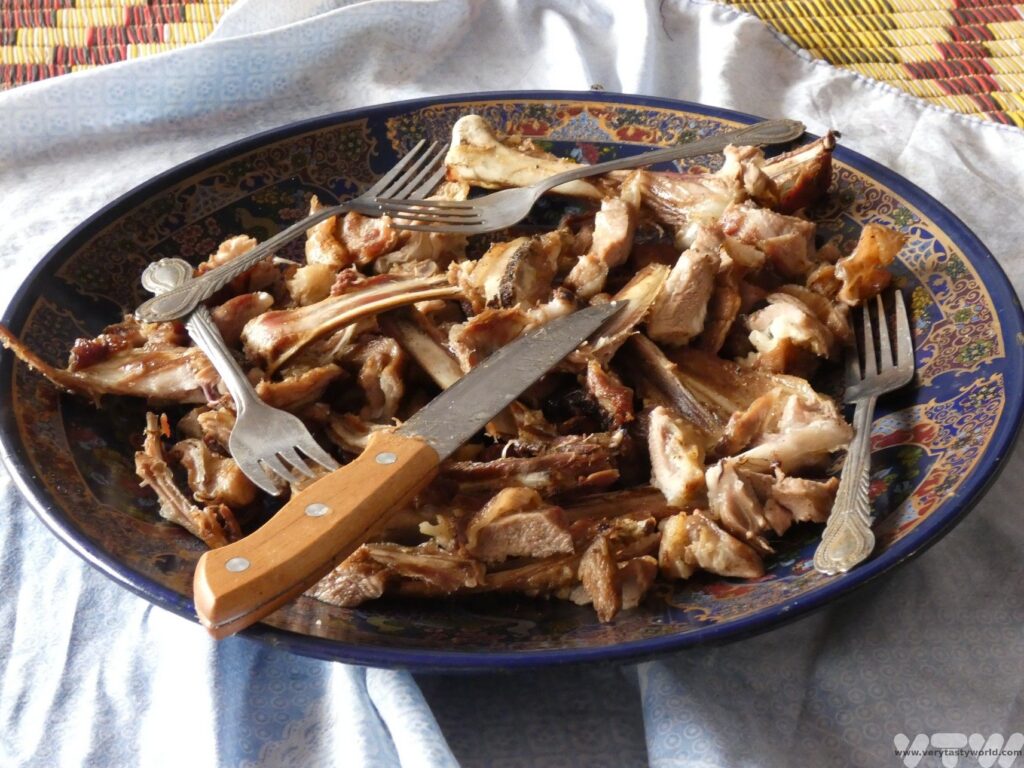
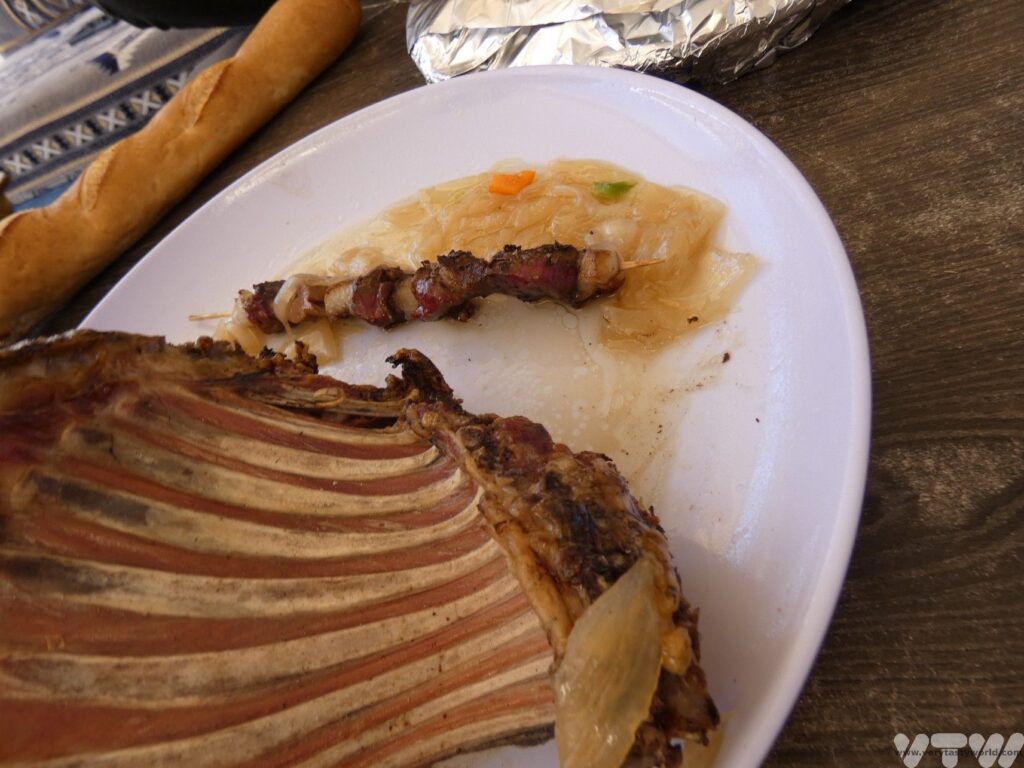
Meat is eaten with many meals – goat and camel are common. Meat is often served barbequed and presented for you to pick at.
Vegetarians won’t go hungry – many of the rice dishes are veggie or can easily be adapted for vegetarians.
Mauritania’s National Dish
The country’s national dish is thieboudienne (pronounced chi-boo-jen). It comprises a platter of broken rice cooked in a spicy tomato sauce, covered with fish and vegetables.
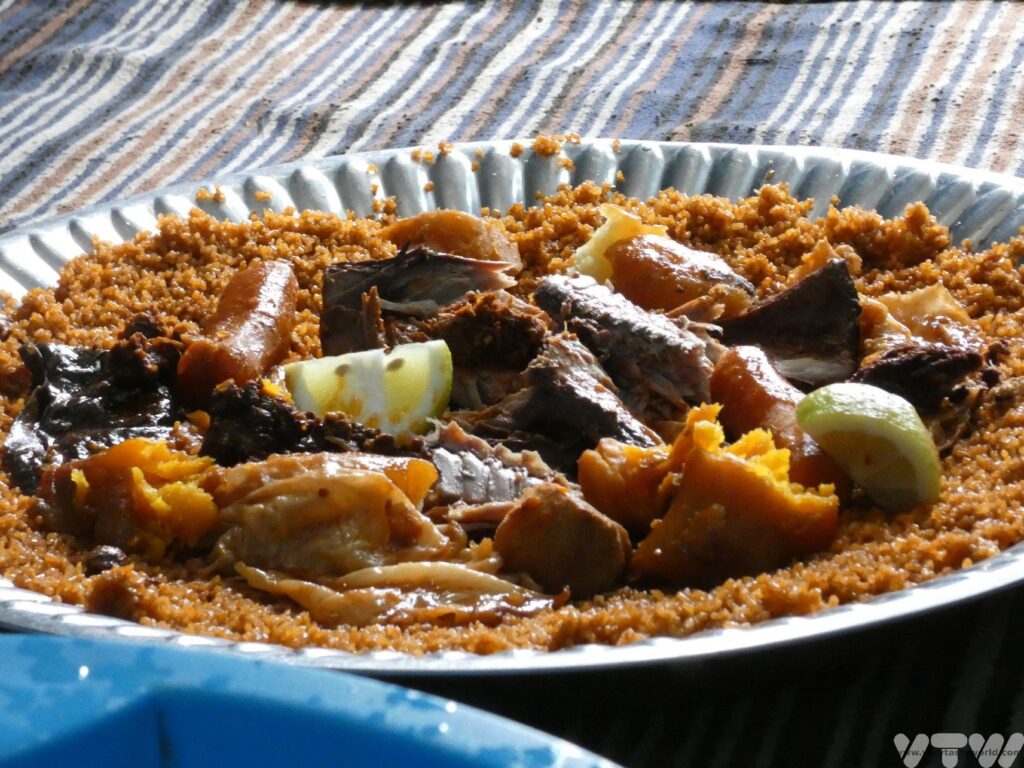
Chilli paste and lemons are also placed upon the rice for extra flavour. We enjoyed a meal at a speciality restaurant in Atar. People come from all over the city to buy their thieboudienne – to eat in or take away. The more famous African dish, jollof rice, is thought to have derived from thieboudienne.
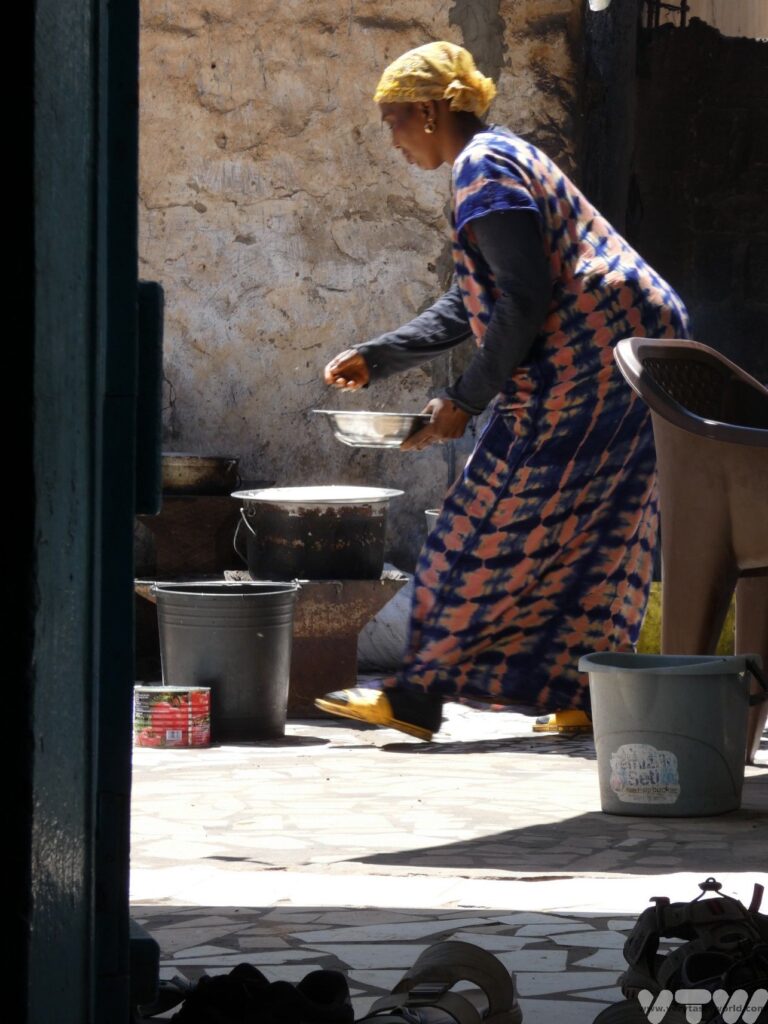
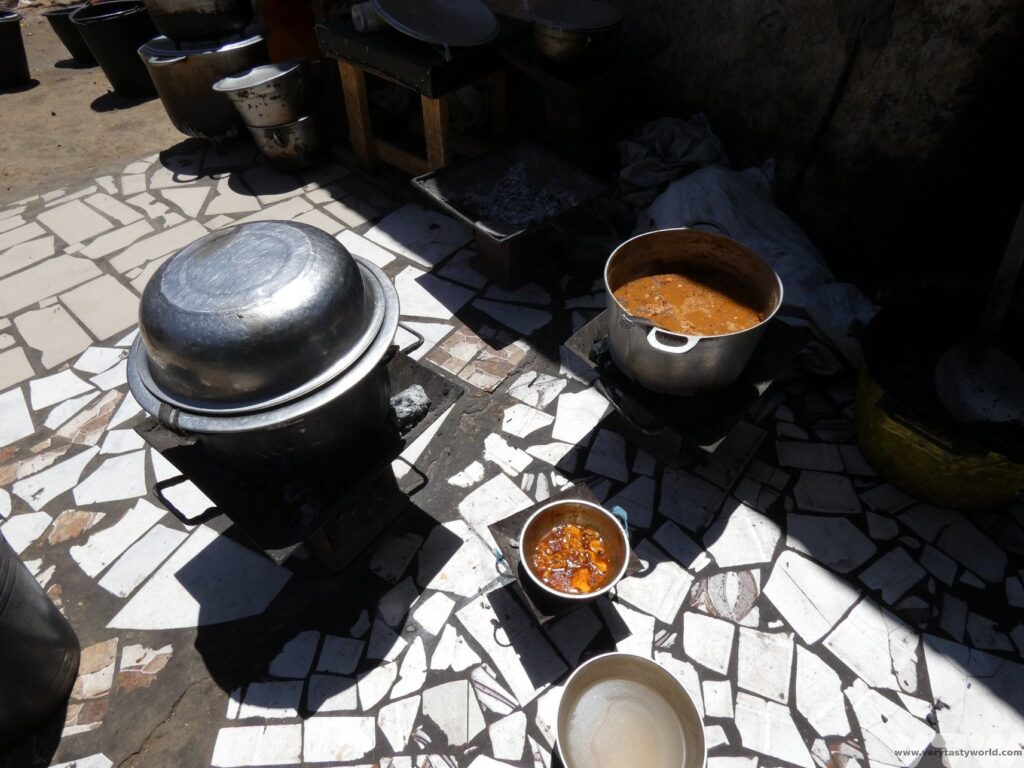
Dining etiquette is that food is eaten with your hand. Right hand only. Pull some of the rice and topping into your fingers and draw them into your palm. Use your thumb to pull the grains of rice together and then eat a mouthful at time. It’s a little messy when you start learning how to eat like a local.
Hands are always washed before and after dining. A washbowl will be provided.
Regional Speciality
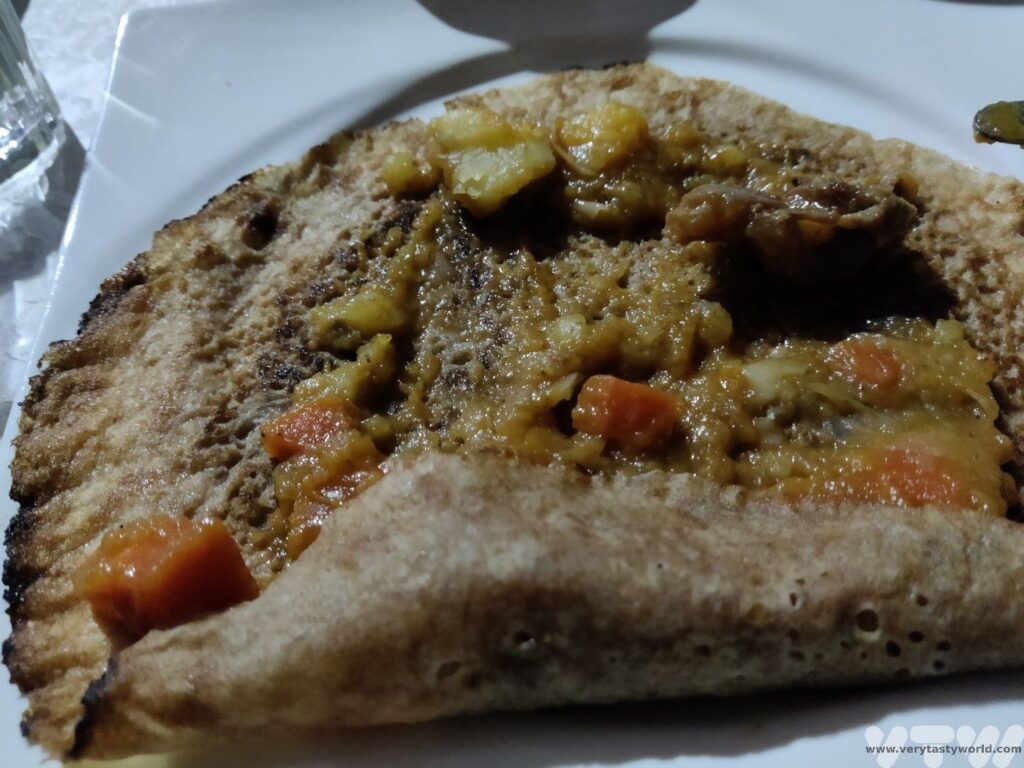
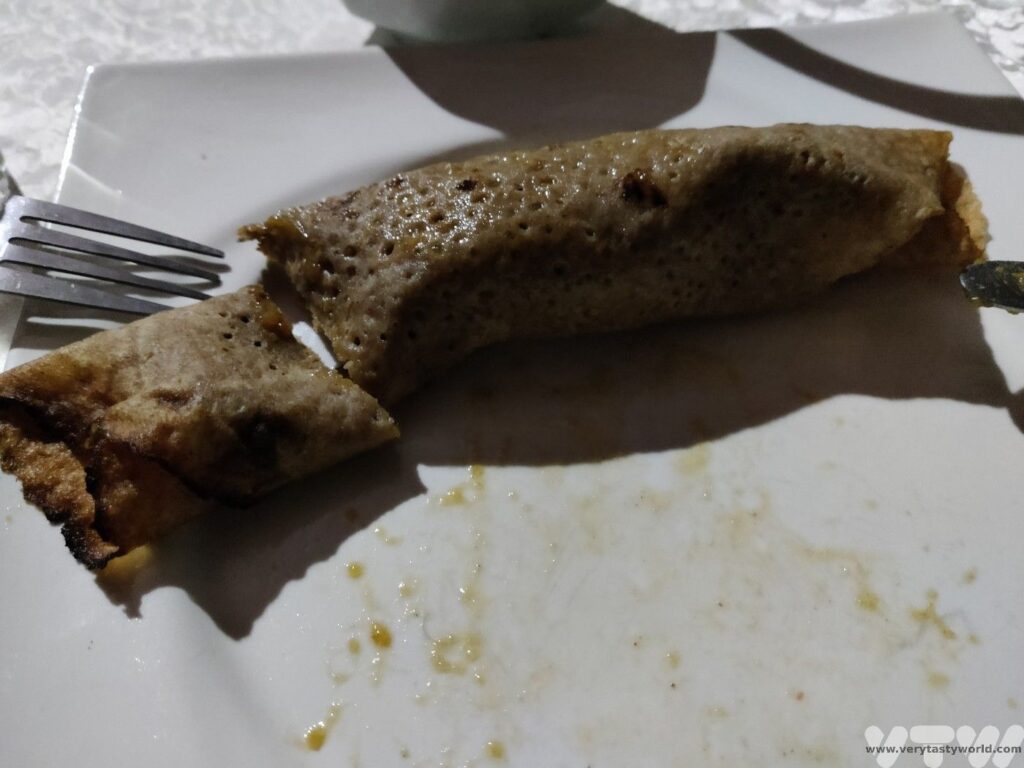
Ouadane, an ancient city on the caravan trail, dating back to the 12th century used to be a centre of learning. It has now fallen into ruin but is a fascinating place to visit. One of the speciality dishes of the region is leksour. These are pancakes made from maize flour. A batter is whipped up and fermented for a day or so before being fried.
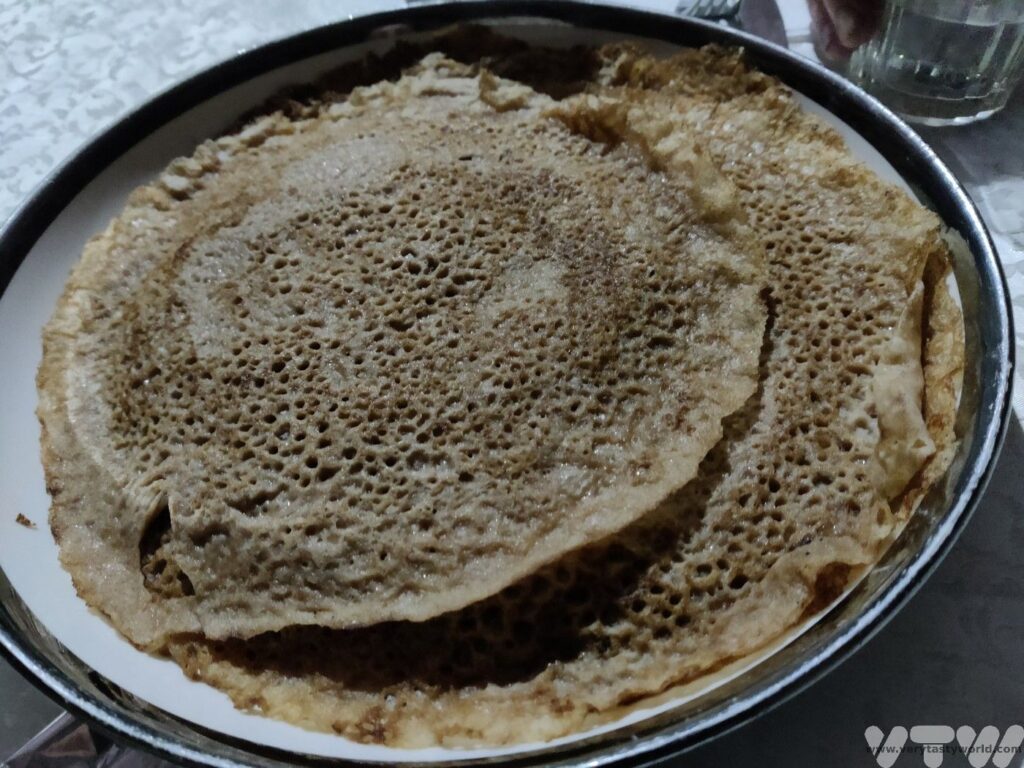
They are served with a meaty stew. Place the stew on top of the pancake, spread it to cover the surface area, roll the pancake, cut into bite sized pieces and eat. It reminded us a bit of injera, which is eaten widely in Ethiopia, although it was less sour. Leksour might not look very pretty, but it was delicious!
Traditional Fishing On A Pristine Coastline
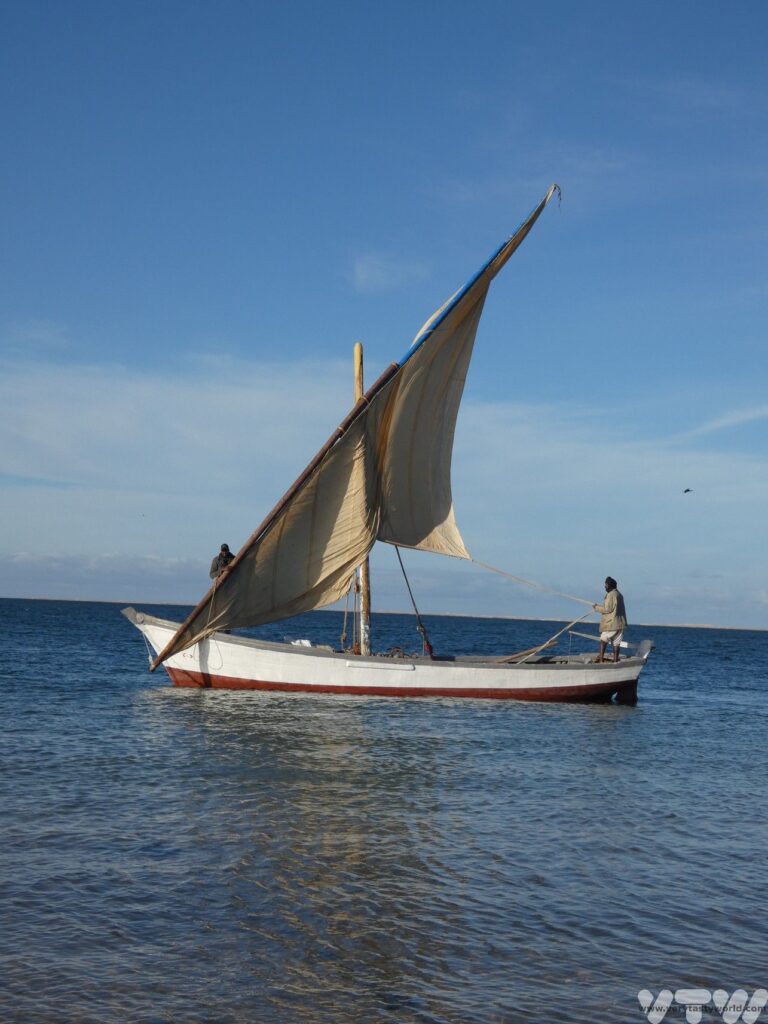
The Banc d’Arguin is a pristine section of the Atlantic on Mauritania’s west coast. It is known as a haven for birds. There are a number of fishing villages dotted along the coast, many of which still use traditional wooden sailing vessels which go out every day. We went out for a sailing trip with local fishermen and caught a number of fish with them.
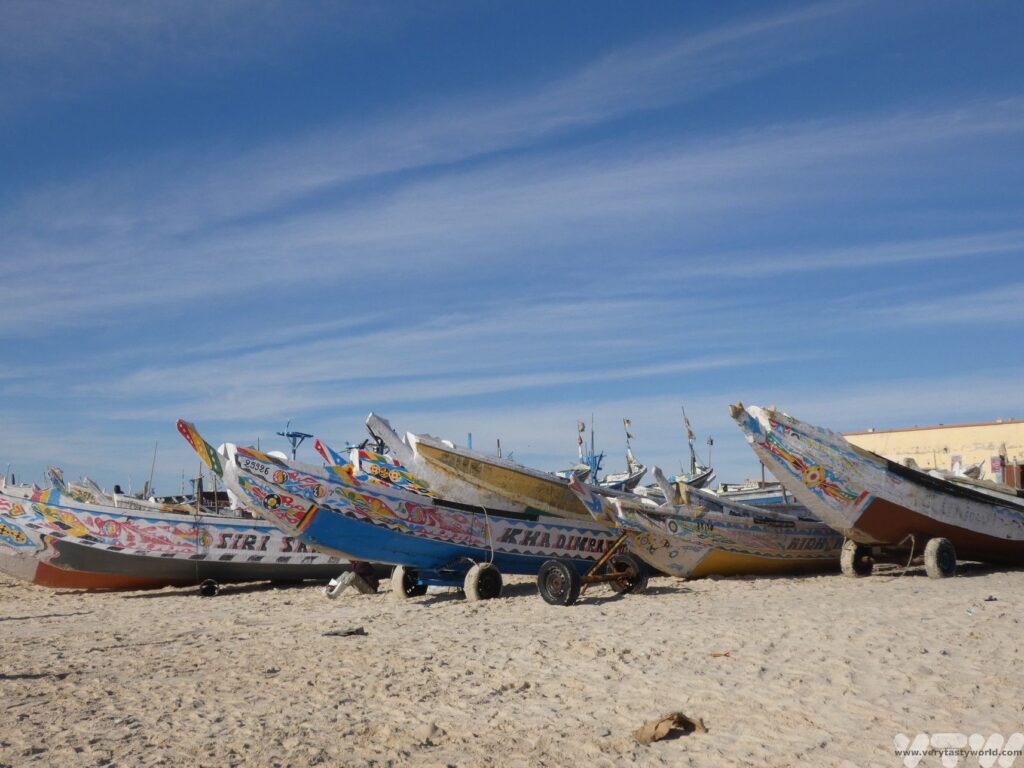
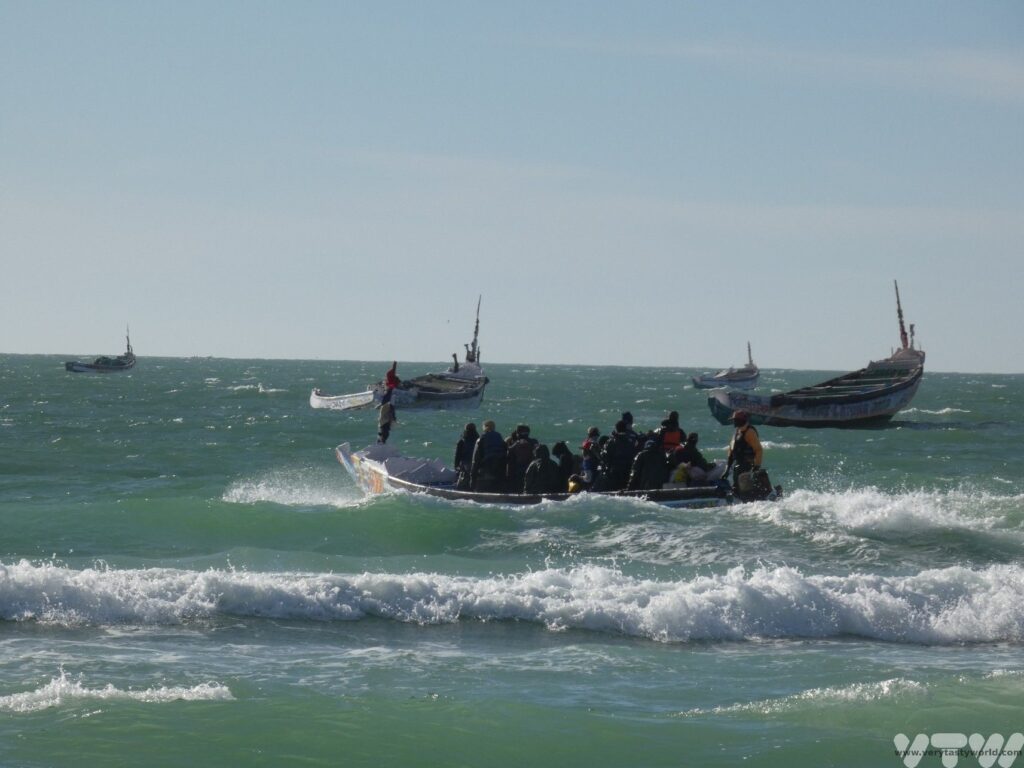
Further south, the bustling fish market in Mauritania’s capital, Nouakchott, is located on the coastline. You can watch the fishermen prepare to launch their colourful boats from the beach in order to harvest the bounty from the sea.
Soft Drinks
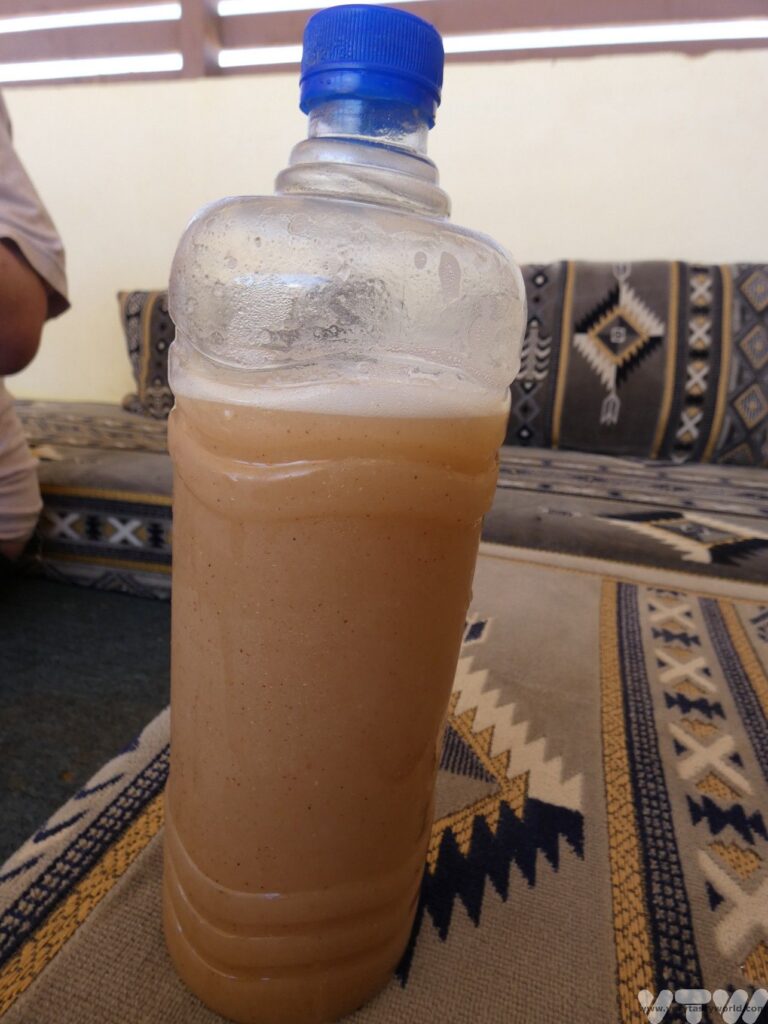
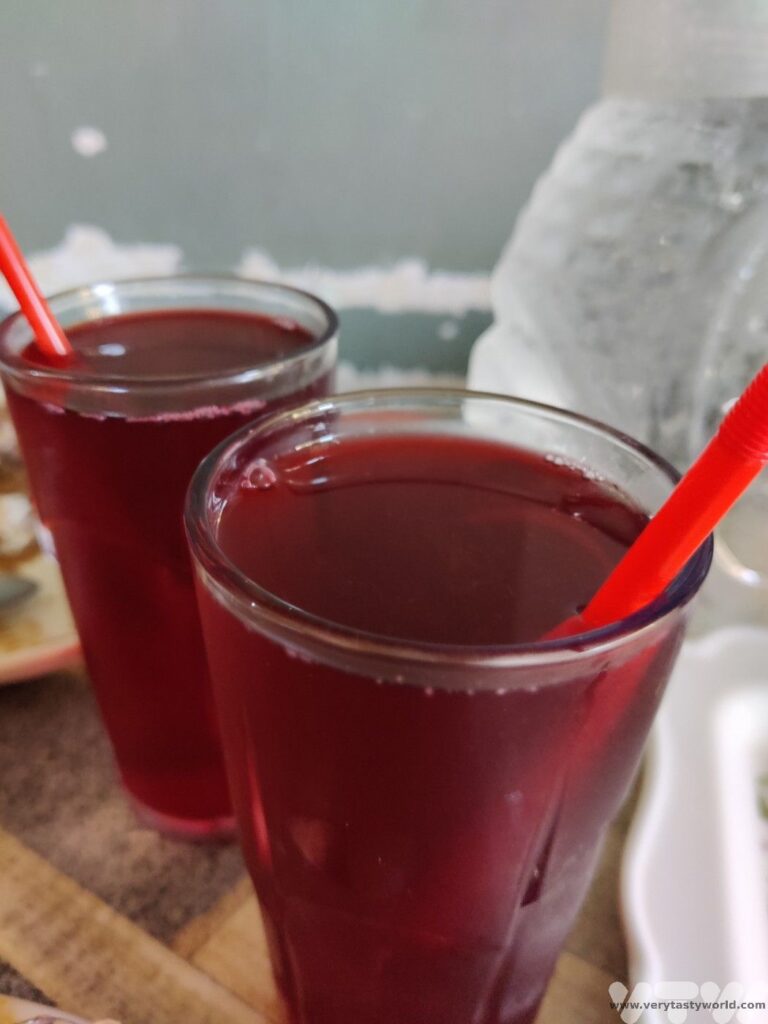
As well as tea, Mauritanians enjoy a number of soft drinks. Baobab fruit drink (jus de bouye) is an absolutely delicious drink (below, left). You can buy baobab bits at the market – grind and add to water to get a refreshing sour drink. Apparently it’s good for digestion as well. Bissap (below, right) is derived from hibiscus. Fruity and sweet, it’s delicious served cold.
Colonial Carbs
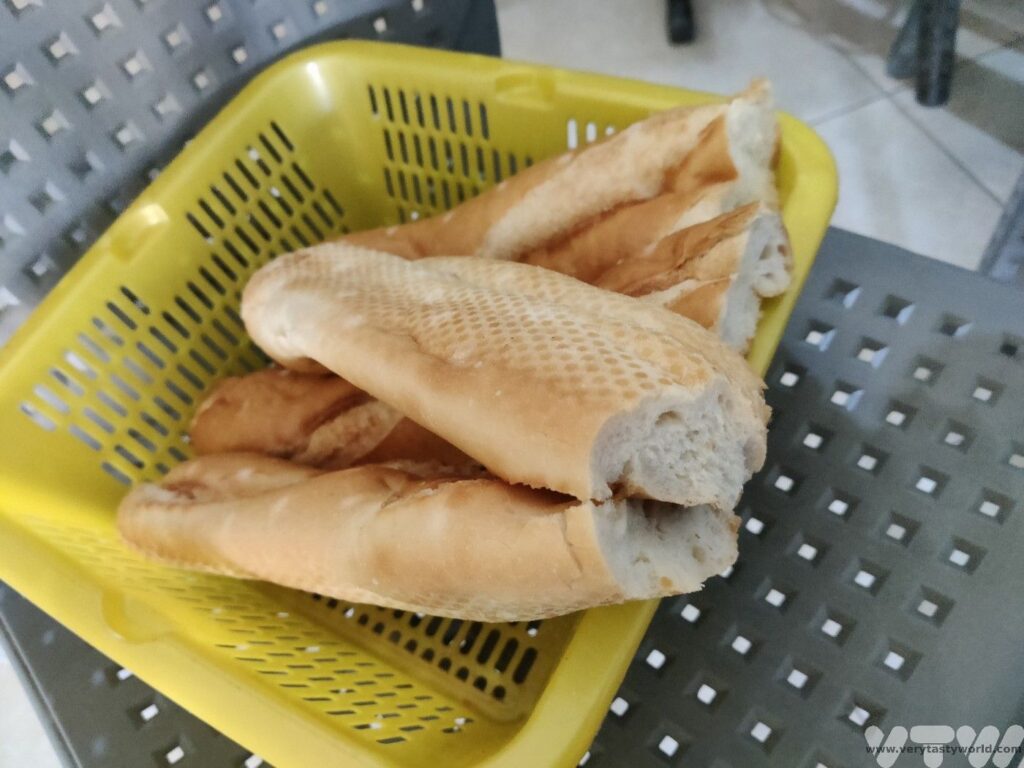
Mauritania used to be a French colony. The ubiquitous baguette forms a part of many dishes to soak up delicious stews and provide lovely carbs. You can buy them from wheelbarrows at the market!
Final Thoughts
When we visited Mauritania we were interested in experiencing life in the desert, to sleep under the stars, visit remarkable geographic features and discover ancient cities. But, like every country we have visited, the cuisine is inherent to a country’s culture. it was fascinating to learn how the environment influences the food of Mauritania. And we were delighted to discover so many dishes that were utterly delicious.
Related Posts You May Enjoy







- Adventures Off the Beaten Track: Things to Do in Mauritania

- The Food of Mauritania – Cuisine of the Desert

- How To Visit Victoria Falls

- A Thrilling Botswana Walking Safari in the Okavango Delta

- Andasibe Mantadia National Park Madagascar

- Skeleton Coast Self Drive in Namibia


Thanks so much for reading. We hope you enjoyed this article. If you’d like to keep up to date with new posts and recipes, please subscribe to our newsletter or follow us on social media – Bluesky, Facebook or Instagram. We always love hearing from you and would be delighted to read your thoughts about this article.


Fascinating how many unique dishes were made out of simple ingredients (dates, rice, flour). I would like to try the Leksour pancakes (yeah they don’t look too sexy but I can imagine they taste quite good and are filling for the days in the desert). Didn’t know camel cheese isn’t a thing, maybe there’s a reason for it, like maybe it doesn’t transform well into cheese with a good texture and consistency. Would need to find out, or maybe due to the heat the cheese process might be disturbed? Regardless, I am interested to know if you took home some recipes and will try to replicate at home?
Carolin | Solo Travel Story
Thanks for interesting report
I really enjoyed my stay in Mauretania. And you helped me to remember even the tastes of Mauretania
Thank you
I love the food reports you guys come up with after all your trips! Who knew Mauritania would have so many delicious looking dishes? The Thieboudienne sounds fantastic and I loved reading about the reasoning behind the foamy top on the tea.
What a fascinating look at the Mauritanian cuisine and how connected it is to the country. I was surprised to read that they don’t make cheese from camel milk, as I can’t think of a place I have travelled that didn’t have its own form of cheese. The foamy tea makes so much sense and I love that they have developed a ceremony to accompany it.
I can’t help but notice the baguette…While it’s not up to Mrs. Bucket’s supreme standards, I would happily settle for the baobab tree drink and join Mrs. Bucket in her afternoon light refreshment with the vicar who just came back from Mauritania…hahaha..Jokes aside, I think that some of the world’s most memorable food cultures come from places where resources are limited and how the locals make the best out of it #𝗳𝗹𝘆𝗶𝗻𝗴𝗯𝗮𝗴𝘂𝗲𝘁𝘁𝗲
Terrific guide to the cuisine of the desert. The food sounds delicious and the baby camels do look adorable. Fascinating to see learn that settlements are built around the source of life. I love dates and it was incredible to see how there stored in the goat skins. Would love to try a glass of camels milk. Eating with your hands sounds like a interesting challenge!!
While I’m sure eating more with your hands takes a bit of getting used to the food certainly looks delicious. I thought that pancake was injera at first too, sounds nice not being as sour, although I do enjoy Ethiopian food. Good to know much of the food can be adapted for veggies. The baobab juice has me intrigued since I loved seeing the trees when I was in Africa
I love me some dates!