

Andasibe Mantadia National Park Madagascar
Andasibe Mantadia National Park Madagascar is one of the country’s most popular parks to visit because it has a remarkable diversity of wildlife to discover. Lemurs are undoubtedly Madagascar’s main wildlife attraction and the Mantadia National Park is home to both the largest and the smallest species. But there are also many birds, amphibians, reptiles and flora in the rainforest and these are fascinating as well. It is also one of the parks that is closest to Madagascar’s capital Antananarivo (known as Tana). Here is our guide to visiting this wonderful national park.

Please note that this post contains affiliate links. If you click through and decide to make a purchase we will make a small commission, at no extra cost to you, which will help towards the costs of running this site.
Getting to Andasibe Mantadia National Park Madagascar
We travelled to Madagascar with a local operator who arranged all our transportation and accommodation for us. The best route to reach Andasibe is to drive along the RN2 (Route Nationale) from Tana. As with all driving in Madagascar, the roads are slow-moving and riddled with potholes. The RN2 is also the main road between Tana and the sea ports on the eastern coast so there is often a parade of lorries rumbling their way along, hauling goods for export and creating a cloud of dust in their wake. You just have to sit tight and get into the ‘mora mora’ mindset – slowly, slowly.
Buses will also be available from Tana if you are travelling independently. These are basically minibuses which can be quite cramped and will also be slow, especially as they will stop multiple times along the way. There is also a train from Tana to Andasibe.
It took us around 5 hours to travel Andasibe – a 150km journey on a road that was particularly slow that day as we were stuck behind lots of lorries that were difficult to overtake. It was dark when we arrived.
Where We Stayed in Andasibe
Andasibe is the best location for exploring the Mantadia Park. There are a few accommodation options. We stayed at the Mantadia Lodge at Andasibe which was a fair way out of town up a steep hillside. It was very posh, much more luxurious than we normally choose. (But that was kinda nice after the long journey!)


Our room was spacious and had a great view of the rainforest from the wide windows. There was also an infinity swimming pool which was lovely to relax in whilst overlooking the landscape. One of the best benefits was the free minibar which offered a variety of drinks, including beers, and these were topped up every day.
Exploring the Madagascar Andasibe Mantadia National Park
We spent two days exploring this lush rainforested area in search of wildlife. The area of the Mantadia National Park is roughly 155 square kilometres and is home to much of Madagascar’s unique wildlife. Lemurs are the best known and most popular of the creatures that inhabit this remarkable rainforest but there are many birds, reptiles and amphibians to view as well.
The reason that lemurs are so important is that Madagascar is the only place in the world where you can see them in the wild. When the island separated from mainland Africa millions of years ago, evolution took many species in very different directions. On the African continent, primates evolved into apes and, eventually, humans; in Madagascar they evolved into lemurs. We don’t often use the word ‘unique’ but it absolutely applies to Madagascar’s wildlife.
The Analamazaotra Special Reserve
Leaving early in the morning, we visited the Analamazaotra special reserve, which is located close to Andasibe. It was an easy hike through the forest where four diurnal lemur species reside. We managed to see three of them. This is one of the best places to see the remarkable Indri Indri lemur, the largest of all the lemurs, and endemic to the area. The lemurs have a hauntingly beautiful cry as they communicate with each other in the forest. When we first heard them, we thought we were hearing whales singing!
The Indri Indri live together as families in separate territories and can live for up to 80 years. They breed once every three years, and their only puppy remains with its mum for nine years before it leaves to starting a new family elsewhere in the jungle. Lemurs need to come down from trees to eat clay once in a while to help digestion. They get their water from leaves. They can jump up to 10 metres across the treetops.

Observing these remarkable lemurs was a true privilege. The reason that it is so important to protect the Indri Indri is that they cannot be kept in captivity. People have tried. But these highly intelligent creatures value their freedom too much and simply refuse to eat.
We also saw the Diademed Sifaka lemurs who share the forest with the Indri Indri but eat different foods, so they don’t compete.

And the Eastern Lesser Bamboo lemurs were delightfully energetic and lively little lemurs, flitting through the bamboo.

We saw the Pandanus frog which lives in the sharp, spiked pandanus plant. The frog can get water from inside the plant. Unusually for a tree frog, this species has a tadpole phase. Many tree frogs don’t, they never walk on the ground – the eggs usually hatch straight to little frogs.


Madagascar may not have giraffes, but it does have bizarre insects like the famous giraffe-necked weevil (Trachelophorus giraffae). They live on the trees and feed from the leaves. The female is quite adept at rolling up leaves in order to lay her eggs inside.
Visiting Andasibe Village
We spent the afternoon exploring the village of Andasibe,walking the narrow cobbled streets. It has a population of around 5000 people.

We joined the local spectators watching a football match.

And then walked through the village to the old colonial train station with its curiously angular architecture.


Trains do run from Tana to the coast via Andasibe, but are slow and do not necessarily stick to their timetables. But a rail journey could be worth considering if you have the time for a leisurely trip.
Nightwalk at the VOIMMA Reserve
The VOIMMA reserve is a great initiative because it was founded by the Andsibe villagers who wanted to have their own stake in eco-tourism. This park, run by the community, provides a local alternative to the national parks which are managed by the government. At nightfall we donned head torches and made our way through the forest to try to spot the nocturnal creatures of the area.
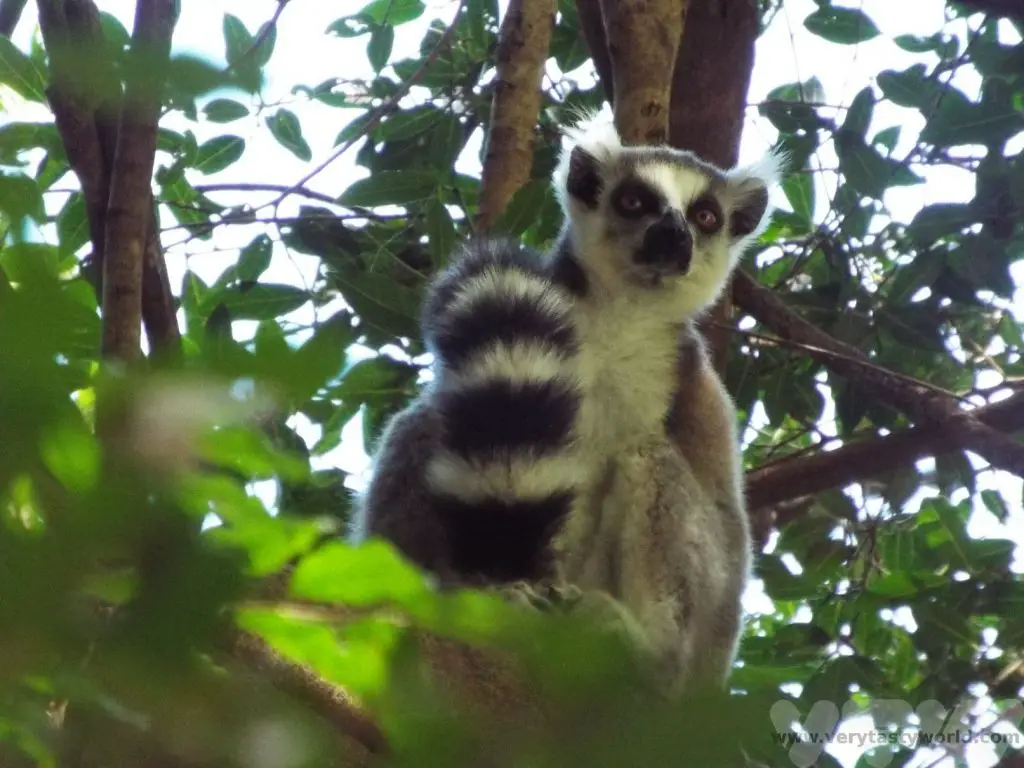
Having seen the largest lemur we also got very lucky and saw the smallest lemur, the Brown Lemur, which isn’t much bigger than a mouse. He was a bit shy though, not keen to pose for a good photo.

And the curvy chameleons were out in force.

The Andasibe Mantadia National Park Madagascar
The following day was an early start again. The primary forest of Madagascar’s Andasibe Mantadia Park is around an hour’s journey from the village. We spent three hours hiking in this park. It requires a reasonable level of fitness as there are some steep slopes and dense vegetation.


There are over one hundred species of bird in the park, including kingfishers, hawks, moorhens, flycatchers and fan-tailed birds. There are also 14 species of lemur, multiple reptiles including the snake boa manditra and multiple species of amphibian.
We didn’t have a huge amount of luck here but did see more lively Diademed Sifaka lemurs playing in the treetops.


Vakona Reserve Visit
On the way back from the forest we visited a lemur sanctuary, the Vakona Reserve, where lemurs are rescued and rehabilitated, with future generations being returned into the wild.
Located near a former graphite mine, this sanctuary comprises five islands. The first is inhabited by rescued lemurs who will remain on the island. They are habituated and it’s possible for visitors to get really close to them.
The offspring of these lemurs will eventually move to the next island, then the next and so on. After about nine years future generations will progress to the fifth island where they will have no contact with humans. From there, they can move back to the wild. It’s a great scheme because it genuinely helps the lemur population whilst bringing in income from tourists who can get fantastic photos of the lemurs.


You have to get aboard a canoe to reach the first island, the only one that visitors are allowed to set foot on.
Andasibe for Foodies
Although people don’t generally go to Madagascar for the food, Malagasy cuisine is both interesting and delicious. Our hotel had a vast range of local and international food (Sushi? In Madagascar?) which was very nice but also relatively expensive. Some tours offer an all-inclusive package, others don’t and we preferred to eat local food, so our lovely driver took us to Vane Resto.
Vane Resto was located around a ten minute drive from Andasibe. We enjoyed zebu kebabs with garlic and ginger grilled on skewers and river fish.
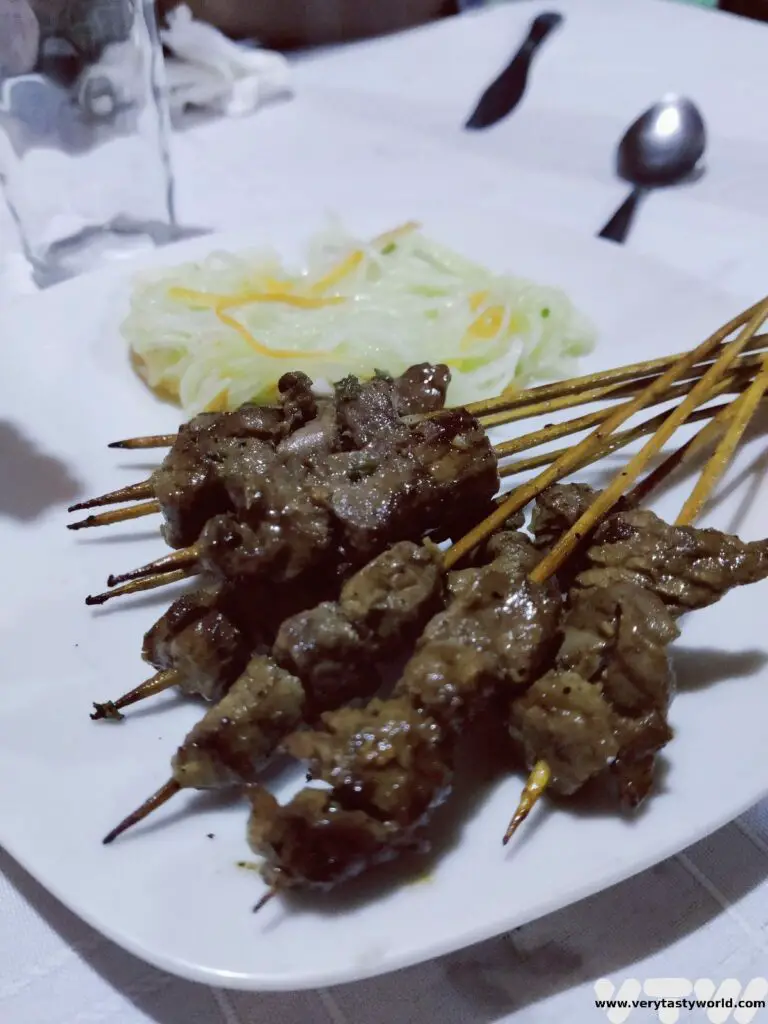
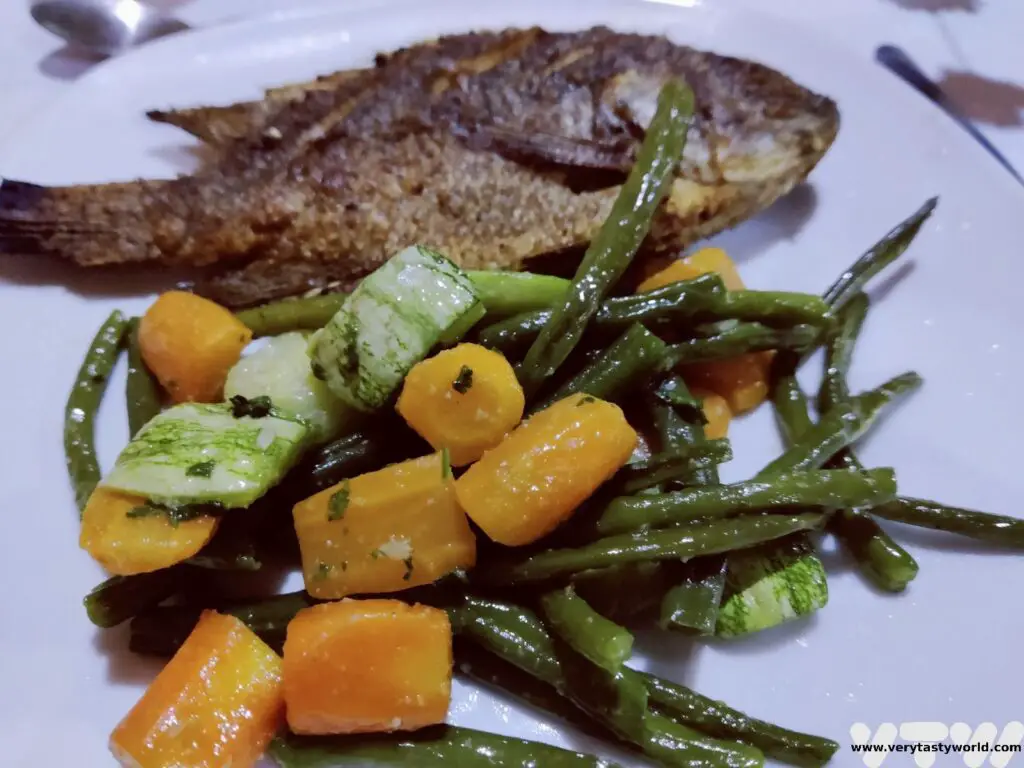
All washed down with Three Horses Beer, or THB, is the most popular in Madagascar. It’s a light, refreshing lager. The food is cheap and hearty.
Return To Tana
We left Andasibe and began our journey towards the capital. It was a 150km drive lasting about 3.5 hours so we broke it up by visiting the Peyrieras Nature Farm. Located half way along the route, 75km from Tana, this is a small privately run reserve at Marozevo, between the towns of Manjakandriana and Moramanga. It was founded by a French entomologist called André Peyriéras. We were able to see their butterflies and reptiles. Although Madagascar is best known for its lemurs we consistently found the reptiles to be absolutely fascinating as well. The sheer variety of chameleons was astonishing


And we never failed to be surprised at the amazing camouflage abilities of the geckos, which can flatten themselves to the trunk of a tree in admirable attempts to deter predators.


And, of course, we couldn’t pass by the adjacent forest area which supports families of habituated Verreaux’s Sifaka lemurs. We were able to meet them and feed them choice bits of banana.


Lunch at Amanistena
Amanistena on RN2 is a fairly unremarkable town but the locals decided that they could try to benefit from tourists travelling through it to the Andasibe Mandantiba National Park, so they established themselves as a sausage town. It’s a great initiative, so we just had to stop for zebu and pork sausage with cassava powder chips and chilli sauce. And a beer. Apparently Madagascar’s president always stops for a sausage when he’s in the area – they’re that good!

Although the RN7 is the most popular route to follow when visiting Madagascar, we highly recommend spending an extra few days exploring the Andasibe Mantadia National Park. We were thrilled to see both the largest and the smallest lemurs as well as a plethora of other fascinating creatures and birds. We will never forget the hauntingly beautiful cry of the Indri Indri, creatures that will never succumb to captivity. See them while you can!
Related Posts You May Enjoy



- Adventures Off the Beaten Track: Things to Do in Mauritania
- The Food of Mauritania – Cuisine of the Desert

- How To Visit Victoria Falls

- A Thrilling Botswana Walking Safari in the Okavango Delta

- Andasibe Mantadia National Park Madagascar

- Skeleton Coast Self Drive in Namibia


Thanks so much for reading. We hope you enjoyed this article. If you’d like to keep up to date with new posts and recipes, please subscribe to our newsletter or follow us on social media – Bluesky, Facebook or Instagram. We always love hearing from you and would be delighted to read your thoughts about this article.


You saw such a great variety of lemurs. I knew there were a couple of different types but I had no idea there were so many. The wildlife would make that long journey on the pot-holed roads worth it. The hotel looks like the perfect place to relax after a long day of exploration. I can imagine myself enjoying a beer from the mini bar while soaking in the infinity pool listening to the wildlife all around.
We knew that we would see lemurs but didn’t realise quite how lucky we would be to see so many different species. Yes, travelling on the roads is tough but the wildlife makes it all worthwhile.
Madagascar has always fascinated me as it’s essentially one giant island, but there’s all of these insects and animals that are native only to that island. I’m glad you pointed out the various options for these parks, especially the option of working with a guide. I personally would feel more comfortable that way, but some prefer to just go on their own. You were able to get some good photos, especially of the insects and lemurs. The zebu kebabs looked good! Great job on the photos.
Thank you! You’ve absolutely captured what makes Madagascar so special – that much of the wildlife genuinely cannot be seen anywhere else in the world!
Oh my, this looks amazing. I could spend a week here just hanging with the lemurs! You have such incredible photos. The up close of the lizard – I’m impressed that you even saw that on the tree haha
Thank you. We knew we’d love the lemurs but were also amazed by the camouflage abilities of so many of the reptiles!
Aside from vanilla, Madagascar has carved its allure from a wildlife perspective – diverse and rich. I remember your previous post on Madagascar and you mentioned about the animals that inhabit this East African island. What a trip to immersed oneself with wildlife and to be welcomed with treats from the singing lemurs! I think they sent Timon from The Lion King packing lol #flyingbaguette
Jan – https://flyingbaguette.com/
Haha! Yes, the Indri Indri would most definitely have sent Timon packing! Madagascar truly is a place for amazing wildlife.
From the very first line of the post, I was enchanted by the photos… so many friendly, cute faces!
The Andasibe region undoubtedly has a huge range of activities to offer intrepid explorers who venture there. The village contains the human side and the jungle the biodiversity. A fantastic combo!
There’s no doubt that Madagascar has a lot to discover and is well worth exploring.
Thank you! Yes, those lemurs are so cute! We loved visiting the village as well as the jungle to explore this wonderful region in full.
Madagascar is the dream. I’d love to visit one day. I am always surprised at how big it seems and how far from the mainland. I’ve always loved lemurs, and until now I thought they were the star of the show in Madagascar but it might just be the chameleons. What interesting creatures and such impressive colors
You know what? We thought the same – we knew we’d love the lemurs but the chameleons and geckos, especially those with the amazing camouflage ability, absolutely charmed us. Hope you get to visit one day, we’re sure you’ll love it.
I’m pleased for you that you got so many opportunities to experience Madagascar’s wildlife. It shows, that nature there is still in tact as there is still a high density of healthy populations there. I hope it stays that way and the natural habitats for so many lemur species can be preserved. The people of Amistena are smart and you confirming the sausages actually tasting nice, is a great testament that they weren’t just inventive but also interested in delivering quality.
Carolin | Solo Travel Story
Thank you. Madagascar truly is a paradise for wildlife, we were very privileged to see so many amazing species.
And you’re right about the Amistena sausage town dreaming up a way to entice tourists to visit and taste delicious sausages!