
Lobster Dinner in Nova Scotia
What makes a luxury food luxurious? Is it exclusivity? A famous name? Limited availability? And why do many luxury foods look so unappealing? Oysters are grey and slippery, truffles look like muddy-mini-brains, and lobsters appear positively primeval. Sometimes it’s easy to see why food is considered to be luxurious. Kobe beef, for example, is reared to exceptional and very precise standards and there is limited availability. Seafood is considered to be a luxury food by many in the UK, an island nation with a long history of fishing. But ingredients such as lobsters, scallops and oysters are enormously expensive. The north-eastern coastline of America and Canada is famous for seafood. And when we visited Canada one of our top priorities was to enjoy a lobster dinner in Nova Scotia. Or more…
What Makes Fine Dining Fine?
We recently celebrated a significant wedding anniversary and treated ourselves to lunch at a Michelin-starred restaurant. It was expensive but it was a place that we had long wanted to visit and, if you can’t treat yourselves after 30 years of marriage, when can you? But… while the food was nothing short of divine, we didn’t really enjoy all the other ‘stuff’ that goes with luxury dining.
The wine was eye-wateringly expensive (and not that amazing), we were requested to comply with a dress code, a hefty automatic service charge was added to the bill (we could have asked for it to be removed) and we just felt, well, not fully relaxed. The service felt kinda overly stiff and formal. It was a lovely experience, just not as sublime as we’d hoped it would be.
Our local city has a fine dining restaurant which is much more up our street. Owned by a chef who has worked in amazing kitchens all over the world, the food is exquisite but it is served in a relaxed, informal environment. You can dine in a t-shirt and jeans if you want. Bring your own booze and become your own sommelier. You share a table with the other guests and enjoy lively conversation and usually a laugh. As you say your goodbyes you get a hug from the chef’s wife (this is optional!). And did we mention how exquisite the food is?
Seafood and Eat It!
We’ve recently returned from a road trip to Nova Scotia, one of Canada’s eastern maritime provinces, located on the Atlantic coast. We travelled in a ‘figure 8’ around the peninsular, hugging as much of its beautiful coastline as possible, and with a firm determination to scoff as much seafood as we could. We ate like kings every day. But what we loved most about Nova Scotia’s seafood was how down-to-earth it was. No pretentious plating, no fiddly processes, just good honest food.
Nova Scotia’s Lobster Fishing Industry
The town of Lunenburg is around an hour’s drive from Nova Scotia’s capital city Halifax. It’s a beautiful UNESCO heritage town with colourful buildings lining the gorgeous coastline and harbour.

The Fisheries Museum of the Atlantic in Lunenburg is extensive and absolutely fascinating. It’s the perfect place to discover Nova Scotia’s maritime history, particularly in the context of its fishing industry. The staff are friendly and knowledgeable and give talks about lobsters and fisheries throughout the day. We really enjoyed interacting with them.

Canada has very specific rules about catching lobsters. All fishermen need a licence. These are issued by the government and each costs $1.25m CAD. Licences are issued for particular ocean regions, which mean that the fishermen assigned their locations are responsible for looking after their patch. There are very specific rules on what they can catch – undersized lobsters and females with egg-laying potential all have to be returned.
Dories and Lobster Pots
We learned about the history of fishing in the area and the evolution of the lobster pot.
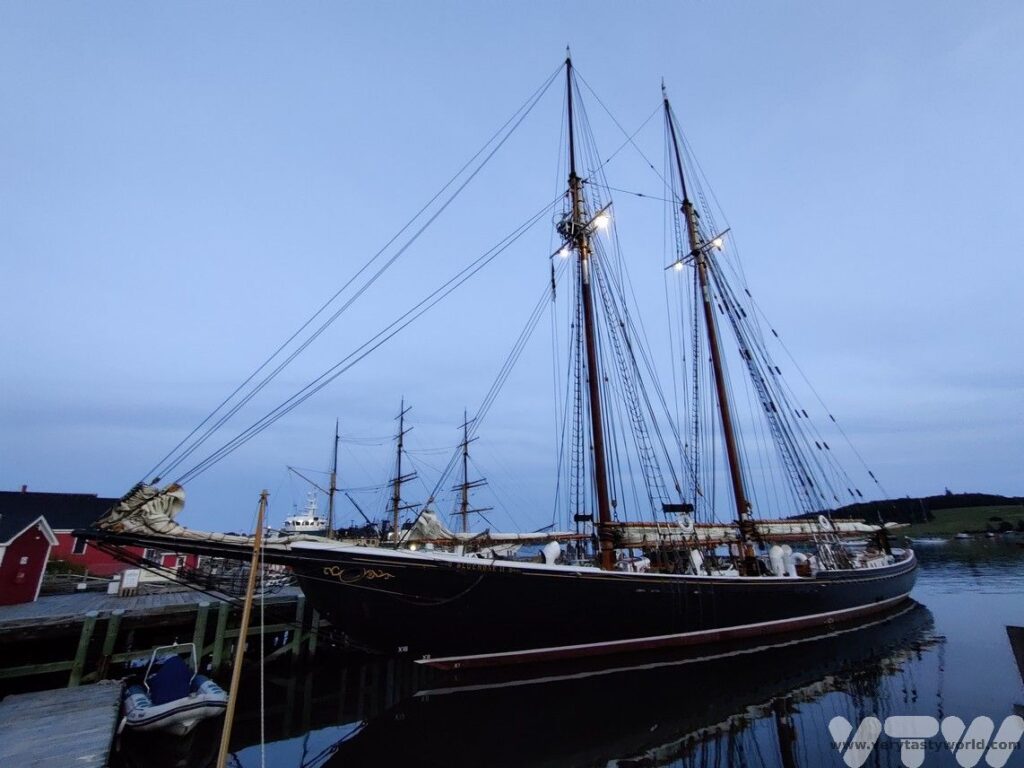
Historically, fishermen went out to fish for lobsters using dories. These small boats would be stacked up in a schooner which would take the men to the fishing grounds. You can see the little dories in the photo below.

The dories would be launched and the catch hauled in. Interestingly, during both World Wars U-boats would torpedo the schooner although they would rescue the souls on board, destroying the main boat, but would leave the crew in the dories to make their own way back to shore.
Lobsters are caught in pots which are designed like wooden crates with internal netting. They are weighted down with rocks to keep the pot on the bottom of the seabed and a wooden or plastic buoy marks its location. Lobsters have a keen sense of smell and are attracted by bait – usually bits of fish – and they swim backwards into the pot. Then they become trapped inside the netting.
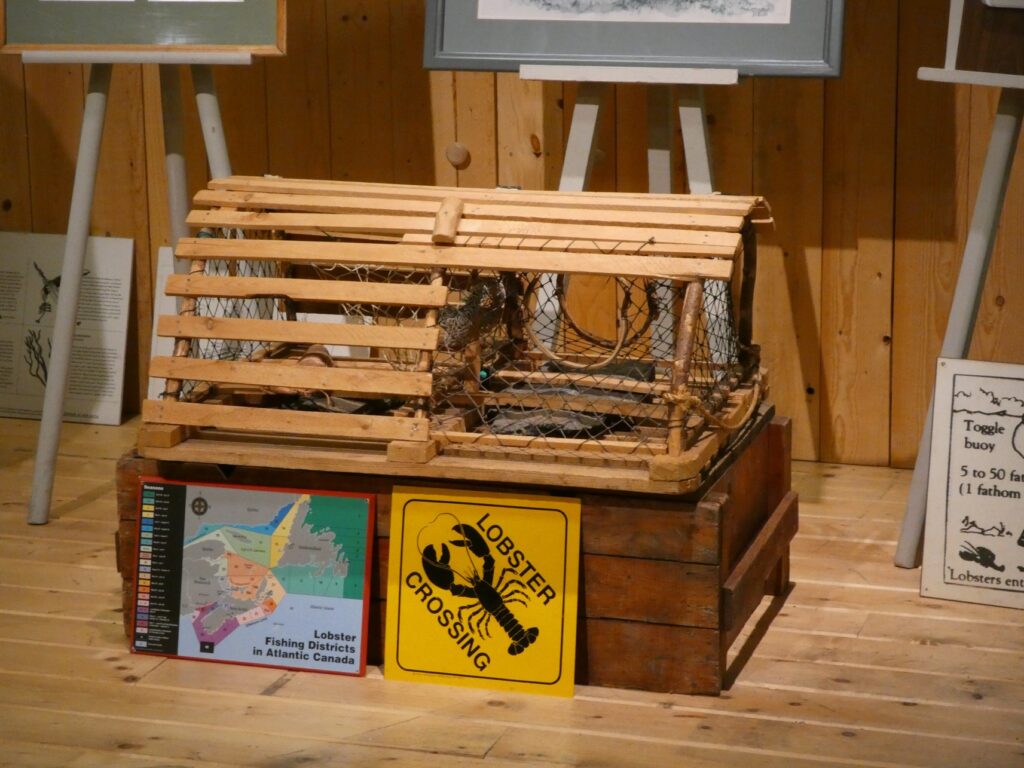
The older type of pot had a wooden catch which local seals learned how to open by rubbing their bellies on it. Then they could work their way inside to get a tasty snack – free food! They have been observed teaching their young pups to open the pots too. Modern lobster pot designs use a bungee catch which is ‘seal-proof’ but also incorporates a hinge that rusts away after 4 weeks or so, allowing lobsters to escape if the pot ever loses its mooring and drifts away to the sea.
Sometimes you may encounter a more unusual species in the pot!
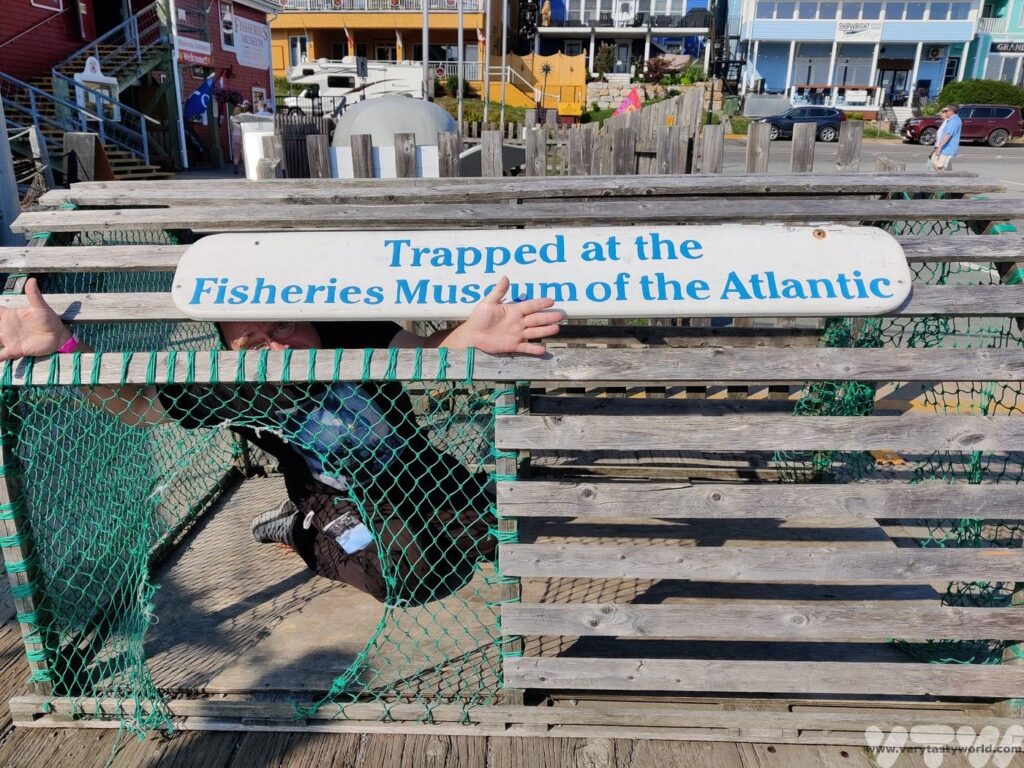
The sea is as much a part of the fabric of Nova Scotia as its beautiful landscapes. The bounty from both land and sea are taken very seriously, but the focus is on enjoying the great ingredients.
Lobster? Food For Poor People?
When visiting Musée des Acadiens des Pubnicos in southern Nova Scotia, a museum which showcases traditional Acadian life, we got chatting to the boatbuilder who had been demonstrating how to build a dory over the course of the summer. He told us that when he was a child, lobster was considered to be poor man’s food. At school, the poorer kids who brought lobster sandwiches would try to swap their lunch for the baloney or peanut butter sandwiches that the richer children brought in.
And perhaps that is why that lobster, considered to be such a luxury food worldwide, is treated with respect but is not elevated to snooty levels here, it’s accessible to all. We ate lobster dinners in family restaurants and diners throughout our trip.
Best Lobster Dinners in Nova Scotia
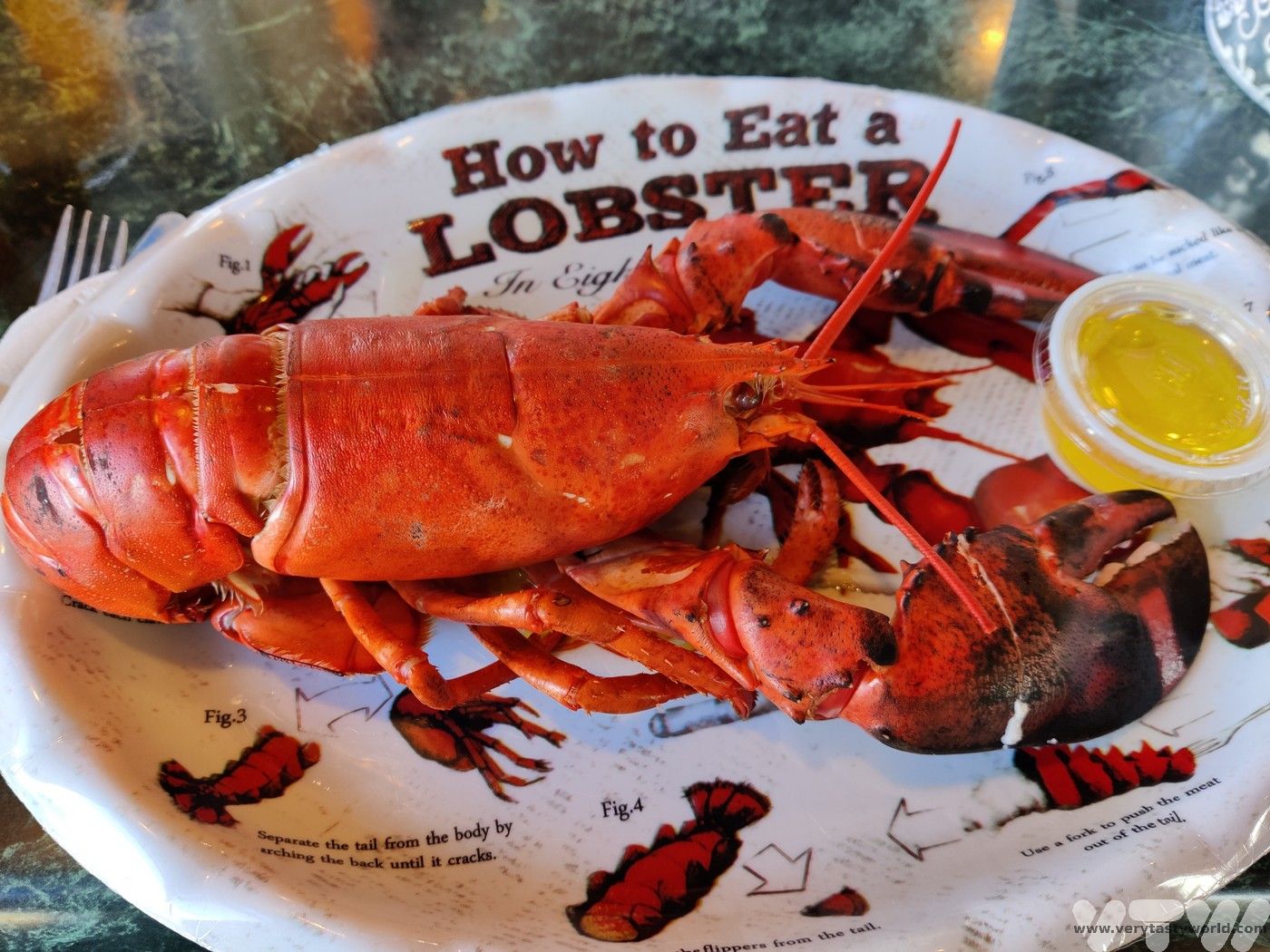
Whole Lobster – a lobster on a plate. Simple. Classic. The lobster is cooked to perfection, the claws are usually pre-cracked and then you are given either crackers or scissors, and picks to extract the meat from the claws and tail. Some restaurants also give you a plastic bib and a card showing you how to extract the meat from the lobster. And a plastic pot containing melted garlic butter for dipping. Often accompanied with fries or salad.

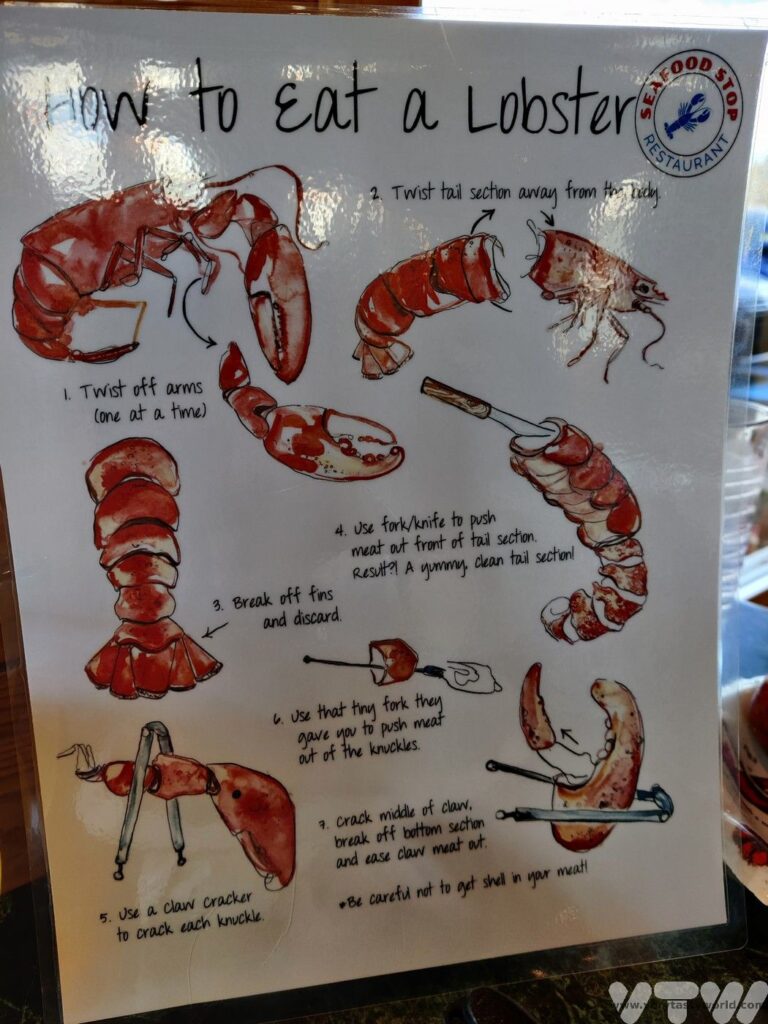
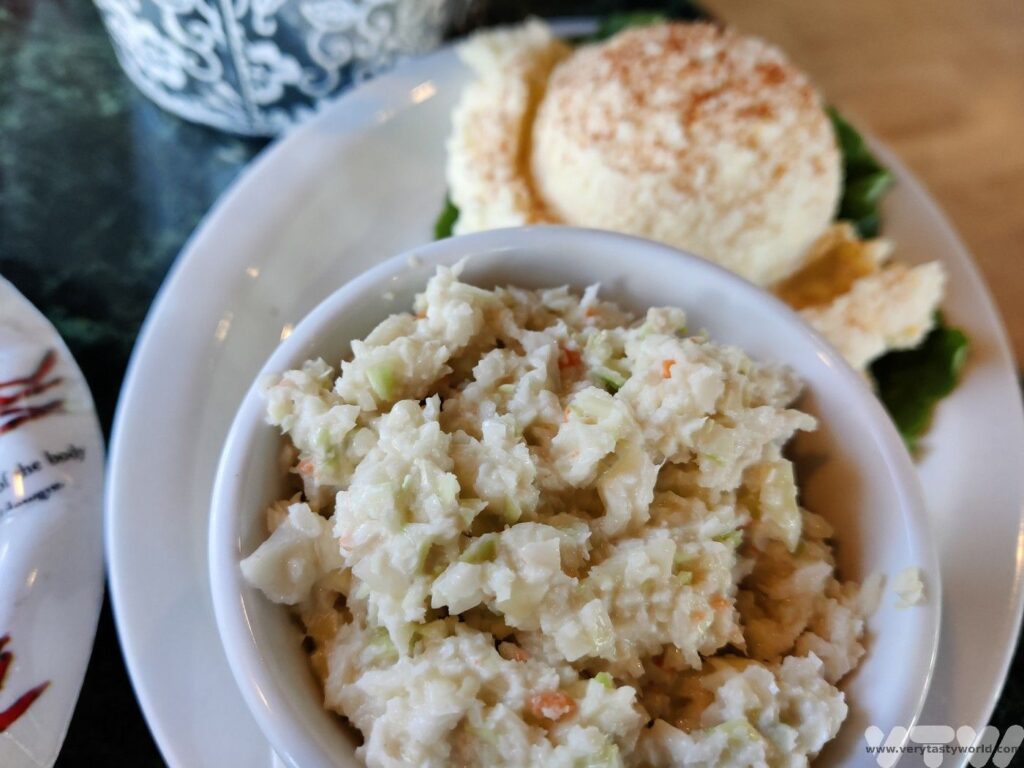
Lobster Roll – another classic that we had long wanted to taste. Tender chunks of lobster meat in a soft roll with salad and dressing. We loved that different types of restaurant had variations that suited their style of cuisine. So an Italian restaurant in Halifax offered a scrumptious lobster ciabatta.
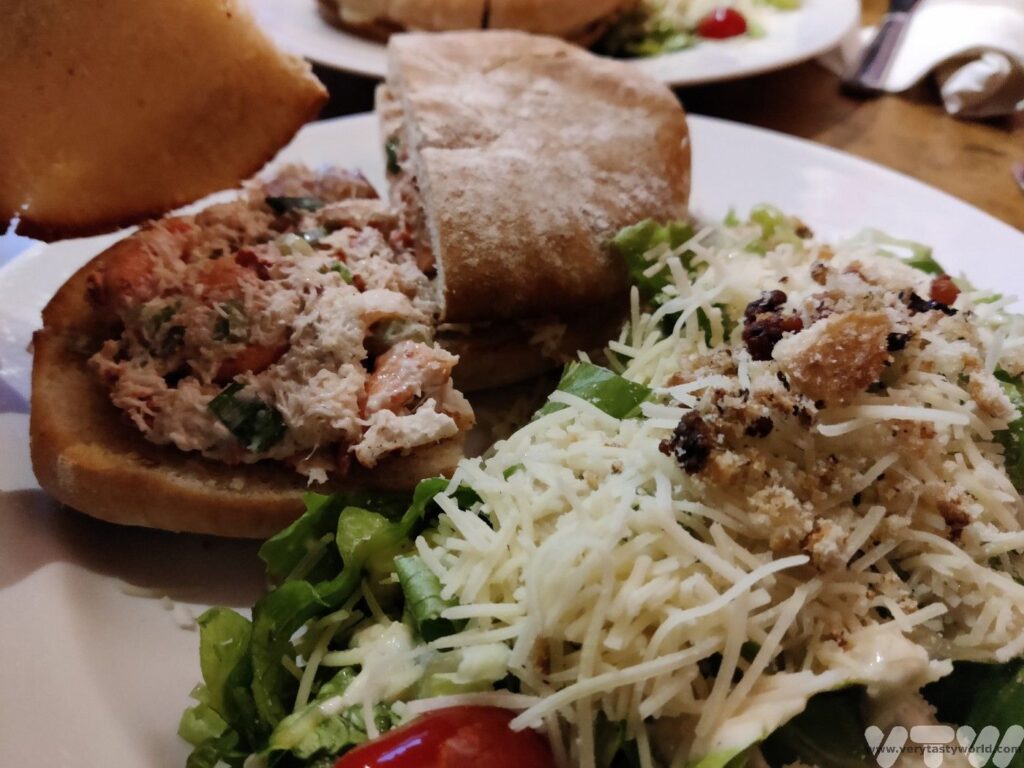
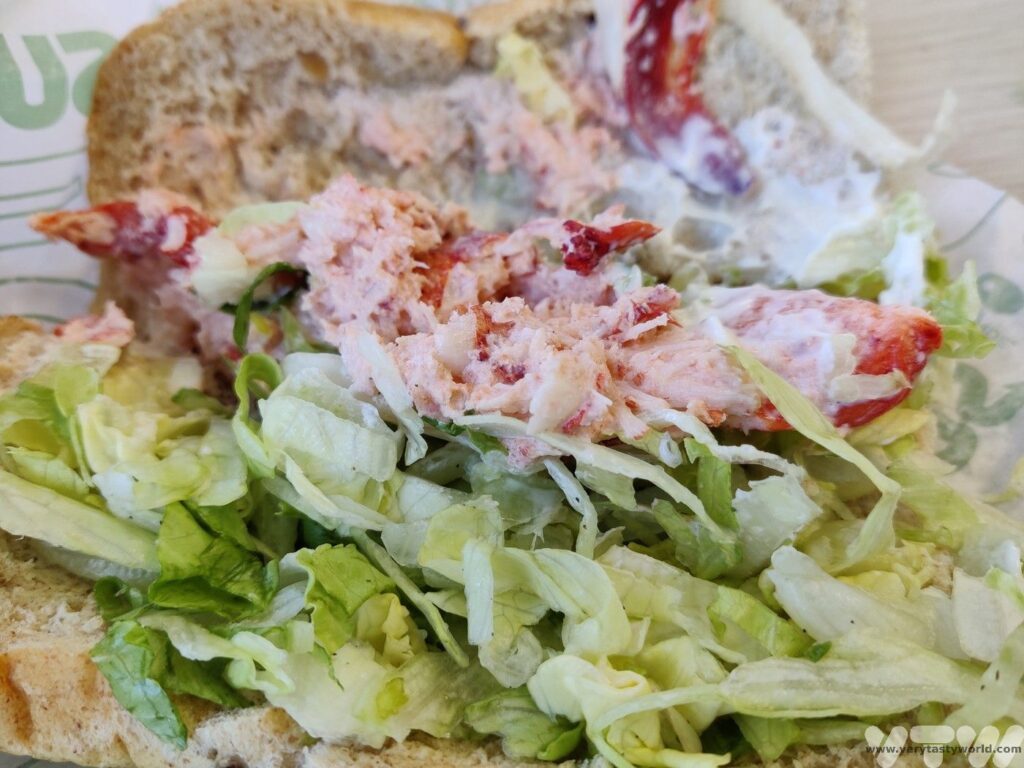
Even the Subway, a fast food restaurant chain, had lobster subways on offer in Lunenburg. They were very reasonably priced and pretty tasty too.
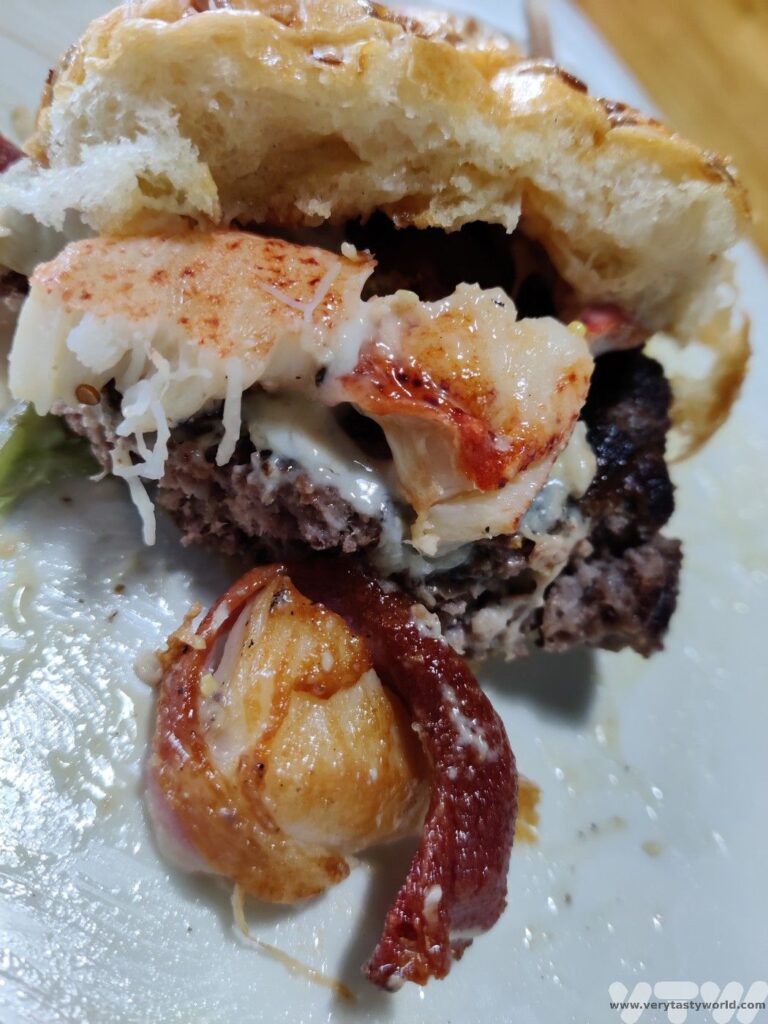
At the Grand Banker Bar & Grill in Lunenburg they take their seafood seriously. The Lunenburger is a smashed meat burger patty with bacon, cheese, rocket, aioli, and, of course, lobster in a toasted artisan roll. If that wasn’t enough, this juicy burger is topped with a bacon-wrapped scallop.

Lobster Mac ‘n’ Cheese – a humble comfort food made luxurious with the addition of succulent pieces of lobster. And nothing like the stingy lobster mac ‘n’ cheese we’ve had in the UK where you need a microscope to identify any pieces of lobster that may have somehow been incorporated in the sauce – here you get luscious chunks of lobster tail and claw.

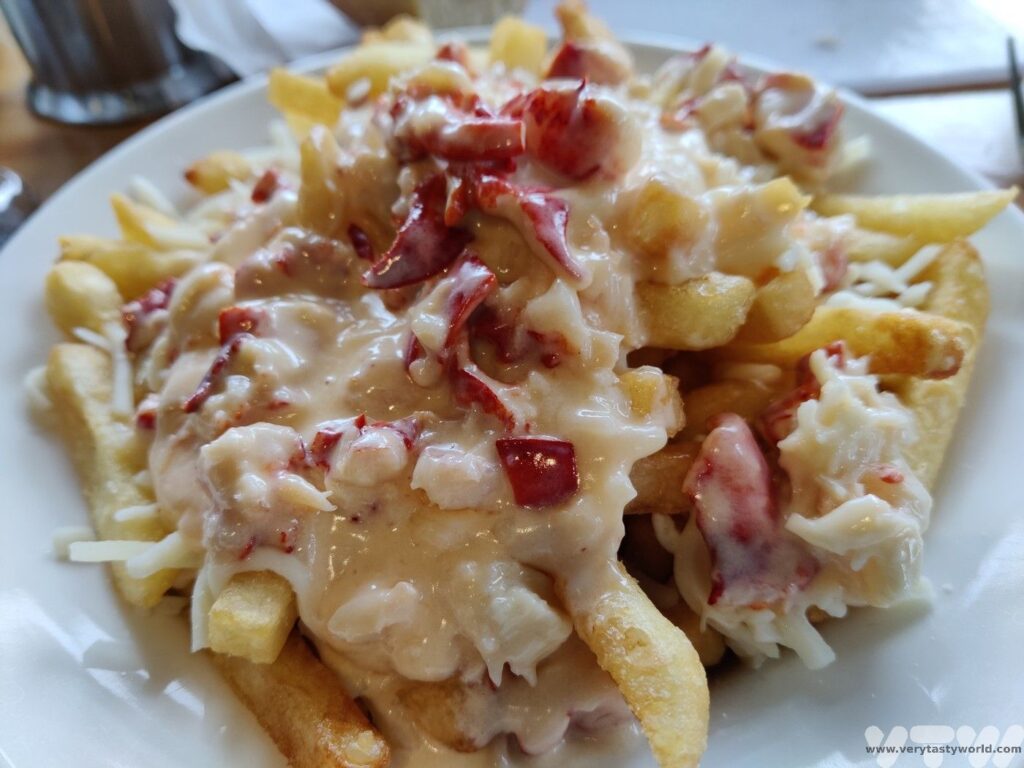
Lobster Poutine – Poutine is Canada’s national dish and we were keen to taste it on our visit. It comprises chips (French fries) smothered in yummy gravy and topped with cheese curds. It sounds kinda wrong to an English girl who likes her chips with vinegar and a Dutch boy who won’t eat chips unless they are accompanied by mayonnaise. But poutine is surprisingly delicious. The key lies with the gravy – the best poutines we ate were served with a thick, rich gravy that was full of flavour. Lobster and traditional gravy doesn’t really work – gravy is really a sauce for meat- so lobster poutine tends to use a creamy sauce.
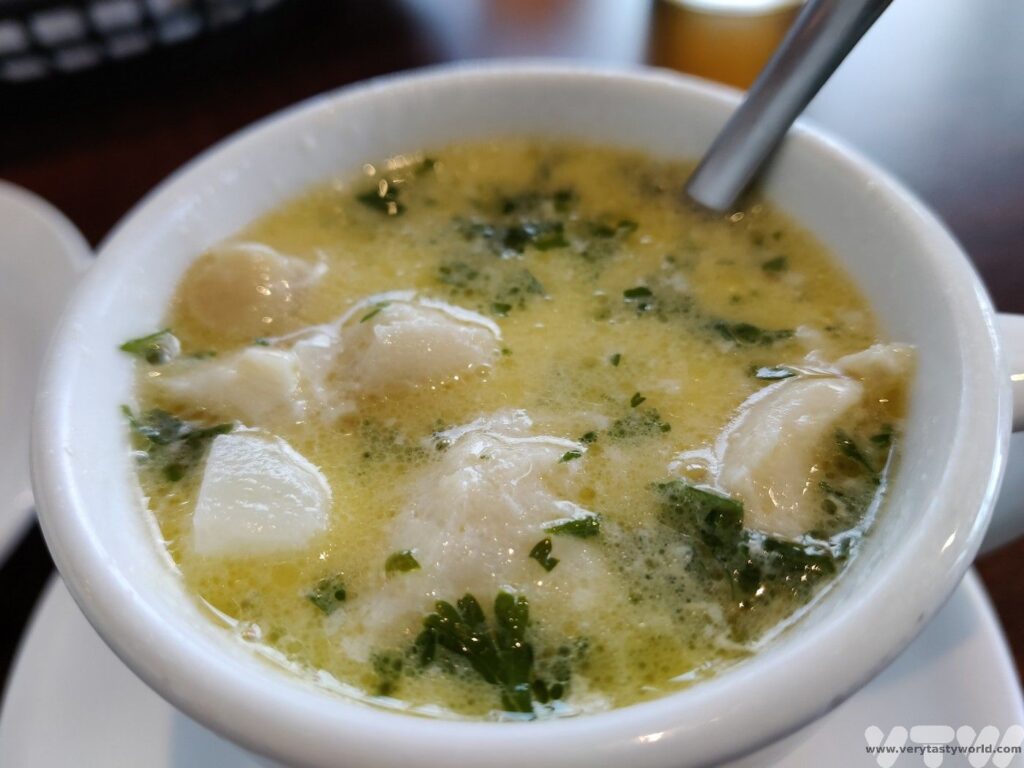
One of the things we most liked about the restaurants in Nova Scotia was that not only were the prices very reasonable, while the lobster may have been the star of the show, you would often be offered the main attraction as part of a full dinner. In Baddeck, on Cape Breton island, we enjoyed all-you-can-eat chowder, all-you-can-eat mussels, a choice of whole lobster or snow crab, followed by a dessert. All for less than the price that a UK fishmonger would charge just for a single lobster that you’d have to prepare yourself. Baddeck Lobster Suppers offers exactly what its name suggests. (And the all-you-can-eat was absolutely good to its word – if you fancied some mussels or chowder, even after finishing your dessert, you only had to ask for more.)

(We did choose the snow crab here, because we had eaten a lot of lobster by the time we reached Baddeck. And it was sublime.)

The food of Nova Scotia was an absolute delight and we thoroughly enjoyed our tasty road trip exploring all that this marvellous province had to offer. But it was the unpretentious deliciousness of the cuisine that stole our hearts. Food isn’t meant to be showy, it’s meant to be savoured.
Related Posts You May Enjoy


- Things to Know Before Visiting Mexico

- A Grand Nova Scotia Itinerary

- The De-light-ful Lighthouses of Nova Scotia

- Discovering the Culture & Heritage of Amerindian Food In Guyana

- A Mexico Travel Itinerary – Exploring Culture, Cenotes and Cuisine

- Things To Do in San Cristobal de las Casas

- Lobster Dinner in Nova Scotia

- Rivers and Rainforests – A Guyana Itinerary

- Best Time To Visit Machu Picchu 2024 Update






This post reminded me of how much I love Nova Scotia! We don’t have lobster in our waters on the Pacific Coast, so it is such a treat to over-indulge in lobster! I also eat an awful lot of chowder, too!
You’ve captured the joy in simply but exquisitely prepared foods served in a relaxed friendly environment so well!
I haven’t been to the Grand Banker for their lobster burger, but it is on my list for my next visit.
Lyn | http://www.ramblynjazz.com
While I am vegetarian and have never tasted lobster, I enjoyed this post.
I completely agree that sometimes fine dining isn’t quite as ‘fine’ as you’d expect. Everything you identified from cost to etiquette can make you uncomfortable. However, I do enjoy dressing up and going somewhere upmarket on occasions.
I haven’t been to Nova Scotia so enjoyed learning about Lunenburg. No wonder lobster is expensive, given the cost of the licenses the fisherman have to pay ! I certainly didn’t expect to learn so much about fishing when I read the post heading. The pictures of the lobster pot are interesting as I didn’t know what they looked like.
I had no idea that lobster could be served in so many ways and your photographs are great.
This is an interpreting post even for someone who will never taste lobster !
You’ve got me drooling in front of the screen! Each photo is a treat for the eyes and whets my appetite to try one of these lobster dishes.
I found it very interesting that lobster was once considered a poor man’s dish… It was the same in Portugal, for example with sardines.
Nowadays they are considered scarce and therefore much more expensive.
Unfortunately I can’t eat seafood so lobster is a bit out of the question for me. I do like the approach in Novia Scotia though that has kept the origins of the lobster and the significance of this meal down-to-earth and not exploited it as you have experienced it back home in a fine dining restaurant. It makes it ever so much more authentic and the Italian version with the ciabatta looked appealing and appetising. If I could eat and chose, the poutine dish would be next on my list as opposed to being served the whole animal and having to crack it open. Regardless if it was served in a traditional style or in a fast food restaurant, I’m sure the lobster dishes were all super fresh and reflected the authentic connection it has to the area.
Carolin | Solo Travel Story
Never had lobster and likely never will, but it’s interesting how the perception of it has changed to being luxurious vs poor food. I like that there’s a “failsafe” for the lobsters if the traps get lost. I’ve often thought lobster just looks like a lot of work to eat. But when in Nova Scotia, right?!
As someone who is born and raised in the New England region of America, lobster is kind of in our blood haha! That being said, I love a good lobster salad or even cold lobster mixed with mayonnaise on a toasted, buttered hot dog rolls. Its definitely one of the simple pleasures of late summer and early autumn for us every year, and it’s an expensive one too! That being said, the lobster poutine looks AWESOME! I would absolutely try it, even though I prefer lobster cold. It’s amazing how lobster started out as a “food for poor people” and has now evolved to become one of the more expensive dishes you could get for seafood. I definitely enjoyed reading this one, and now i’m hungry.
http://www.redsolotraveler.com
oh my god – yes to all of the above. I love Lobster so I would have to try all of the types haha. I did know that it was a poor food originally, it’s crazy how time changes things so drastically. I’ve never had lobster poutine, but when in Canada right? Haha
This post made me dream of having a lobster dinner in Nova Scotia! I love trying out new foods, but I was always confused how to eat a lobster. Even though I’d fancy a whole lobster, it would take me quite some time to learn how to eat it properly.
I also appreciated the insight into the dining culture there—it’s amazing how much thought goes into celebrating local ingredients. I’d love to visit someday and experience this firsthand!