

Discovering the Culture & Heritage of Amerindian Food In Guyana
The South American country of Guyana is still very much an ‘off the beaten track’ location but it has so much potential to become a fantastic tourist destination for those seeking adventure and discovering wildlife in its rainforests and savannah. Around 90% of the country is forested and is home to a huge range of biodiversity. Most of Guyana’s population lives along its coastline but the majority of people who live inland are indigenous and are known as Amerindians. When we visited we were keen to stay in villages, meet the local people and especially to learn about – and taste – Amerindian food in Guyana. We were particularly interested to learn how Amerindian food influenced Guyana’s national dish.
The Amerindian Communities of the Guyana Rainforest
The Akawaio, Arekuna, Macushi, Patamona, Waiwaiand and Wapishana tribes largely inhabit the interior of the country. During our stay we met with people from the Macushi and Wapishana groups. Our Guyana itinerary ensured that we visited a number of villages, often staying in the local lodges.
These lodges are run by the Amerindian villagers and everyone from the group takes it in turns to work there on a rotational basis, ensuring that everybody has the opportunity to gain employment from tourism.

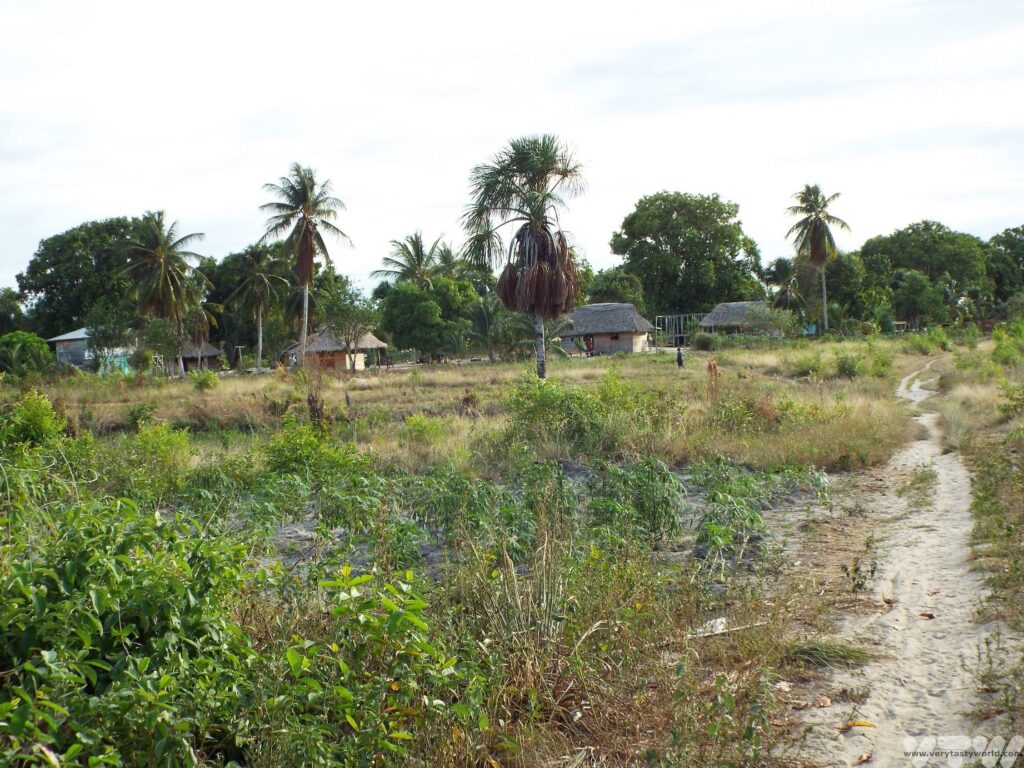
At the Rewa Amerindian Village, at the confluence of the Rewa and Rapununi rivers, our Macushi guide showed us around his village. The local people are experts in using the flora and fauna of the forest as a source of food and water but the villagers also cultivate foods.
Cassava – The Versatile Staple
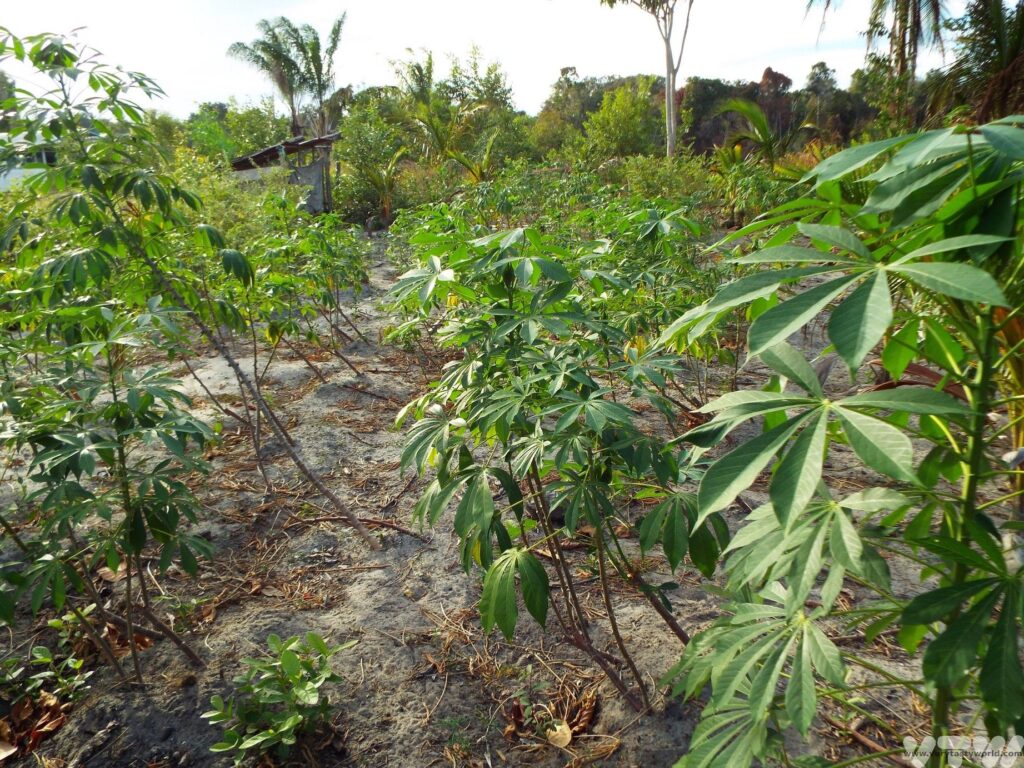
Cassava is a staple food and we saw this crop growing in the fields surrounding the village. It is a strange foodstuff as it has to be processed because the bitter cassava root is toxic in its raw state. There is a surprising variety of foods that can be made from this crop.
The cassava root is harvested and then grated.
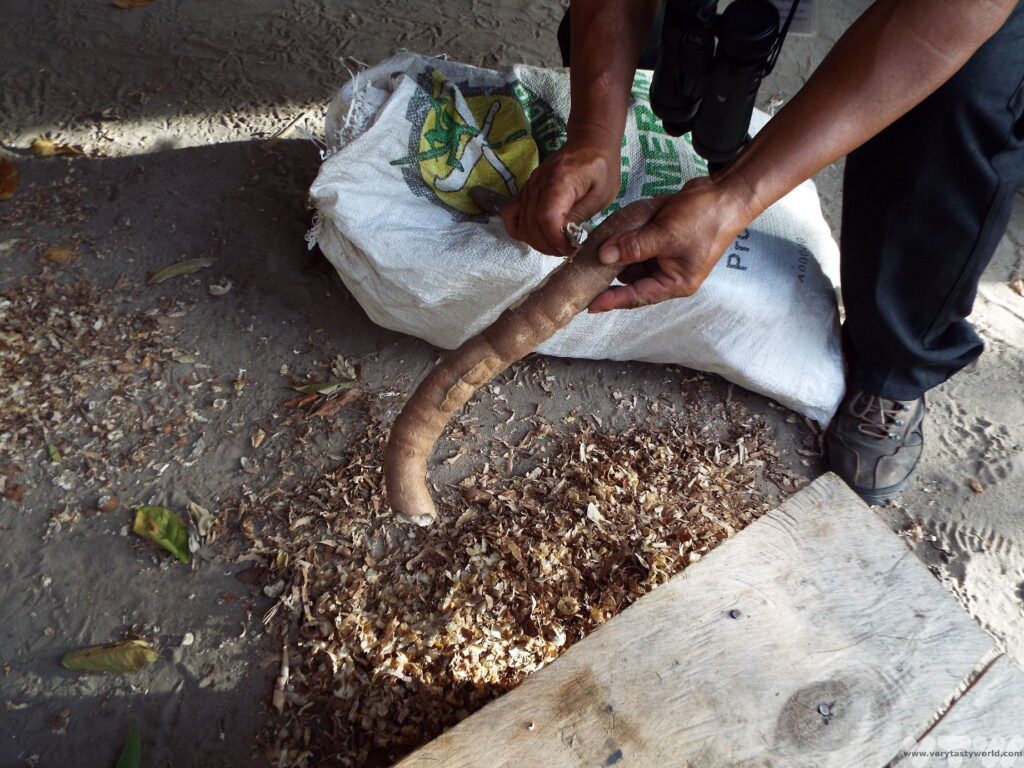
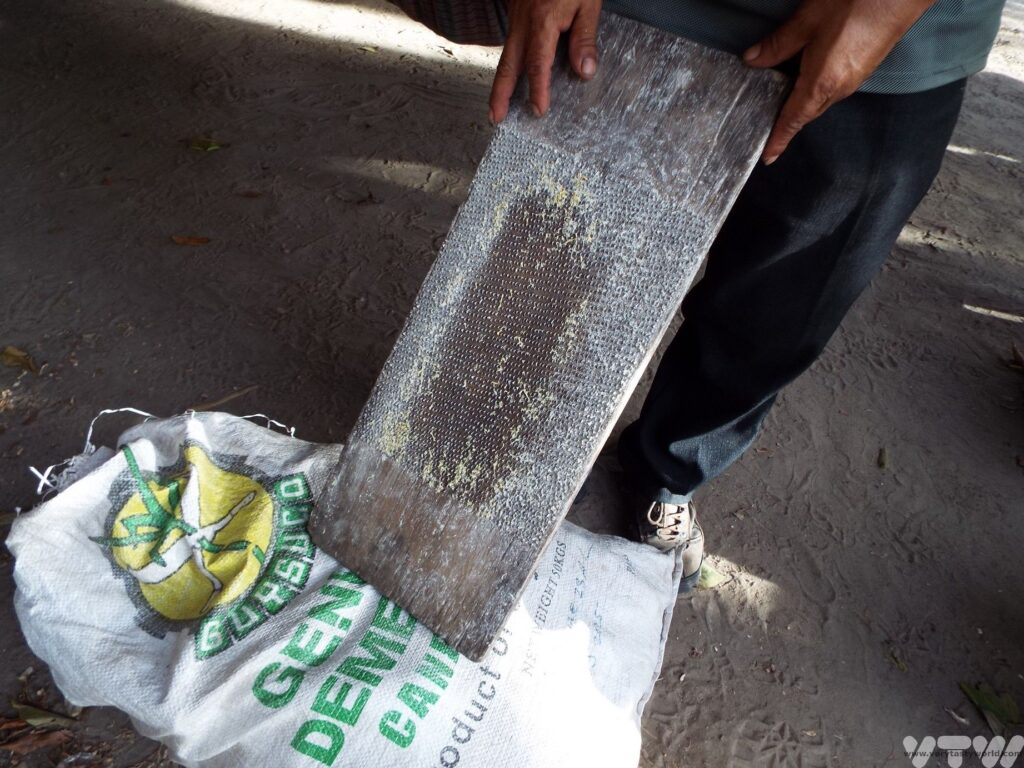
We loved the innovative ways that the villagers grated cassava. There’s the old-school hand grater, he improvised adapted bicycle wheel grater, and the high-tech motorised super-grater.
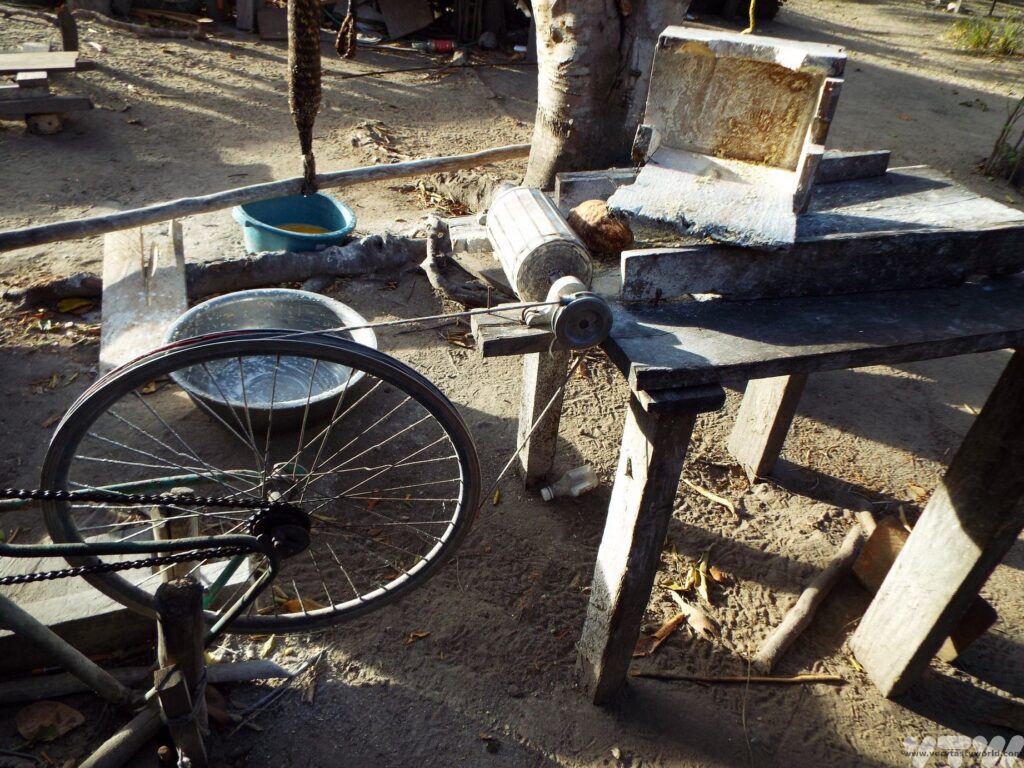
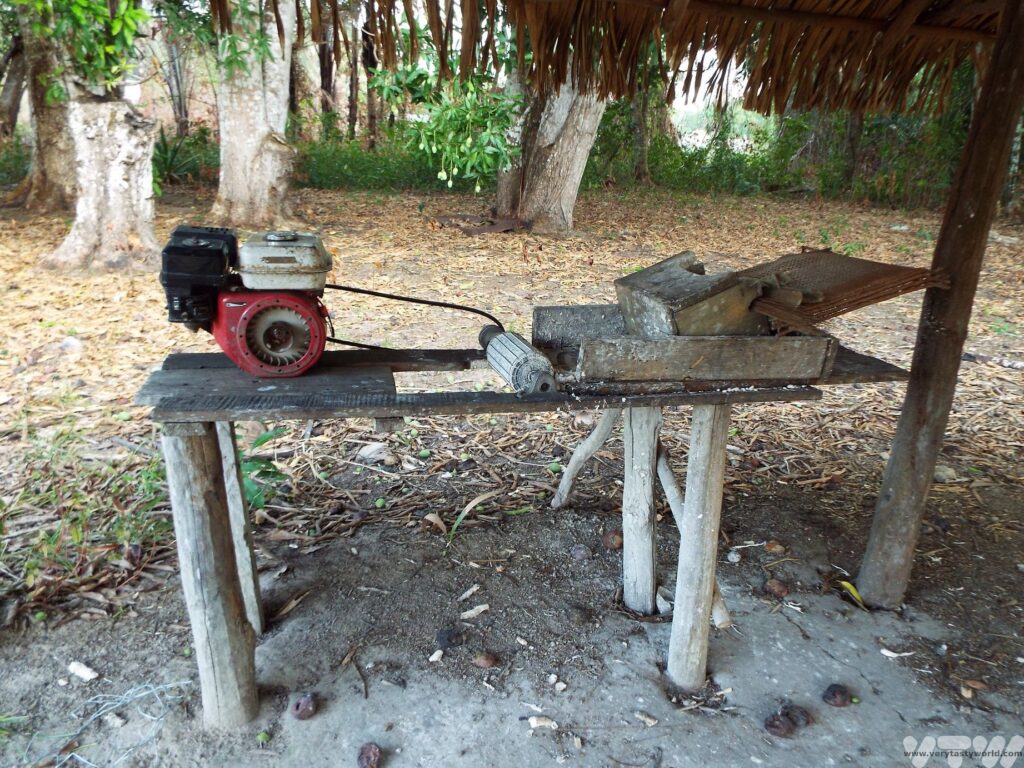
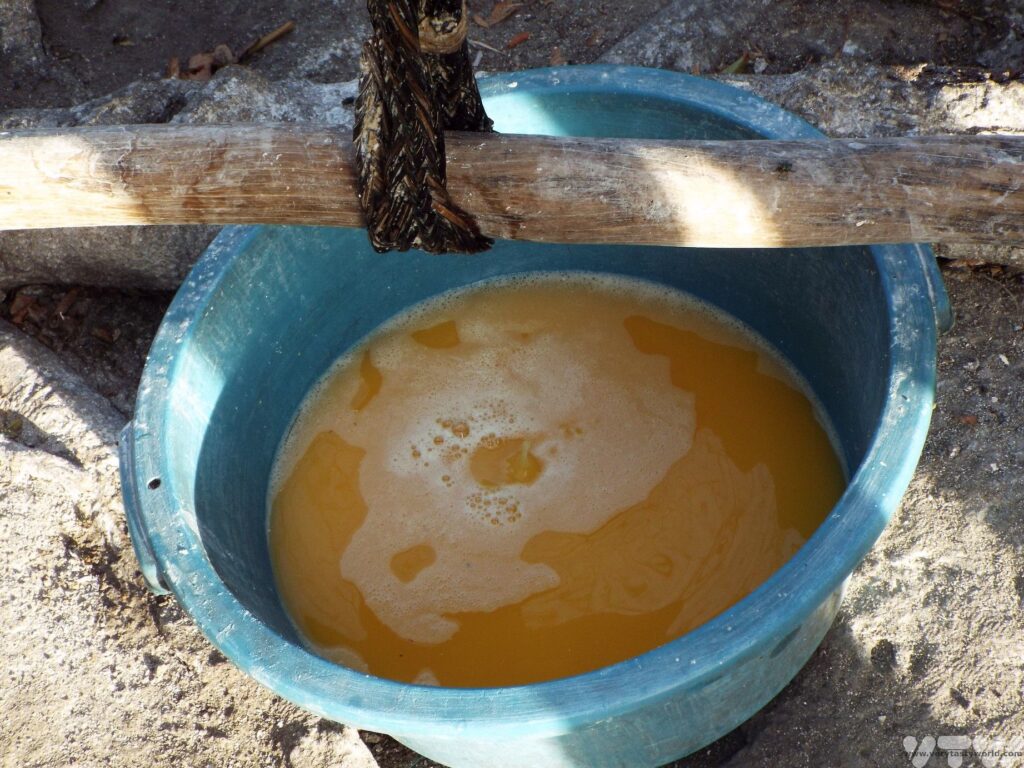
The grated cassava is placed in a woven bag called a matapee and hung over a pot while the juices run out.
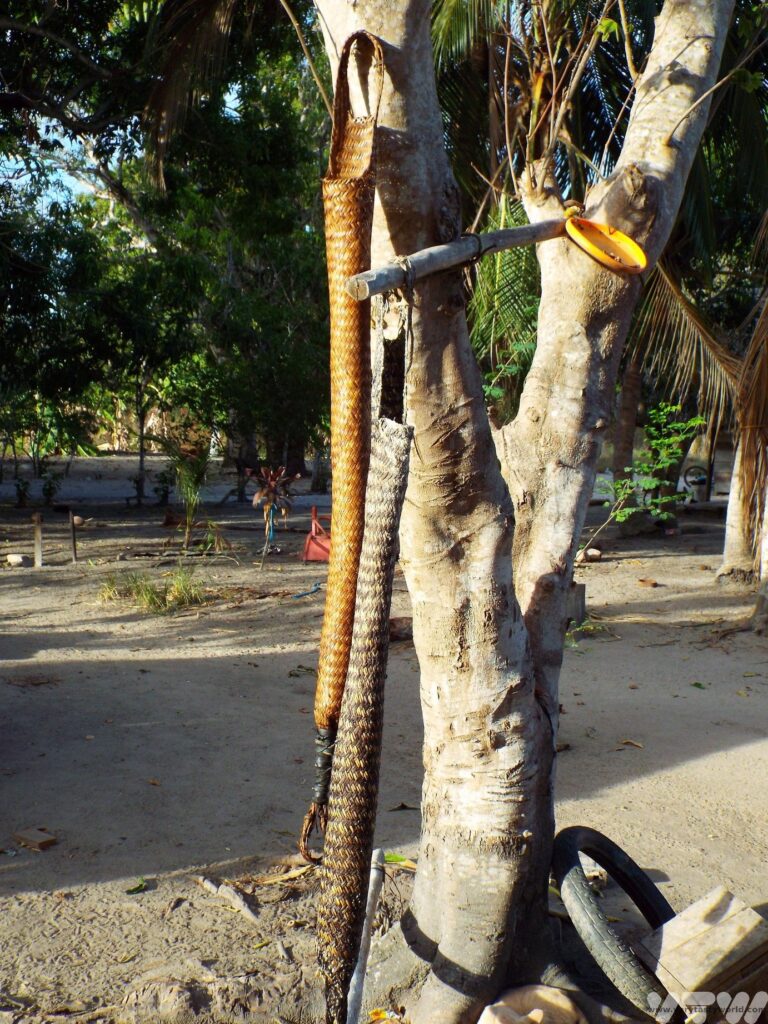
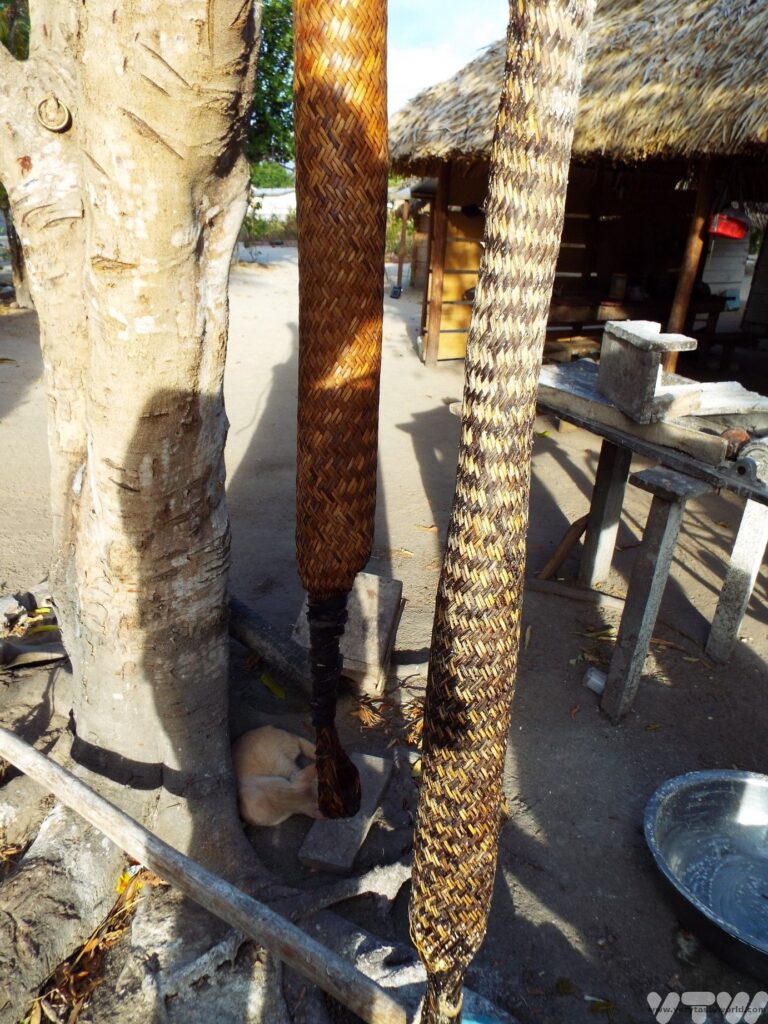
The juice is then boiled and reduced to make cassareep, a dark, sticky liquid that is used in all sorts of dishes.
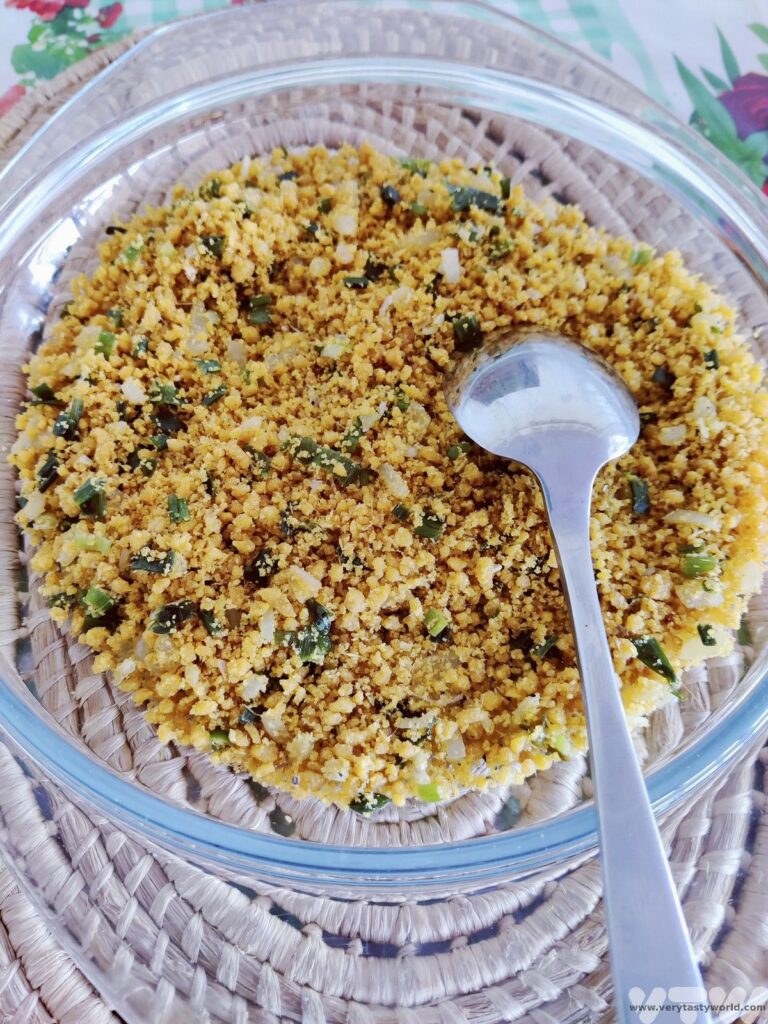
The grated cassava is then sieved and fried to make farine, a coarse flour. It is sprinkled over a meal. We managed to buy some farine when we were in Lethem, the town on the border with Brazil. However, farine wasn’t easily available in Guyana’s capital Georgetown.
Cassava can be processed further. Beiju is a bread made from ground cassava. It is grated into a pan, then baked to form a solid mass like a pancake or a wrap. It doesn’t have the softness of bread as we know it, it has a crunch like a biscuit or a rice cake.
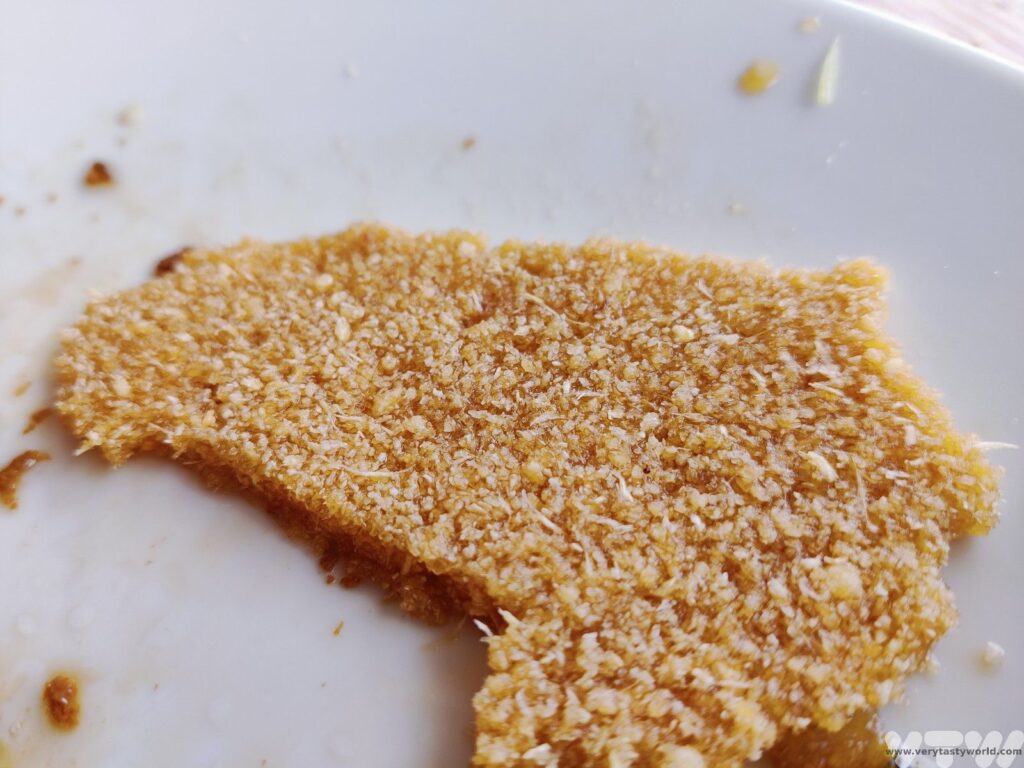
Modern variations of beiju are accompanied with eggs, or cheese and jam.
Hunting, Fishing and Farming
Protein is hunted or farmed and comes in the form of meat and fish. The local villagers showed us the bows and arrows used for hunting.
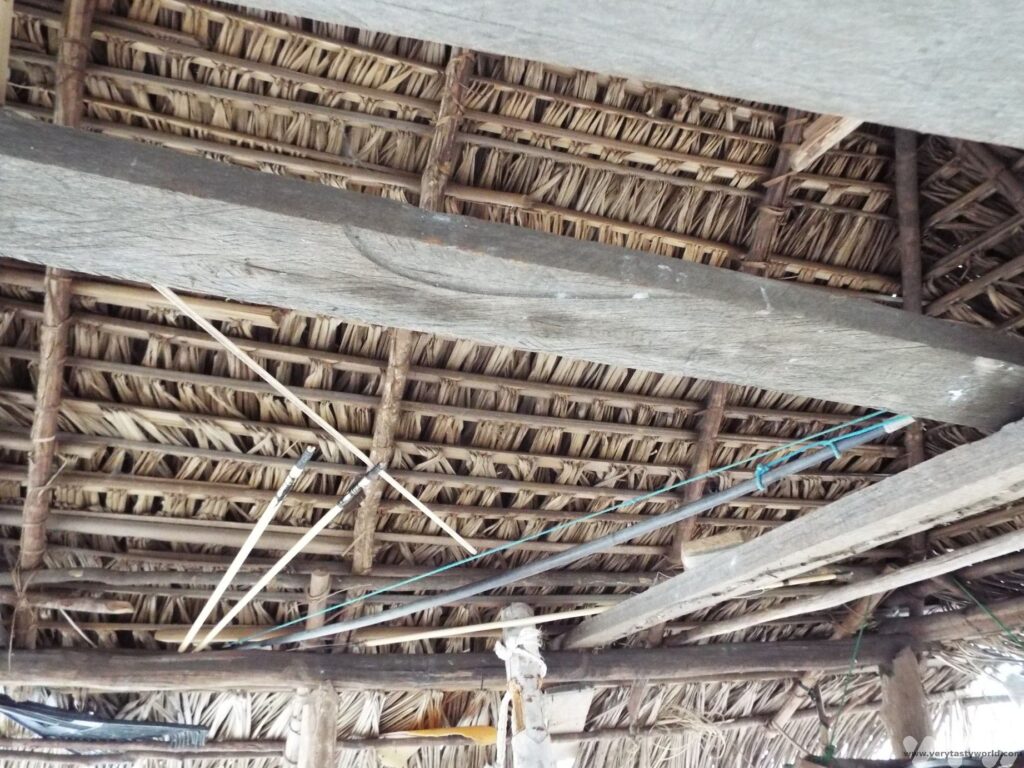
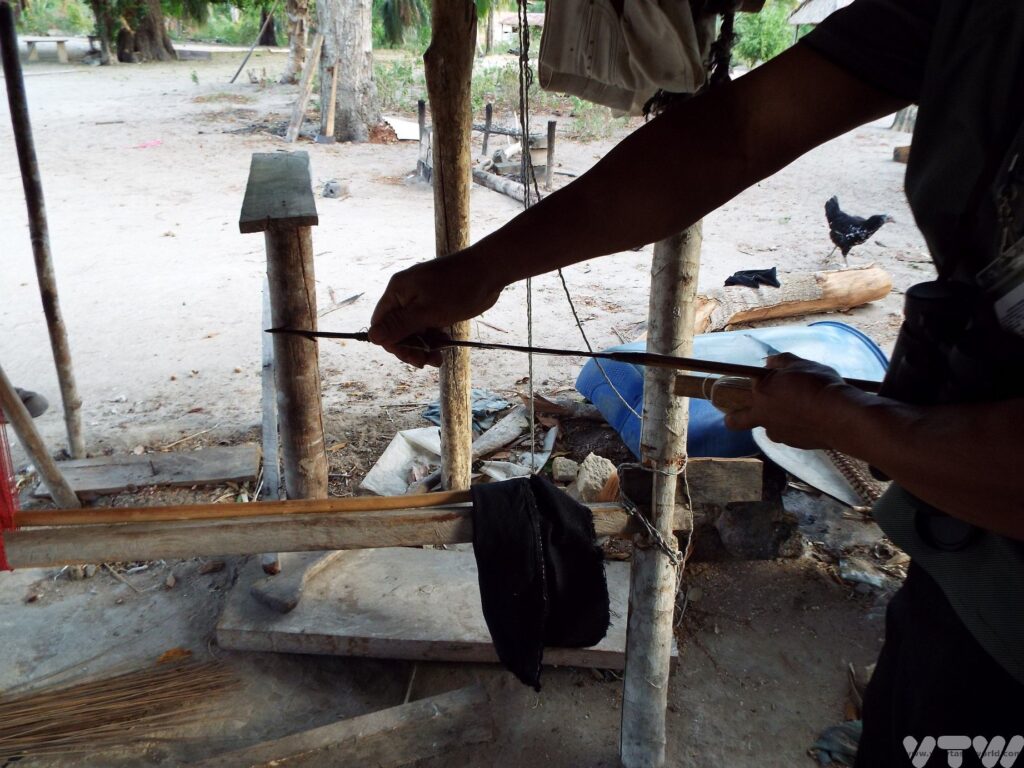
Sometimes poison darts are used – the skin of a particular frog species contains a poison. The frog doesn’t need to be killed, just rubbing an arrowhead on its skin will contain enough toxin to poison small animals.
Guyanaa is known as the ‘Land of Many Waters’ and the extensive local river systems provide many different varieties of fish. Large catches can be dried in the sun to preserve them.

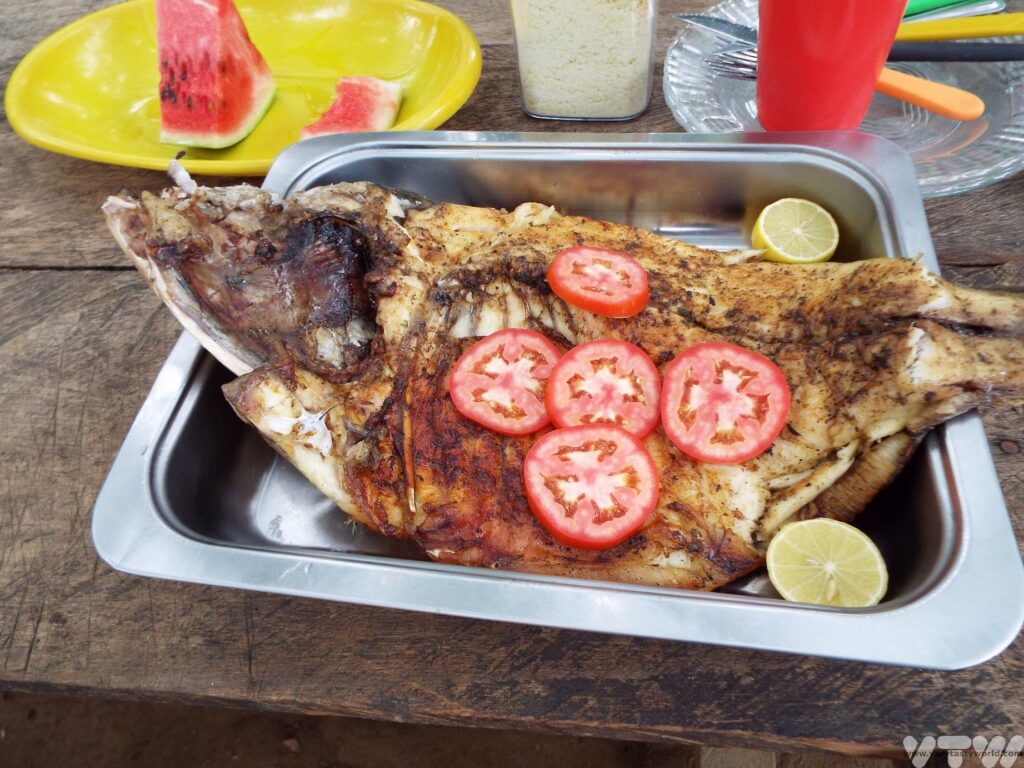
While staying on the shores of the mighty Essequibo river, deep in the heart of the rainforest, we caught a red paku in the shallower waters while on a boat trip. Roasted for dinner, it was delicious.
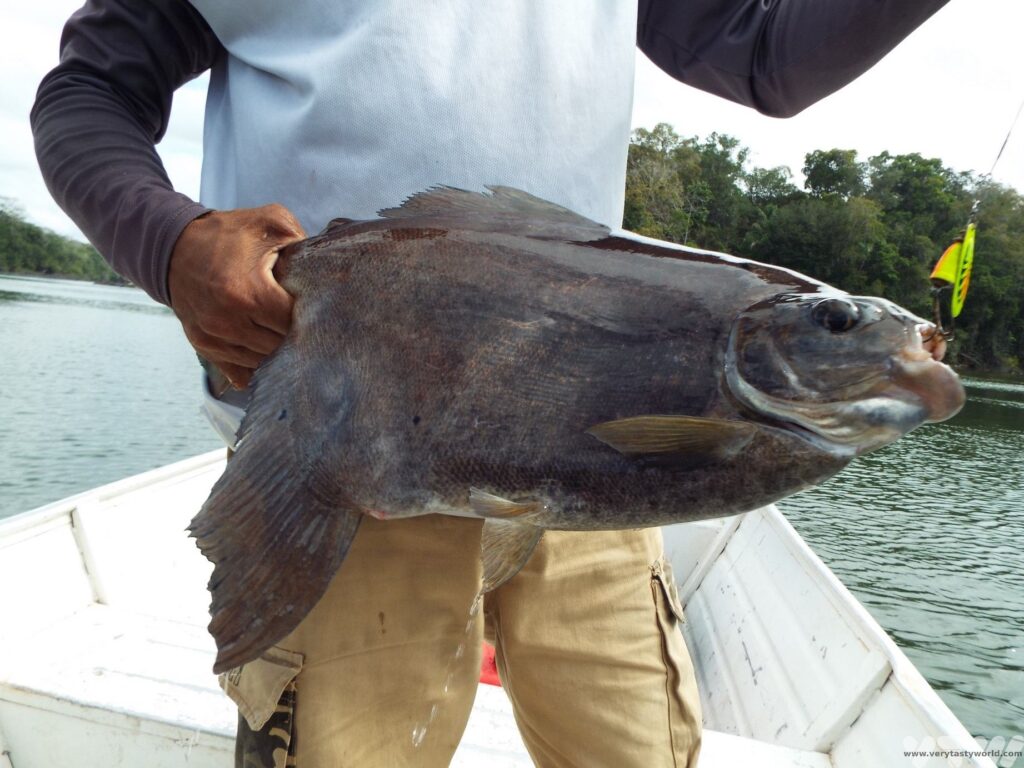
The Tambaqui fish is a delicacy of the Amazon system and again is roasted for maximum flavour.
The sheer size and variety of species in the rivers is astonishing. Some of them are monsters! Local people know exactly where in the river specific species can be found, and whether they reside in deep or shallow sections.
In terms of land mammals, the agouti is a large rodent and a useful source of protein.
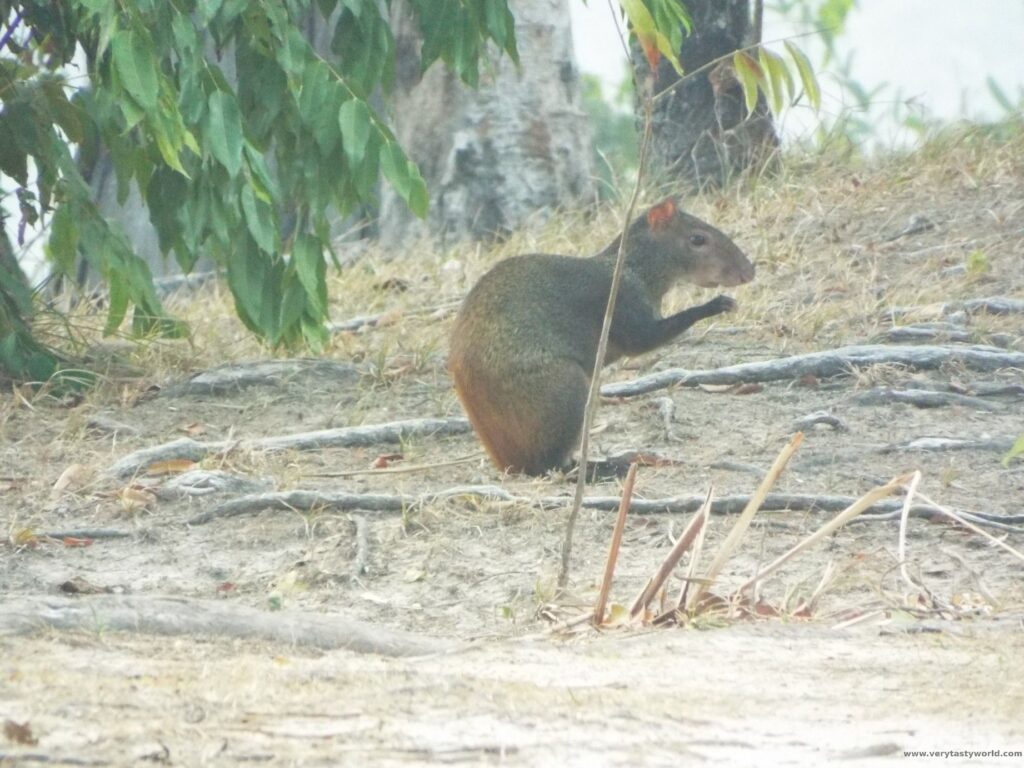
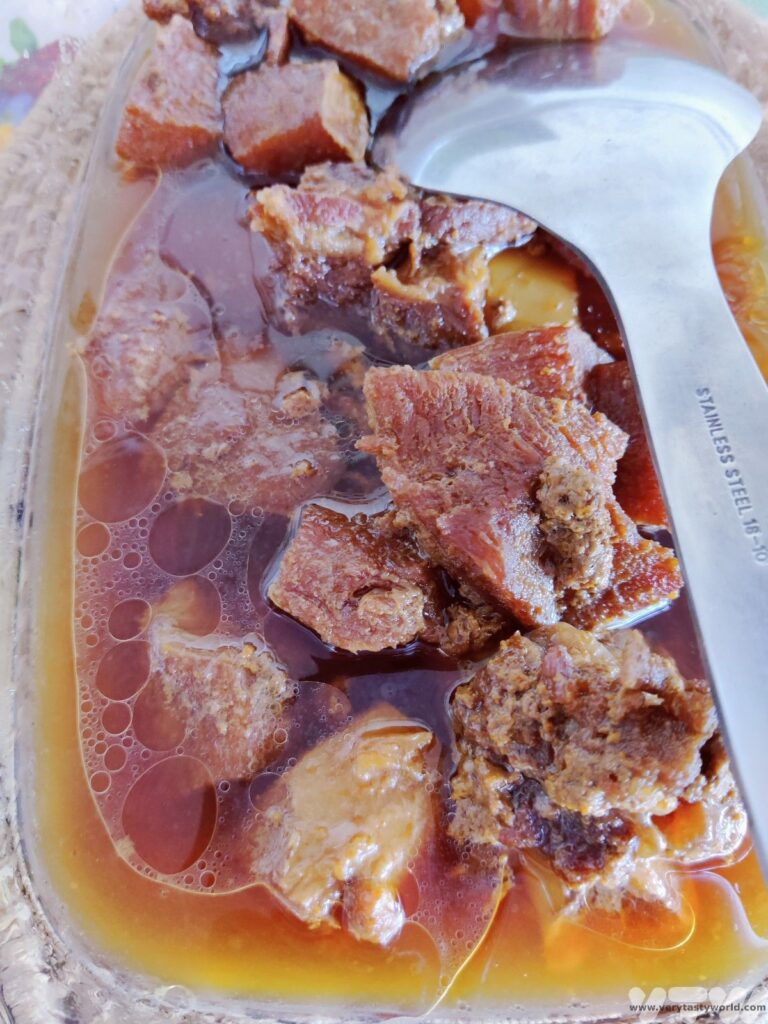
We ate more conventional meats on our journey – pork, chicken and mutton was the standard fare on offer. Meat cooked in cassareep, the sweet reduced cassava juice, was sticky and sumptuous.
The Origin of Pepperpot
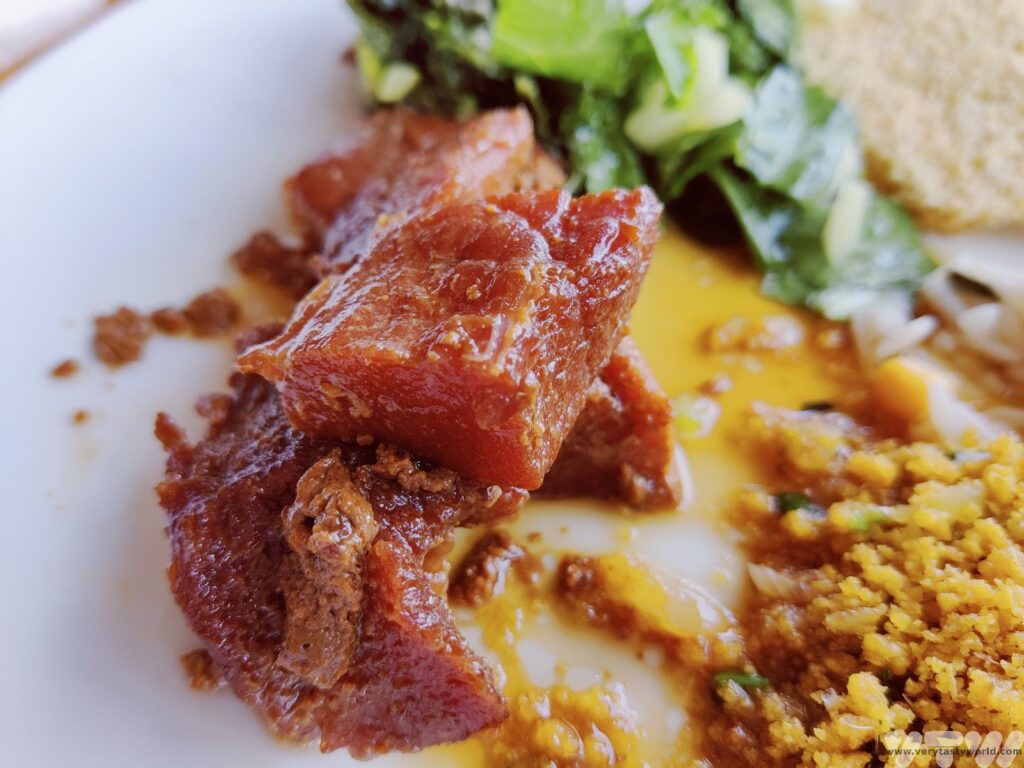
Guyana’s national dish, pepperpot, is derived from Amerindian food. Pepperpot is a celebratory dish, a stew containing meats such a succulent pork and flavoursome mutton, cooked in a cassareep sauce and enhanced with cinnamon and hot chilli peppers. It is served with chunky white bread for dipping in and absorbing all those delicious flavours.
The original Amerindian dish is a stew that contains all sorts of ingredients including meat, fish and vegetables, as well as bones which add flavour to the stock. The dish is cooked with cassareep and farine. Beiju and choice cuts of meat would be dipped into the stew. Apparently the clay cooking pot was never cleaned, which ensured that it retained the juices of the stew.
Sadly we weren’t visiting Guyana during a time of celebration so never managed to try pepperpot but we did find some cassareep to take back with us, so will try to make it at home.
At one of the villages we asked our hosts whether it would be possible to enjoy local food. They couldn’t manage to rustle up a breakfast, but they delighted us with a lunch that comprised traditional ingredients – meat cooked in sweet and sticky cassareep, farine and vegetables
Fruits From The Forest
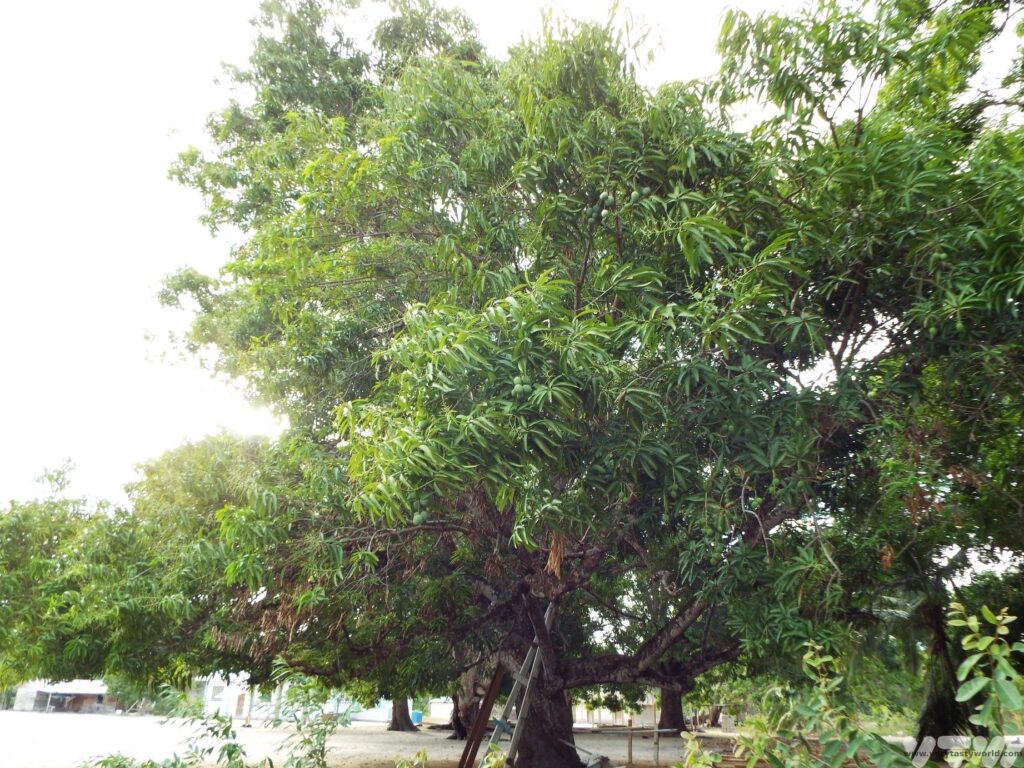
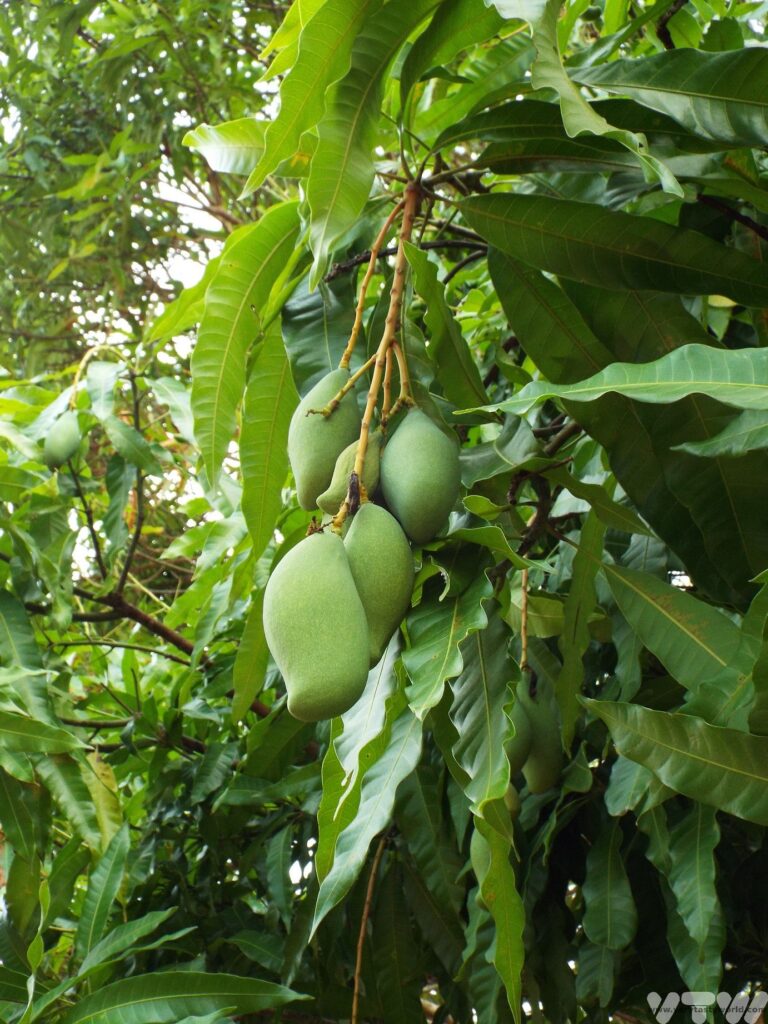
Fruit and vegetables are also important in the Amerindian diet. These include wild limes, mangoes and pineapples that grow in the forest.
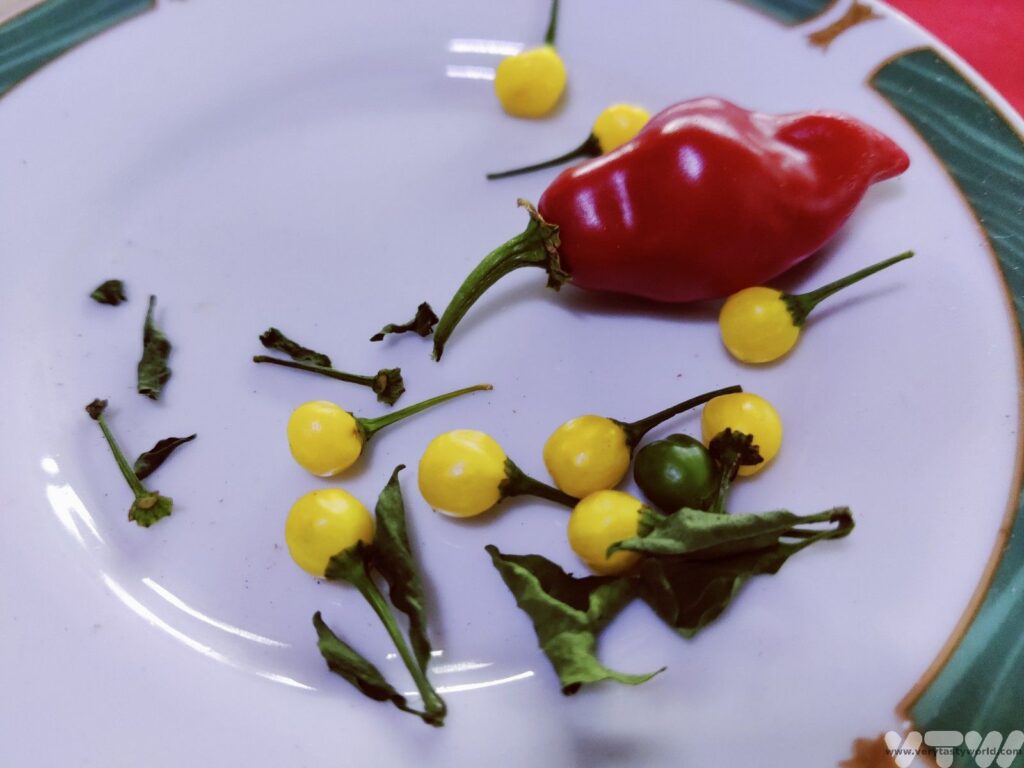
Capsicum frutescens is a wild chili pepper – mega hot – that adds significant spice and heat to a meal.
From Toxic to Tasty – Roasting Cashew Nuts
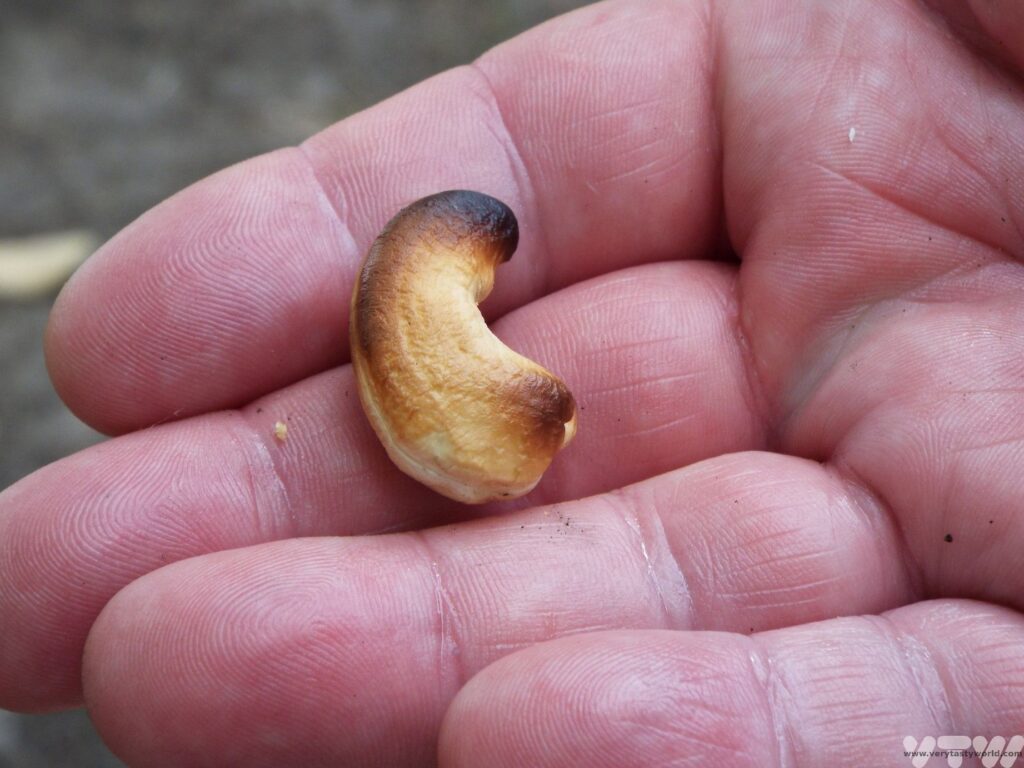
It was fascinating to learn that so many essential foods in the rainforest are actually toxic. Like cassava, cashew nuts need to be processed before they can be eaten. The nuts grow on trees.
There are two parts to the cashew, the real fruit and the seed, the latter of which provides the nut. The actual fruit is not only toxic, it is corrosive.
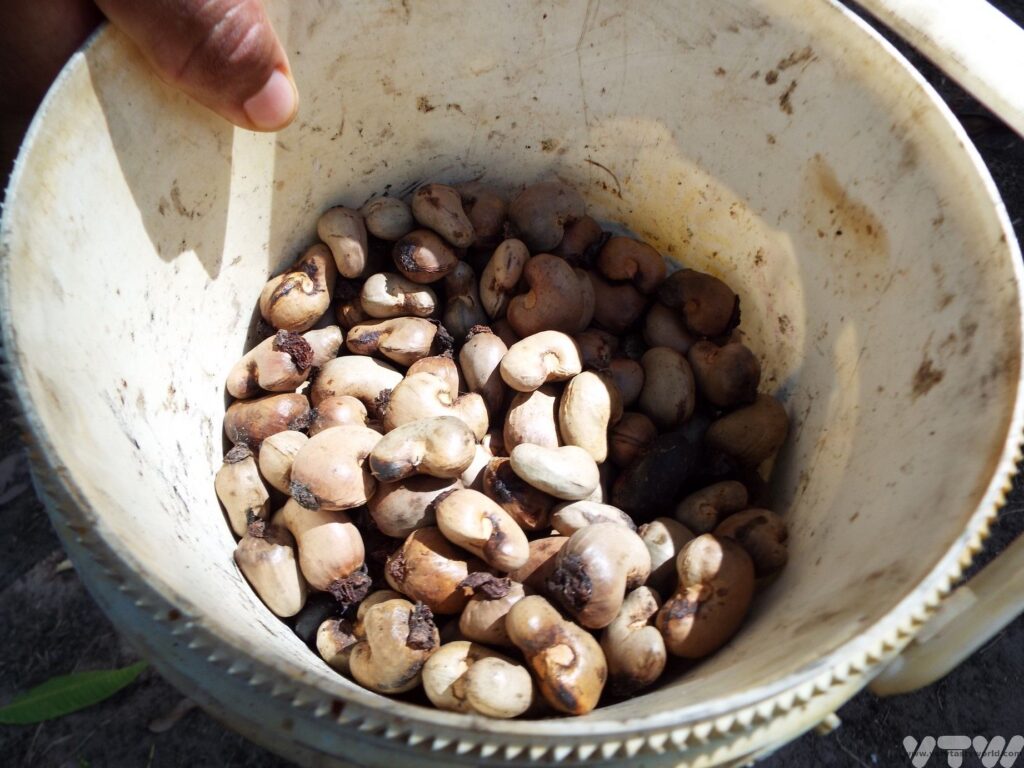
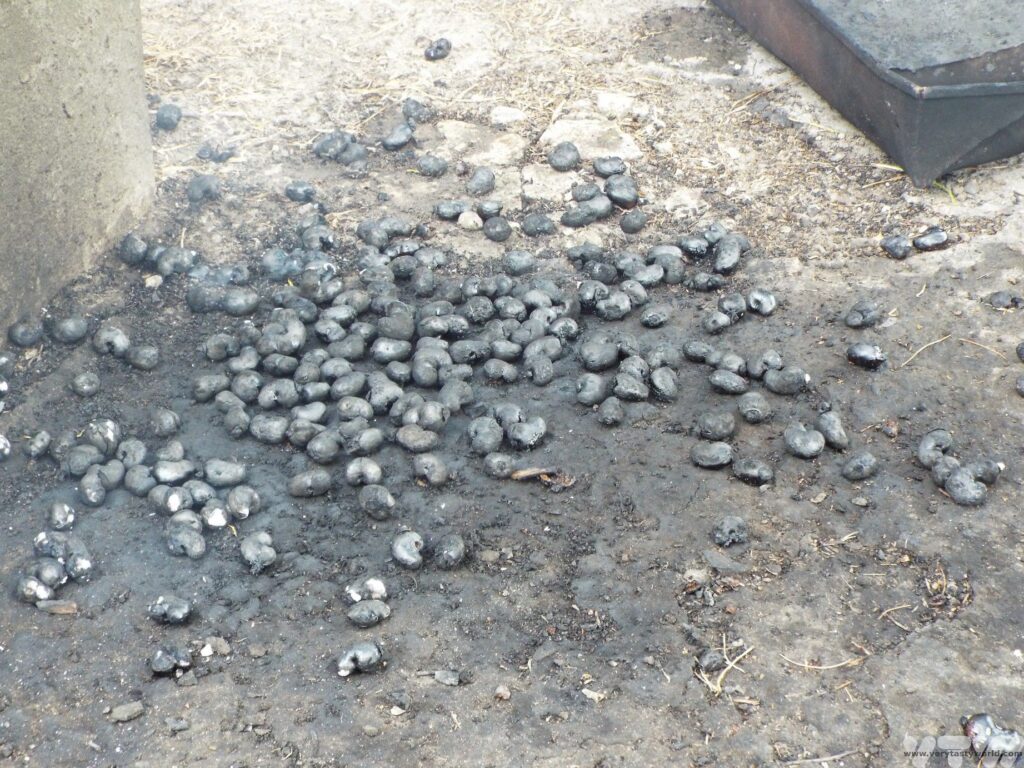
The way to make the cashews edible is to bake them. They are put on a tray which is then placed over the fire. They start smoking gently at first and then go bam in a whoosh of flame! All the toxic vapours evaporate.
The burnt blackened shells are bashed open in order to remove the nut.
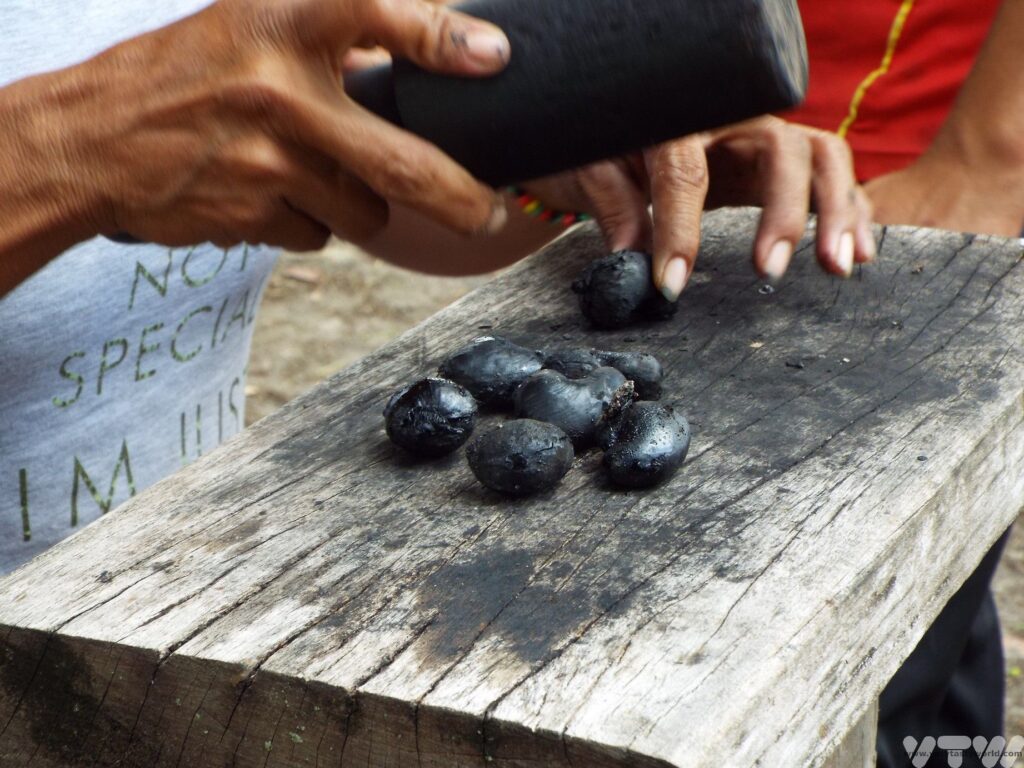
Roasted cashews, straight from the fire, are utterly delicious – absolutely the very best way to enjoy cashews. Unless, of course, you’re also enjoying them with local tipple – fresh lime juice and rum! (Which is a Caribbean enhancement.)
Final Thoughts
Guyanese society is a blend of many different cultures and religions – from African, Indian and European backgrounds as well as the indigenous peoples. Guyanese cuisine reflects this rich cultural heritage with Caribbean cook-ups, Indian curries and rotis, and European fruit (black) cakes. But, importantly, the food of the Amerindian people has not only permeated the cuisine, it forms the basis of Guyana’s most celebrated dish.
Related Posts You May Enjoy



- Things to Know Before Visiting Mexico

- A Grand Nova Scotia Itinerary

- The De-light-ful Lighthouses of Nova Scotia

- Discovering the Culture & Heritage of Amerindian Food In Guyana

- A Mexico Travel Itinerary – Exploring Culture, Cenotes and Cuisine

- Things To Do in San Cristobal de las Casas

- Lobster Dinner in Nova Scotia

- Rivers and Rainforests – A Guyana Itinerary

- Best Time To Visit Machu Picchu 2024 Update


Thanks so much for reading. We hope you enjoyed this article. If you’d like to keep up to date with new posts and recipes, please subscribe to our newsletter or follow us on social media – Bluesky, Facebook or Instagram. We always love hearing from you and would be delighted to read your thoughts about this article.


Fascinating how much of the food is toxic before being prepared. I had no idea that this was the case with cashews or cassava. Or that I’d use alliteration. 😉 One of my former neighbors – when I lived with my folks as a kid – was from Guyana. Her kitchen always had some pleasant aromas wafting about.
This post reminded me of my time in a Matsiquenka village in the Amazon region of Peru (also run as a cooperative), where I learned about their hunting, fishing and foraging traditions. This post has put Guyana on my list.
Your photo of the drying racks shows how large the fish can be. I only caught little ones when I visited. I wish I had seen cassava processing — it looks fascinating. I had no idea that cassava and cashews were toxic without processing. I’m going to appreciate them so much more now.
A very unusual travel post but highly interesting, especially learning that most foods from the jungle are actually toxic. I wonder how the locals found out that through processing and roasting the toxicity could be eliminated and get edible food out of nature. None of the dishes you mentioed sounded overtly adventurous but exotic and delicious. Ripe mangoes, fresh chillies and ceshews would add an exciting twist and bring freshness to any meat based dishes. I loved that you were abe to experience the cuisine in Guyana and I am interested how much of their cooking habits you have replicated at home.
Carolin | Solo Travel Story
I had no idea cassava was such a versatile food. Or that it was toxic. Actually, same with cashews. I’ve never had them that fresh either, I’m sure they’re so good. While the local wildlife isn’t appealing to my palate, I appreciate the local hunting and fishing traditions and making use of what is around. Great post about a place I knew little about
I’m not a meat eater so I’m not sure how easily I’d handle a trip to Guyana – maybe just lots of roasted cashews with fresh lime juice and rum!! It’s really interesting to learn about the different ways of hunting and fishing used by the local communities – I wonder how they first discovered the different ways of making toxic food edible as I’m not sure I’d want to be the guinea pig to try different cooking techniques!