
A Bhutan Itinerary – A Magical Week in a Mountain Kingdom
Imagine a country where the king prioritises Gross National Happiness over Gross Domestic Product and there isn’t a single traffic light in its capital city. There are very few countries in the world that can be described as unique, but Bhutan, a tiny kingdom nestled in the Himalayan mountains, has genuinely managed to retain its cultural identity. It is a fascinating place to visit. Our Bhutan itinerary will take you across the mountains to visit beautiful dzongs (fortress-monasteries), hike across spectacular scenery, view the local wildlife and stay with a family on their farm.

Please note that this post contains affiliate links. If you click through and decide to make a purchase we will make a small commission, at no extra cost to you, which will help towards the costs of running this site. Thank you for your support!
This itinerary is for people who like history, culture, nature and hiking. We visited during late February/March so that we could see the black-necked cranes. If you are visiting in the summertime, the cranes won’t be resident, but the Gangtey area is delightful for walking and makes for a great opportunity to explore rural Bhutan.
How To Get To Bhutan
Most people fly into the country’s only international airport located in Paro. There are two airlines Drukair and Bhutan Airlines. You can fly from Nepal, India, Bangladesh, Thailand and Singapore.
There is no public transport at the airport so you will need to use a tour operator or ask your hotel to arrange transport, or you can take a taxi.
It is possible to drive from India at four crossings: Samtse, Phuentsholing, Gelephu and Samdrup Jongkhar.
Most visitors will need a visa to visit Bhutan. The government website has the details.
Notes on Visiting Bhutan
Until very recently it was not possible to travel in Bhutan independently – you would need to find a tour operator who would arrange accommodation and transportation. The most convenient way to get around is to hire a guide and driver. You cannot hire a car and self-drive in this country and you must be accompanied by a guide when visiting certain attractions, even if you are travelling independently.
There are likely plenty of tour operators in your country who can arrange a tour but they will usually subcontract the trip to a local operator. You can usually save money but going direct to a local Bhutanese tour operator. We did use a local tour operator and they were fantastic – our guide was called Dawa and our driver Tring, who were both delightful. One aspect of travelling with an guide was that we would request particular sights and activities, and Dawa could easily arrange them.
Important: Bhutan has a Sustainable Development Fee (SDF) for visitors which currently costs $100 per visitor per day, (50% for children under 12, infants are free). This is on top of your transport and accommodation costs.
The SDF is for the benefit of the Bhutanese people – for healthcare, education and infrastructure, as well as developing the hospitality and tourism industry. However, it does means that Bhutan is an expensive country to visit, so bear this in mind when budgeting for your trip. When we visited there was a high and (cheaper) low season and the cost of the trip was all-inclusive. The Government has made changes to the rules over the last few years and may change things again, so do check the latest news on the fees.
A Bhutan Itinerary
Day 1 Arrive Paro (Paro 2195m, Thimphu 2320m)
We flew in from Kathmandu. It takes around an hour and fifteen minutes to arrive by air. If you ask to sit on the left side of the plane when you check in, you are likely to see Mount Everest. The flight into the small landing strip is spectacular – you can almost feel the aeroplane’s wings touching the tips of the mountain tops as it glides between the peaks.

The plane lands in Paro. After passing immigration, transfer to the capital, Thimpu, a 54km journey of about 45 minutes. Our first stop was a visit to the National Memorial Chorten, built in honour of Bhutan’s third king, Jigme Dorji Wangchuck. It is a beautiful gleaming white stupa.

The Simply Bhutan Museum is a fantastic interactive museum showcasing life in Bhutan. It is set up as a home with traditional tools and implements, including demonstrations of how they are used. You can even try your hand at archery.


Look at the chillies drying in the windows! These are a staple food in Bhutan and form a part of the national dish.
At Great Buddha Dordenma at Buddha point, Kuenselphodrang, is a huge Buddha statue which was constructed to celebrat Bhutan’s fourth king, Jigme Singye Wangchuck.

If there is time, later in the evening it may be possible to visit the Tashichhoe Dzong, seat of the Royal Government of Bhutan and summer residence of the chief abbot.
We stayed at the Khang Residency, a pleasant suburban hotel.
Day 2 Thimphu to Punakha (71 km, 2.5 hrs, 1310 m)
Depart from Thimphu and head towards the gorgeous Punakha valley. The road climbs through a delightful forest and then crosses the Dochula pass (3050m) which affords amazing views across the mountains. There is a tea house here, and it’s a great opportunity to stop for a break.

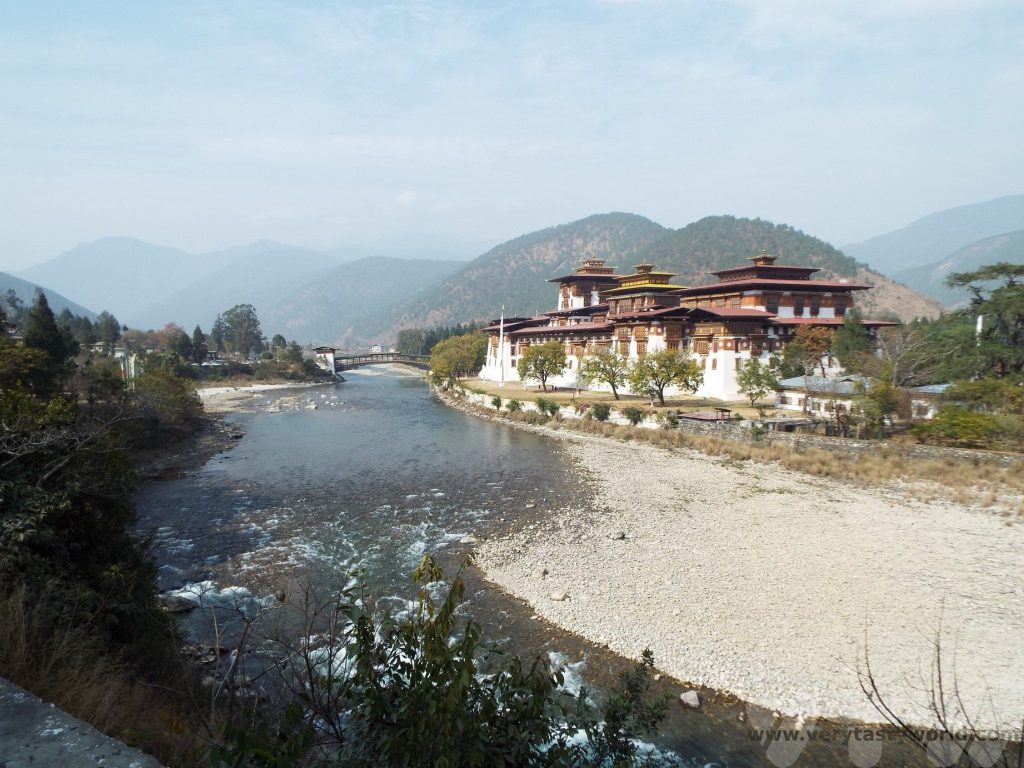
The road then follows a number of hairpin bends into the Punakha valley. Punakha Dzong is one of the country’s most important monasteries – the second oldest and the second largest in the land. Punakha was the country’s former capital and is located at the confluence of the Pho Chu (male) and Mo Chu (female) rivers.

After the long drive, we enjoyed walking by the river.
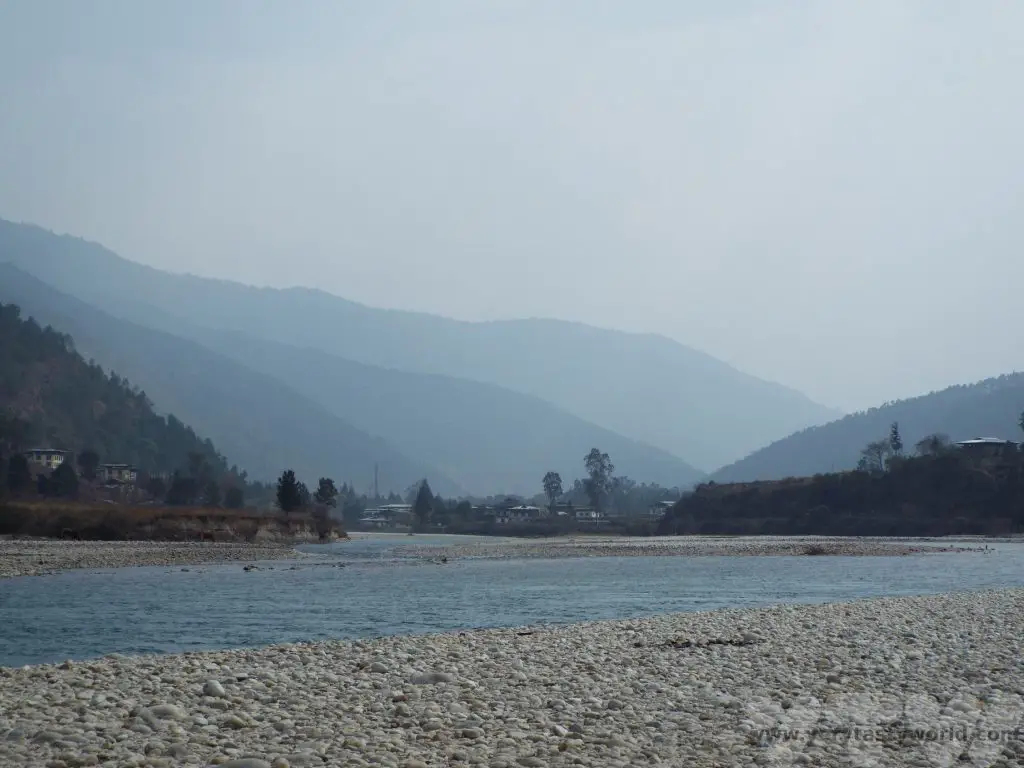
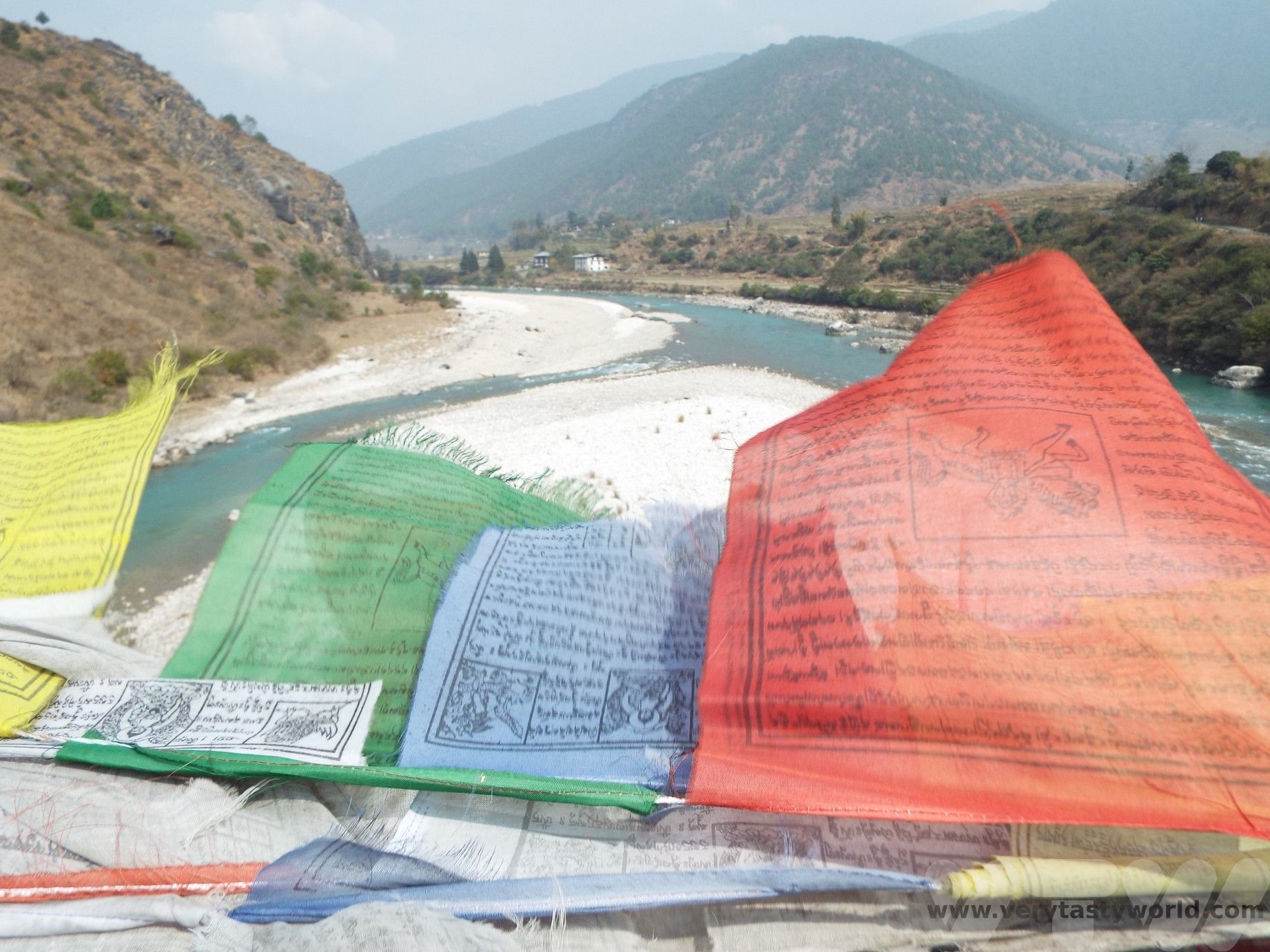
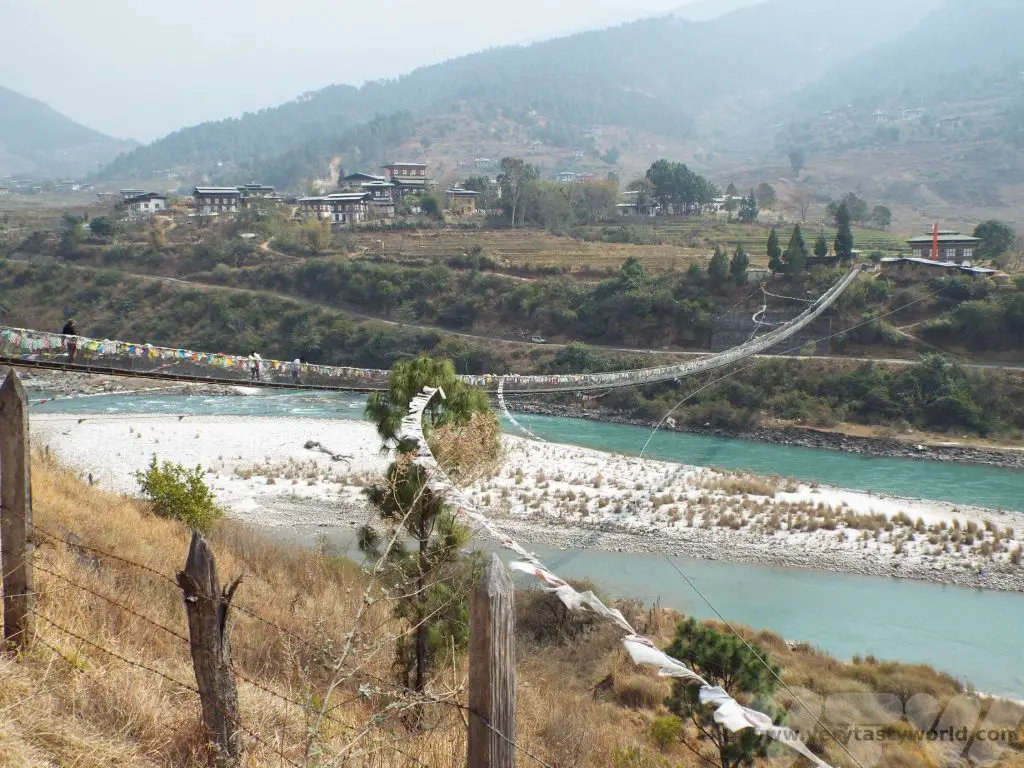
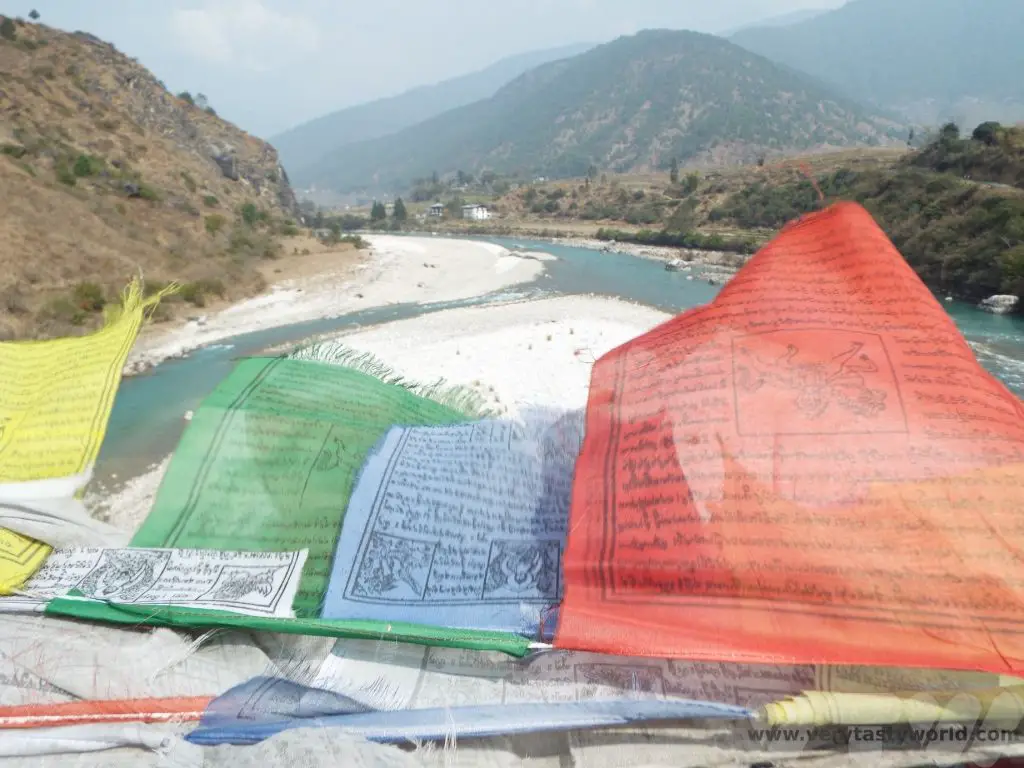
We also visited the suspension bridge, the longest in the country which crosses the Po Chu river, and where hundreds of colourful prayer flags flutter in the breeze and guide the way across.
The Sangchhen Dorji Lhuendrup Lhakhang is a meditation and training centre for nuns who live and work here – training in various arts. The hilltop location overlooks a delightful pine-covered valley. It is possible to visit the centre.
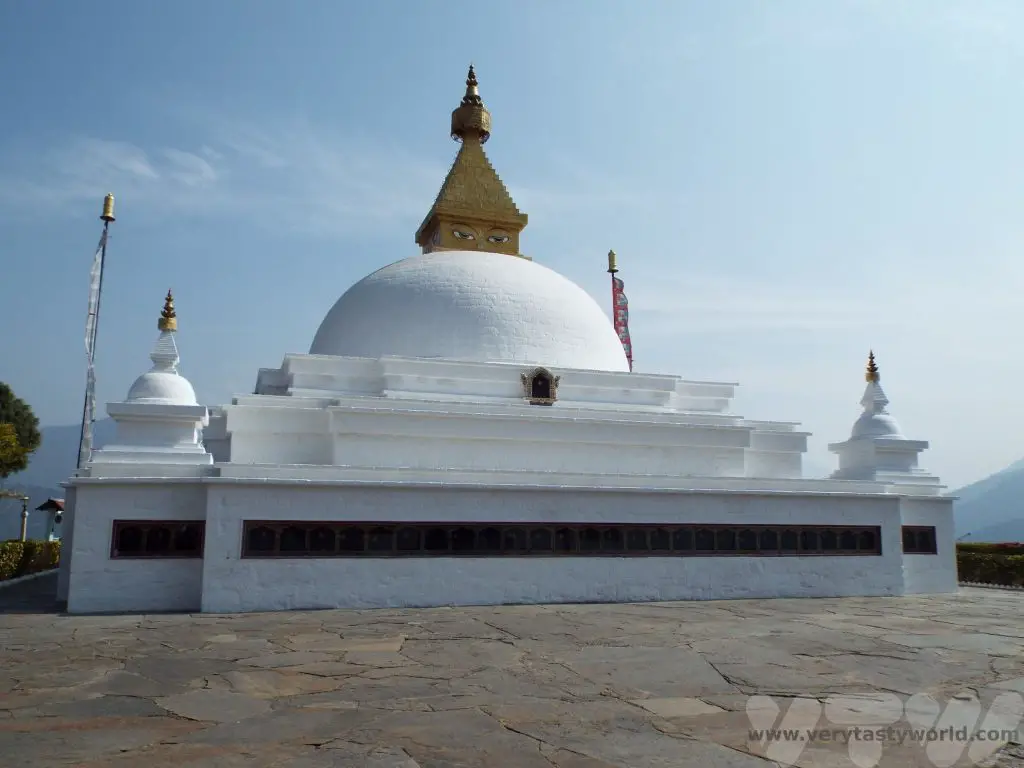
We stayed at Meri Puensum, set on the mountainside overlooking the gorgeous valley.
Day 3 Explore Punakha
We spent the morning visiting the dzong. You can read our detailed post about Punakha Dzong. We were lucky to be visiting on the King’s Birthday and the local people celebrated with singing and dancing. It was a delightfully happy atmosphere and everyone was really friendly.

Then we moved on to walk around to Chimmi Lhakhang, a temple dedicated to the Devine Madman. It’s a place where people come to pray for children. There’s no doubt that the temple is all about promoting fertility!
One thing we had particularly wanted to do on our trip was to stay with a local family and learn to cook with them.
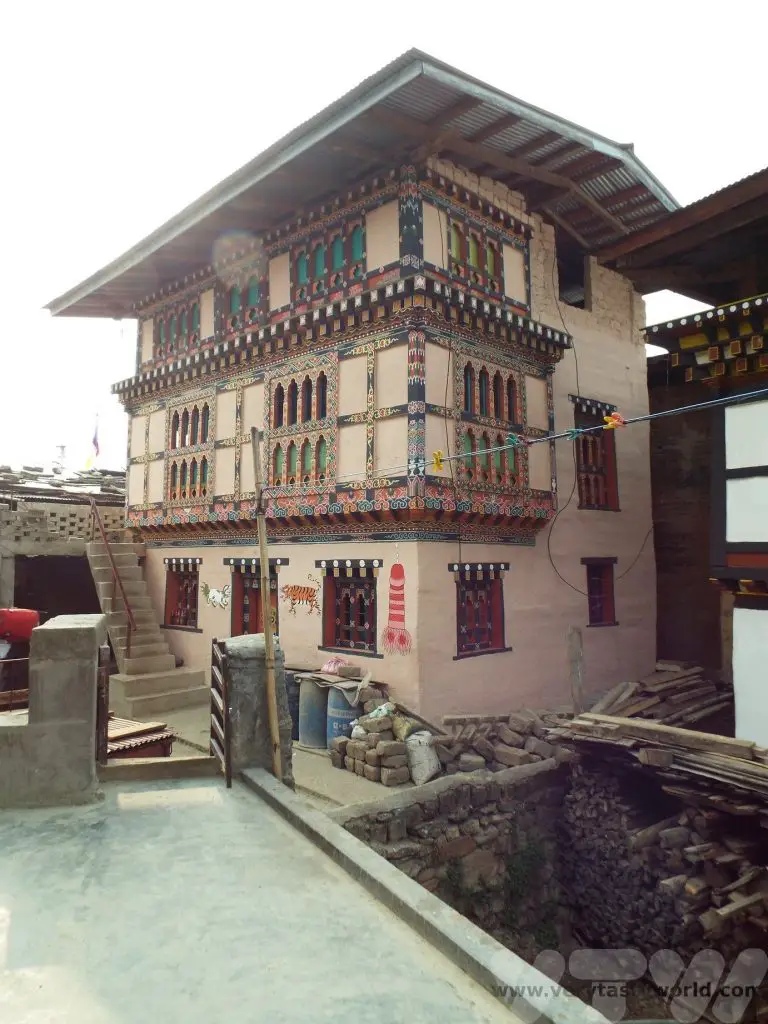
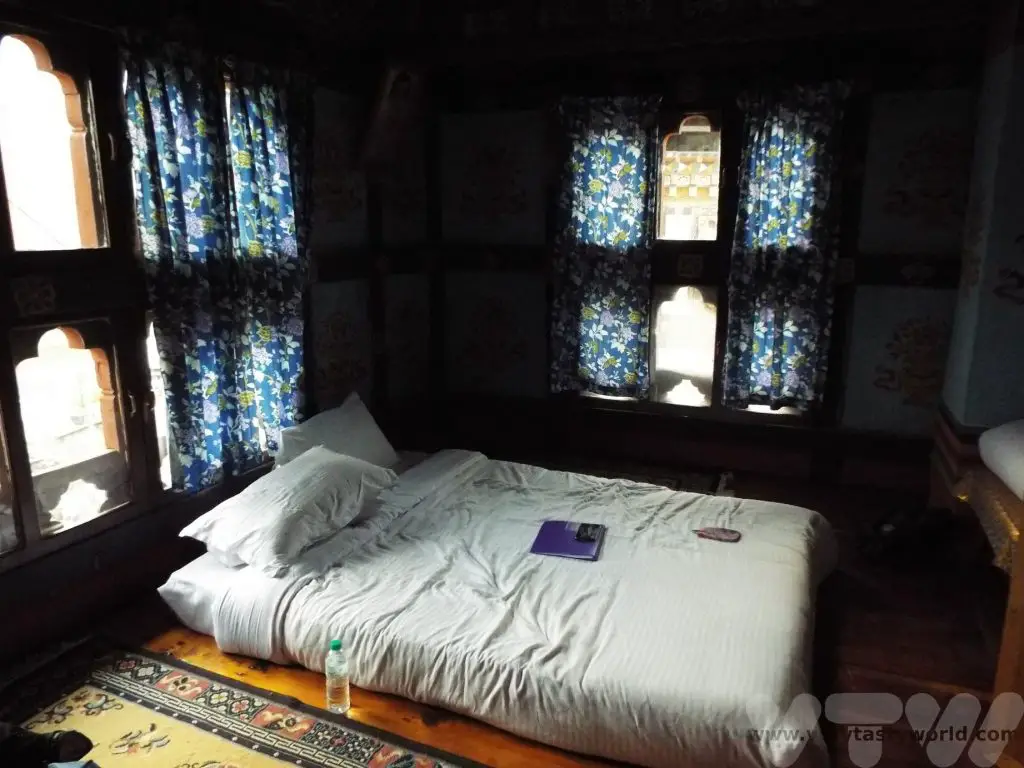
We enjoyed visiting the farm and making dinner with our lovely hosts at the Chimi Lhakhang Farm stay.


Day 4 Punakha to Gangtey (71km, 3 hours, 2900m)
After a hearty breakfast at the farm stay, we hit the road for a trip to Gangtey. The key attraction for this valley is that famous for the elegant black-necked cranes that visit each winter. The country is home to around 600 cranes – they migrate from the Tibetan Plateau and can be seen from November to March.
On the way, we visited Gangtey Gompa, a 16th century monastery.

Then we took a walk through the lovely Phobjikha valley on its nature trail.

We walked downhill through the meadows and into Semchubara village and then through the forests.


We then visited the black-necked crane sanctuary to see where injured and rescue cranes are rehabilitated. There is also an information centre which has infographics about the cranes as well as a great view over the valley. Binoculars are available to watch the cranes.

We stayed overnight at hotel Dewachen in a large, comfortable room, with its own heating stove.
Day 5 Gangtey to Paro (196km, ~6 hours, 2250m)
This was our long drive back but we stopped off at a number of places along the way. We spent time in the valley, in the morning, spotting wild cranes.
An archery tournament was taking place in the area. Archery is Bhutan’s national sport and competitions last all day. Archers take it in turns to hit brightly painted wooden targets from 145m away. We were astonished at the distances and the accuracy of the archers. When the target is hit, the archers perform a short celebratory dance and pick up a silken cloth as a prize. As the day progresses, the wind picks up in the valley, making the target even more difficult to hit.

For reference, the standard Olympic distance is 70m! The tournament is as much about social interaction as it is about the competition. The image below gives an indication of range – the target is on the left side of the picture, just next to the tree in the distance, where the group of people are standing.

After passing the Dochula Pass, we arrived back at Thimphu and stopped off to visit the Simtokha Dzong, a 17th century fortress and former monastery, strategically located on a ridge above a deep gully. It was built by Zhabdrung Ngawang Namgyal, who unified Bhutan and is the first of its kind built in this country.


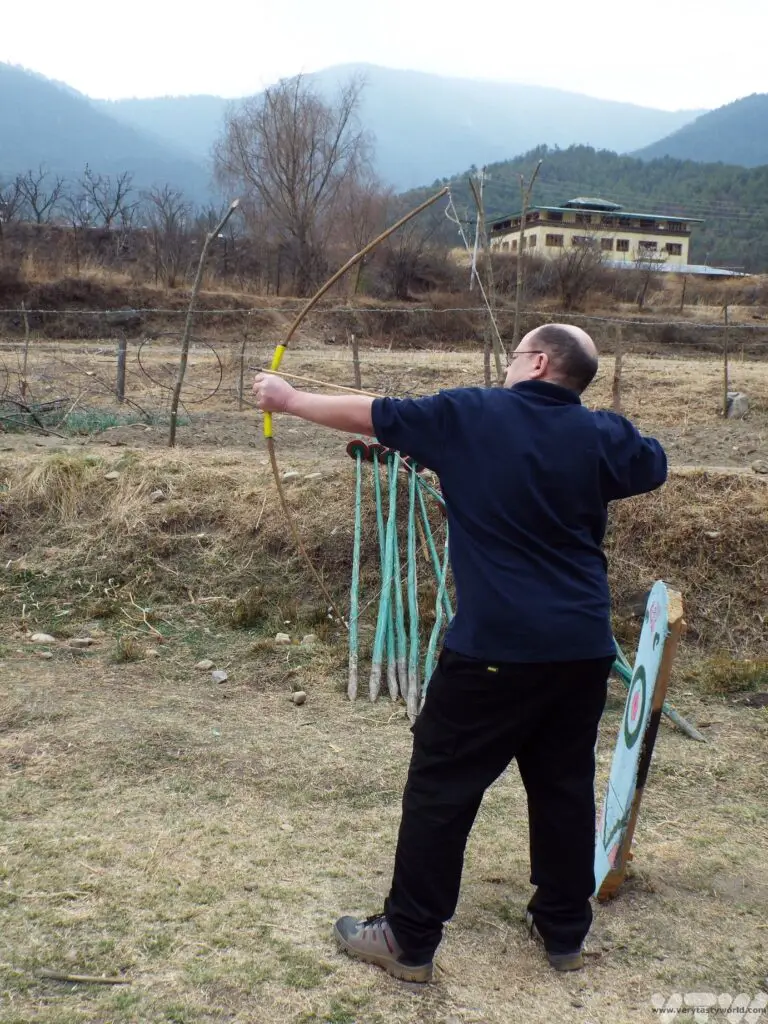
Then the itinerary continues to Paro. We enjoyed an archery lesson at the local range. These are very easy to arrange and there are centres all over the country. Naturally we were hopeless!
Day 6 Paro – Tiger’s Nest Trek (up to 3180m)
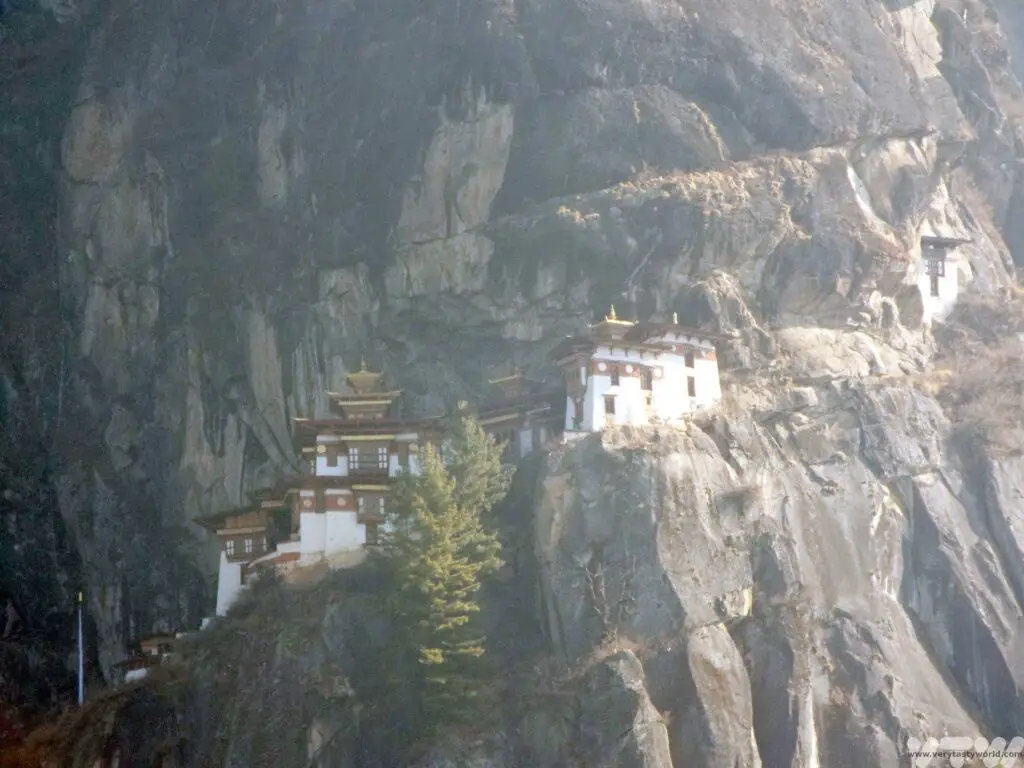
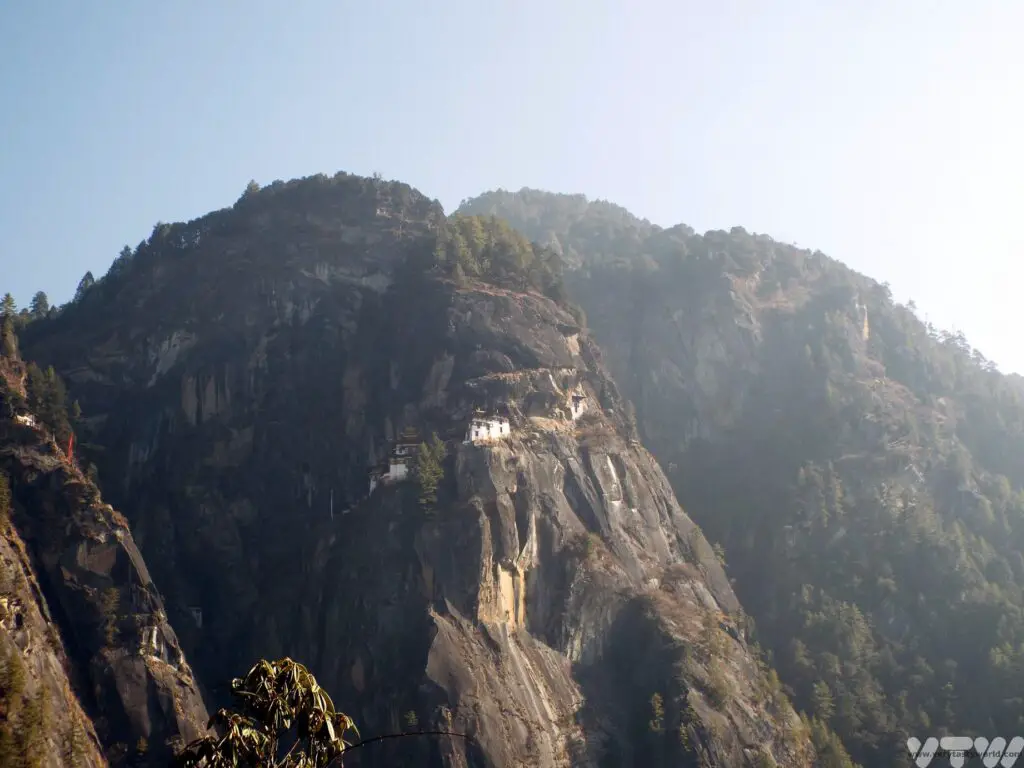
The highlight of any trip to Bhutan is a hike to the stunningly beautiful Taktsang monastery, known as the Tiger’s Nest. This amazing construction, clinging to a hillside, is sited at the location where Guru Rinpoche (Padmasambhava), the founder of Buddhism in the country, reputedly flew on the back of a tigress in the 8th century.
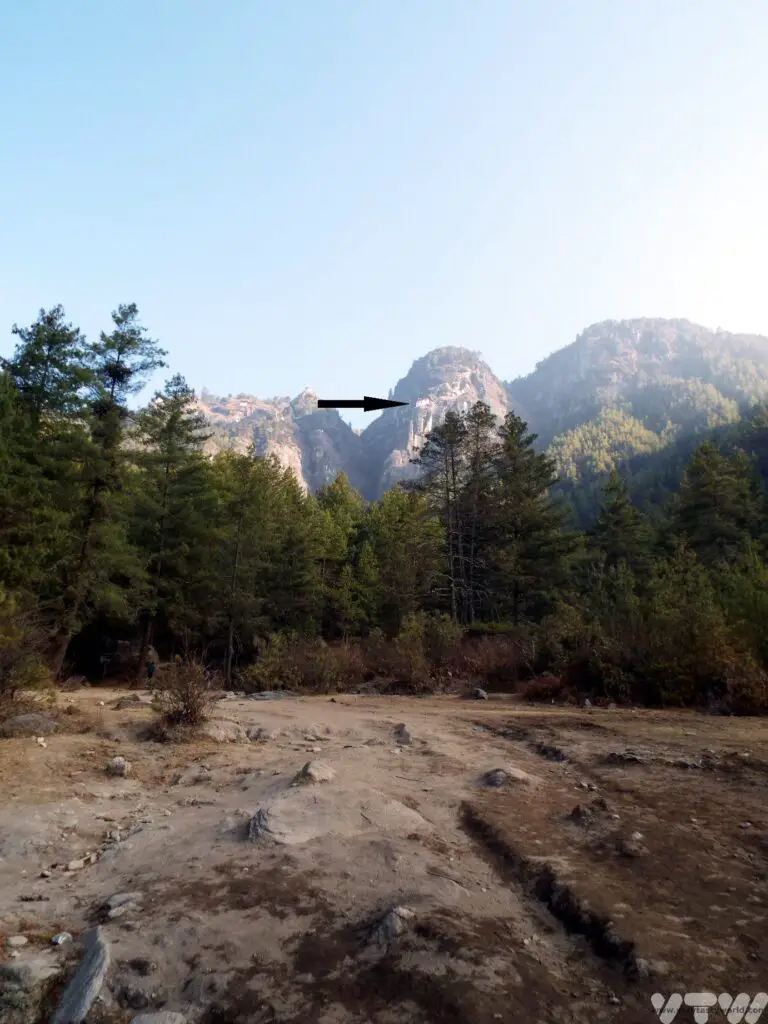
Even though it looks quite dramatic, the hike should be possible for anyone who has reasonable fitness levels, although you are trekking at altitude, over 3000m, which makes the walk literally breathtaking. The reason for the hike taking place at the end of this Bhutan itinerary is to ensure that you have enough time to acclimatise to the altitude during the preceding days. We have a detailed post about what to expect on the Tiger’s Nest hike.
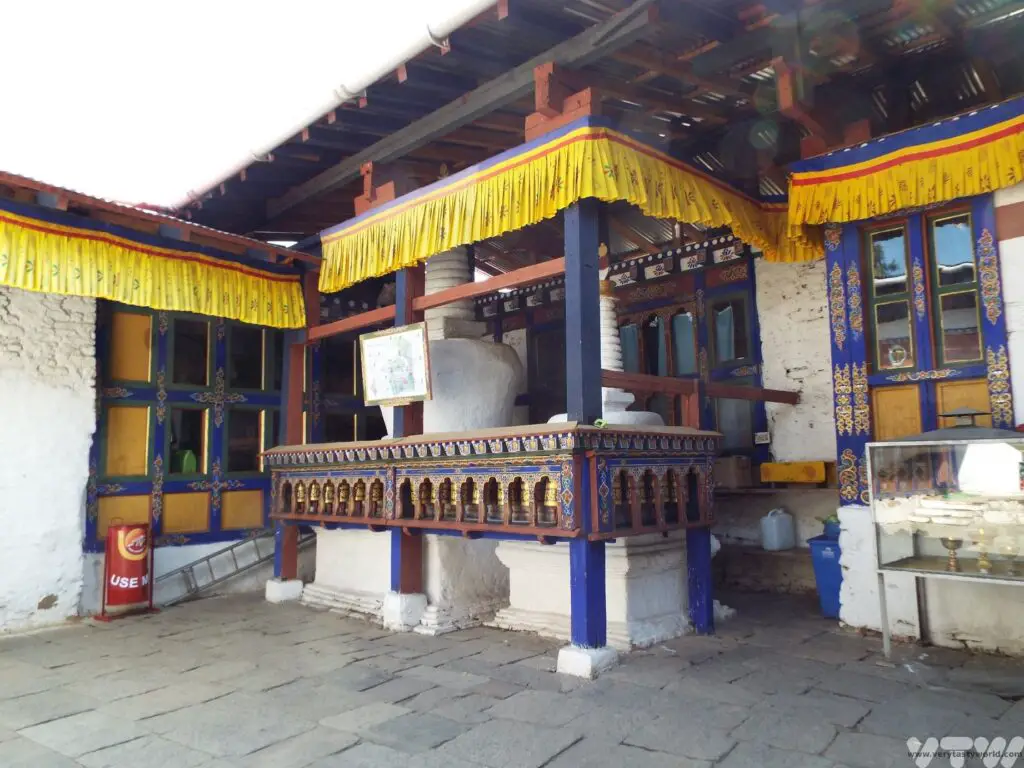
In the afternoon, visit Kyichu Lhakhang, one of the oldest temples in Bhutan. It is one of 108 temples which were constructed in a day by the extremely productive Tibetan King Songtsen Gampo, in an attempt to protect against a wicked demoness. Apparently the orange trees are always in fruit.
Later in the evening we visited a typical Bhutanese farmhouse and met the farmer who made us dinner and offered arak, the local tipple.
Day 7 A Fond Farewell
Time to leave this marvellous country and catch the flight back to Kathmandu. If you have time, there may be an opportunity to visit the national museum, Ta Dzong, which was built as a watch tower for the Paro Dzong. The Dzong itself is an administration centre and education centre for monks. Or you could enjoy a walk along the river.
Don’t forget to look out for Everest on the way home.
Bhutan for Foodies
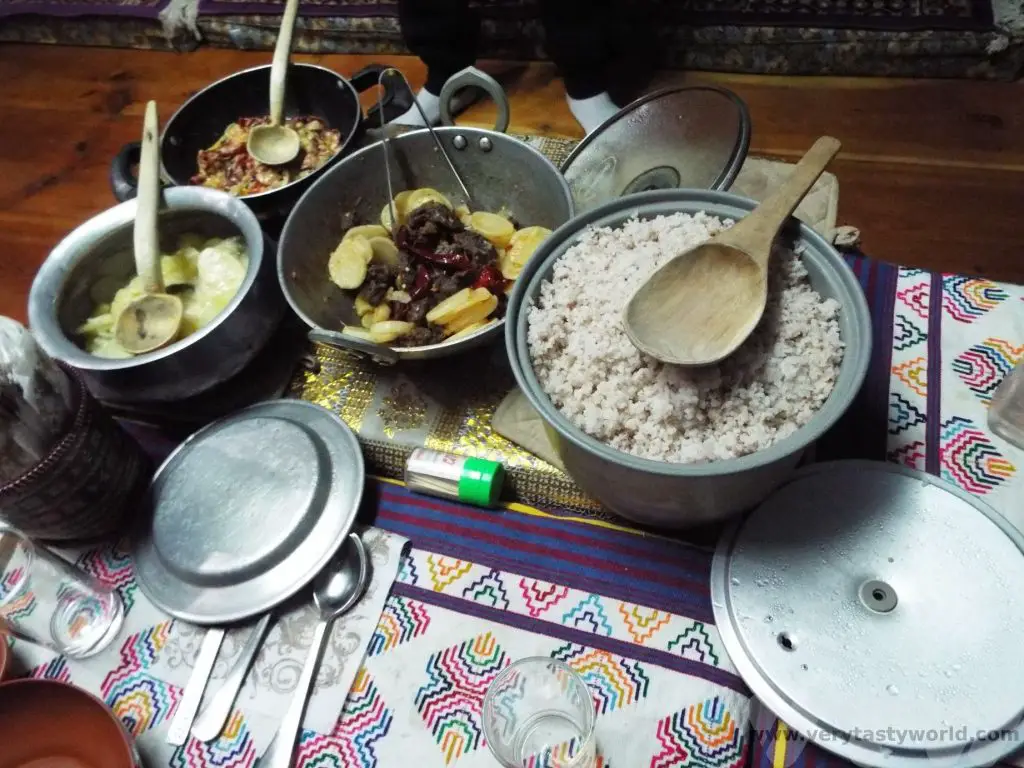
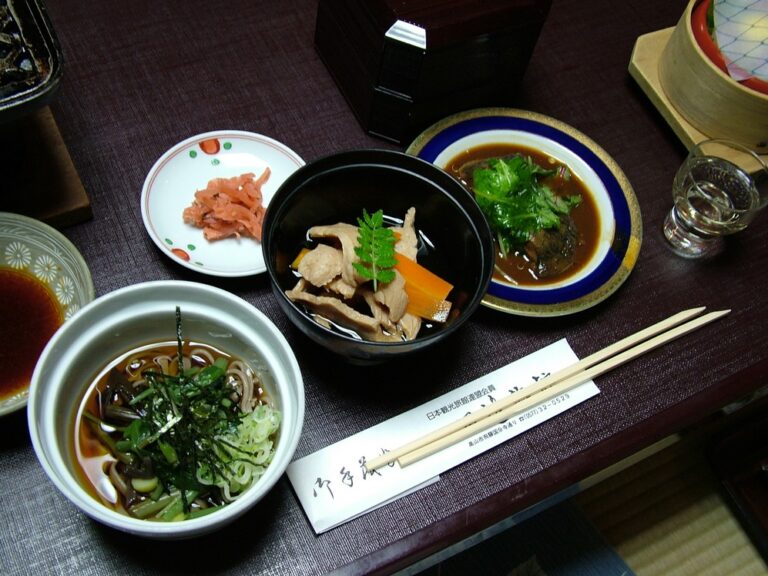
Prepare for your tastebuds to be tantalised. The quintessential Bhutanese dish is ema datshi – chilli cheese! In Bhutan chillies are used as vegetables, rather than a spicy flavouring. Chilli cheese is super-hot but the cheese does help mitigate the heat. It is kind of addictive.

Rice is a staple – usually red rice, which has a nutty flavour. Meat is eaten widely and is often dried for storage. Yak, beef, pork and chicken are all popular dishes. Meat is often stewed. We enjoyed shakam paa, which comprised dried beef cooked with chillies and radish slices, spiced with dried chillies. Vegetarians can enjoy khewa datshi, which comprises sliced potatoes with cheese.
The local tipple is called arak. It’s a clear liquor, usually made from rice or maize. Bhutan also makes whiskey and you can pick up a bottle at the airport. It may not rival any of Scotland or Japan’s finest malts but it’s an interesting and quaffable drink – definitely one to add to the list for whiskey fans seeking alternative flavours.
Final Thoughts
There is no doubt that Bhutan is an expensive country to visit. But it is a wonderful place to discover, a country that fiercely protects its heritage and culture, all set amidst spectacular mountain landscapes. The fee for visitors goes directly towards making life better for its citizens. Although the high cost may put off some travellers, we strongly recommend visiting if you can.
Related Posts You May Enjoy

- Great Grinds & Best Brews – Coffee Around The World

- Things to Know Before Visiting South Korea

- Things to Do in Kuching – The Charming Cat City

- The Very Best Kuching Food

- A Splendid Three Days in Singapore Itinerary

- RECIPE: How To Make Dakgalbi


- A Marvellous 7 Day Tamil Nadu Itinerary

- RECIPE: Vegetable Biryani Tamil Nadu Style
- RECIPE: Biryani Raita Recipe
- The Leh to Manali Highway
- Places to Visit in Munnar, Kerala
- Kumarakom Houseboats on the Kerala Backwaters

Thanks so much for reading. We hope you enjoyed this article. If you’d like to keep up to date with new posts and recipes, please subscribe to our newsletter or follow us on social media – Bluesky, Facebook or Instagram. We always love hearing from you and would be delighted to read your thoughts about this article.




Flying in on the route you took would already be a bucket list item in itself just to see the peak of Mount Everest. What a phenomenal view, wow! I love that Bhutan has a sustainable development fee, maybe something more places should have to counter the effects of tourism, or at least to do more for the country to benefit everyone there. Although $100/day is a little steep, so good warning to give visitors. Sign me up for the Tiger’s Nest trek, that looks like a wild place to visit. But I should probably want to start the trip with a visit to the Simply Bhutan Museum. I like the idea of visiting the crane sanctuary too. What an interesting country (that I actually had to look up to place it on a world map).
Bhutan has intrigued me for years. I had heard about the daily fee but hadn’t realized how expensive it is. I do think it’s a grand way for the country to help support its people. I really enjoyed reading about the range of activities you covered. I would be thrilled to see the cranes and would sign up for the Tiger’s Nest hike. This is a great post full of advice and inspiration.
What a great trip. Just the flight there with those spectacular views would be a real experience. I’d love to tackle the Tiger’s Nest hike – maybe one day! I wouldn’t be so keen on that suspension bridge though!! The food sounds interesting. I’m not great with hot food but I’d still have to give the chilli cheese a go.
I’d never considered Bhutan so it’s really cool to read about the things you can do to explore the country. Whilst the daily fee seems steep, if it’s going to the people by way of healthcare etc I’d feel happy paying it!
It seems that every year or two, the development tourism fee in Bhutan is getting steeper, like the high mountains one sees or would experience during a day’s hike on a visit to this intriguing country. It’s not without a reason, though. I suppose the exclusivity is the ultimate luxury here. I always wanted to have a Himalayan adventure of my own and Bhutan is such a striking place to start off that adventure—sans the suspension bridge haha #𝐟𝐥𝐲𝐢𝐧𝐠𝐛𝐚𝐠𝐮𝐞𝐭𝐭𝐞 🥖🪽
This is quite a mysterious country and I am glad to have learnt more about it thanks to your post. I agree, that an additional $100 per day (similar to Europe’s city tax) is indeed pretty steep. The regulations to visit Bhutan are strict and I agree with Emma, the country retains a “exclusivity” level. Hope it does actually benefit the locals and the development of infrastructure. The monasteries in the mountains built into the stone sound magical, but yeah the suspension bridge would be a challenge.
Carolin | Solo Travel Story
Wow, thanks for the breakdown on how to visit and the extra fees (per day!) involved! I feel like I might have to save up for Bhutan, but by the looks of it I can tell it’ll be worth it! Seems like an incredible country for hiking…which I’ll definitely need some time to prepare for hahah. Also, thanks for the tip of the best seat to see Everest!! Hopefully the plane routes don’t change by the time I’m able to go haha