
What To Know Before Visiting Bhutan
Another in our ‘know before you go’ series – everything you need to know about a country before you visit with some special info for foodies. These handy tips are based on our personal experience of travelling in this country, so here’s our guide for what to know before visiting Bhutan.
Why Visit Bhutan?
We very rarely use the word ‘unique’ in this increasingly homogenised world, but visiting Bhutan really is a unique experience. It is a country nestled in the heart of the Himalayan Mountains. It fiercely protects its heritage and culture. Unlike every other country, it doesn’t focus on GDP, the king measures Gross Domestic Happiness instead, surely something that every political system should adopt.
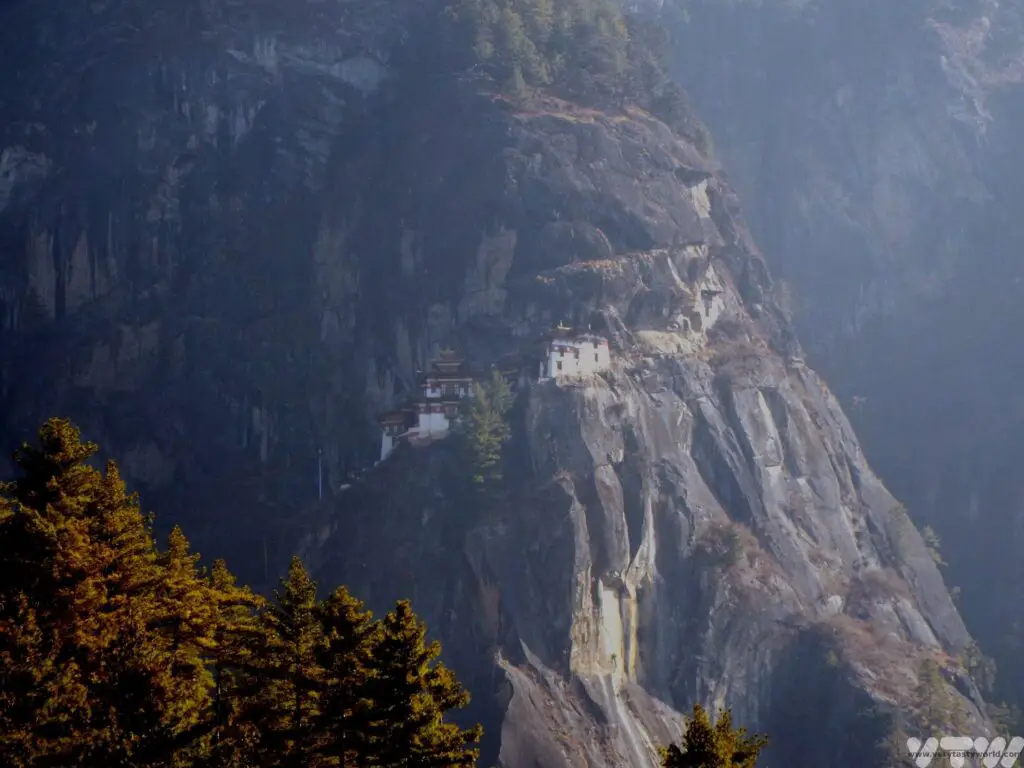
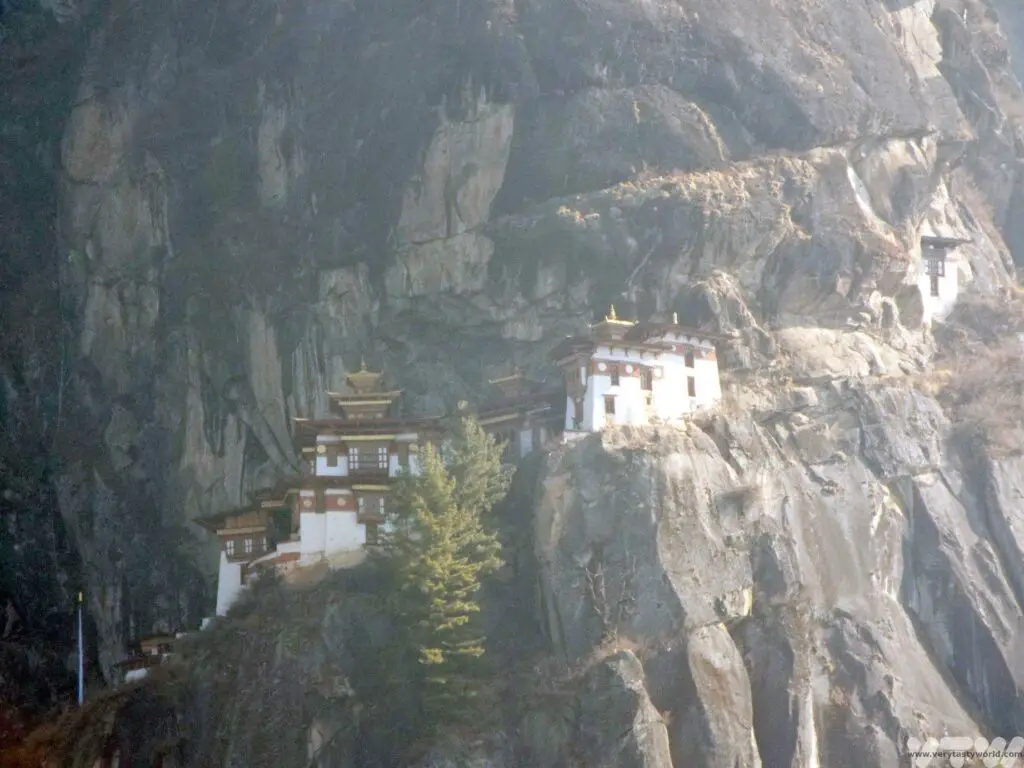
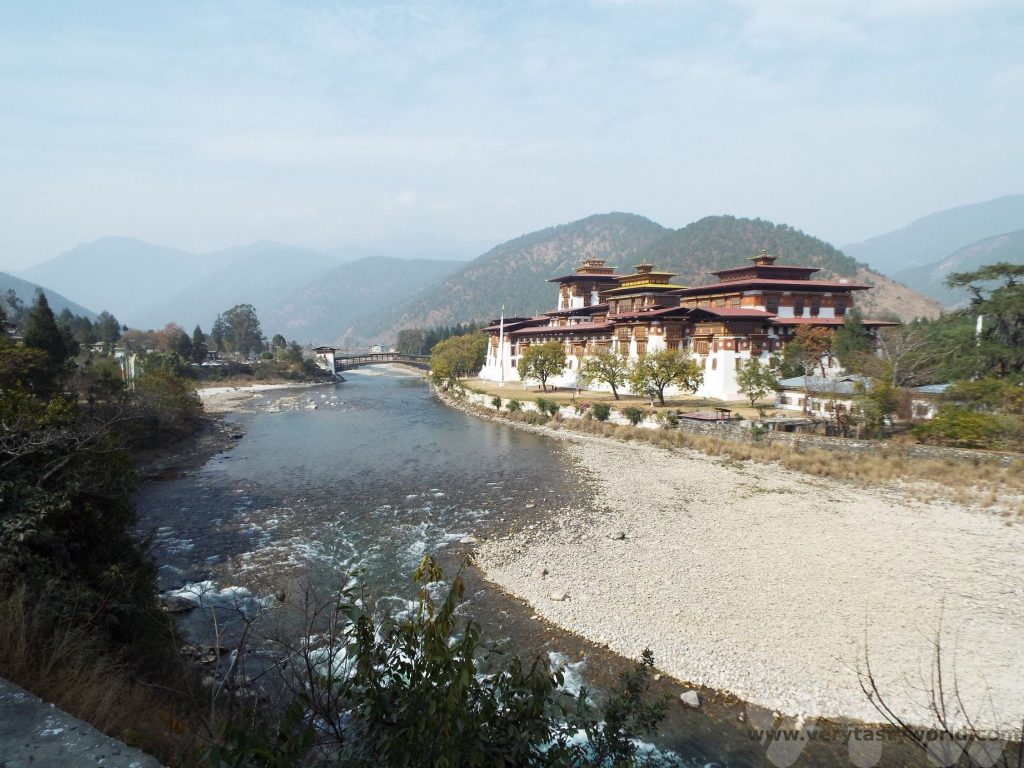
Bhutan has wonderful landscapes, fascinating dzongs (fortified monasteries), peaceful monasteries and some fantastic hiking, especially its most famous trek to the Tiger’s Nest.
Foodies will enjoy the challenge of Bhutan’s national dish – chilli cheese! The Bhutanese use chilli as a vegetable rather than a condiment, so the food is spicy and delicious.
Please note that this post contains affiliate links. If you click through and decide to make a purchase we will make a small commission, at no extra cost to you, which will help towards the costs of running this site. Thank you for your support!
Getting To Bhutan
Most people fly into the country’s only international airport located in Paro. Drukair and Bhutan Airlines are the two national carriers. There are flights available from India, Nepal, Bangladesh, Thailand and Singapore.
If you are flying from Kathmandu you will fly past Mount Everest – ask for seats on the left side of the plane so that you can get a fantastic view!

You can also drive from India. There are four land crossings: Samtse, Phuentsholing, Gelephu and Samdrup Jongkhar.
Passports and Visa
Most visitors will need a visa. The government website has the details.
Bhutan’s Sustainable Development Fund
Bhutan has a reputation for being an expensive country to visit and the primary reason for this is the government Sustainable Development Fund, a daily fee that visitors must pay. The SDF currently costs $100 per day (reductions for children under 12 and infants travel free of charge) which significantly adds to the costs of your trip – this is before you even start looking at transportation or accommodation.
The $100 per person per day is actually a discount of 50% on $200 if you pay in US dollars. This discount will apply until September 2027 after which the daily fee reverts to $200. If you’re planning to visit Bhutan we recommend travelling sooner rather than later!
The SDF is used by the government for health and education services for the Bhutanese people, as well as to develop tourism infrastructure and training. When we visited there was a high and (cheaper) low season and the cost of the trip was all-inclusive. But the system changed and now the SDF needs to be paid in addition to your travel costs.
The Government has made changes to the rules over the last few years and may change things again, so do check the latest news on the fees.
Getting Around Bhutan
Until very recently it was not possible to travel in Bhutan independently – you would need to find a tour operator who would arrange accommodation and transportation. The most convenient way to get around is to hire a guide and driver. You must be accompanied by a guide when visiting certain attractions, even if you are travelling independently.
There are likely to be plenty of operators in your country who can arrange a tour but they will usually subcontract the trip to a local operator. You can usually save money but going direct to a local Bhutanese operator, although you may not have the same level of cancellation/insolvency protection offered by a company in your own country.
We did use a local tour operator and they were fantastic – our guide was called Dawa and our driver Tring, who were both delightful. One aspect of travelling with a guide was that we would request particular activities, such as trying archery, and Dawa could easily arrange them.
It is still not possible to hire a car so that you can drive yourself around the country. You can bring your own car if travelling by land from India. Travel is by road using buses and taxis. Drukride is an on-demand app where you can get bus tickets or hail a cab.

Language
The official language of Bhutan is Dzongkha, a Tibeto-Burman language. The written script is Tibetan script. Our guide spoke great English, our driver spoke basic English. When we were travelling through the country, we met lots of friendly locals who were keen to practice their English with us.
Money
If you are travelling with a tour operator, they often price on an all-inclusive basis so you won’t need much spending money.
Bhutan’s unit of currency is called Ngultrum (BTN) and you can’t buy/sell it outside the country. It has the same value as the Indian rupee. You can use rupees in Bhutan, which are a more convenient form of currency.
There are ATMs in the major cities (Thimpu, Paro, Punakha) and at the airport, but these might not be reliable, so it is worth making sure you have some cash if you need it.
Tipping
Tipping generally isn’t mandatory. If you are travelling with a driver and guide, around $10-$20 per day per party is appreciated. If you are travelling with a tour operator, check with them.
Electricity
The electricity supply runs at 230 V at a frequency of 50 Hz. Plug types vary, from round two-pin to English type 3 pin. We recommend getting a multi-plug travel adaptor.
Internet and Wi-Fi
Bhutan’s only Internet Service Provider is Druknet. Coverage is reasonable in Paro & Thimphu, less so if you travel further out. Most hotels will have wi-fi but it may not be the fastest. You can get a SIM or eSIM cards at the Tashicell store in Paro and Thimphu. Or you could buy an eSIM at Airalo.
Can I Drink the Water?
You can’t drink the tap water but bottled water is easily available. If you are travelling with a driver and guide, they will often supply water.
Health Considerations
If you need medication, take that with you, and some spare, as it may be difficult to find in Bhutan.
Thanks to its location in the heart of the Himalayas Bhutan is – unsurprisingly – very mountainous. Much of the country is over 2000 m above sea level. Some people may struggle with the altitude, so it is important to be aware of the symptoms of altitude sickness.
Additionally, there are very few straight roads in the country – most wind their way up and down mountain passes. If you are prone to travel sickness you may find the car journey difficult, so we recommend taking your usual medication to ease the symptoms.
Culture and Etiquette
As with everywhere, treating people with respect is essential. As this is a Buddhist nation, so we recommend conservative dress when travelling.
Always ask permission before taking a photo of someone.
People consider the head to be sacred – never touch anybody’s head. Don’t point with your finger, indicate with your hand.
The Bhutanese royal family is revered throughout the country and you will often see a portrait of the king in hotels and family homes. Make sure that you do not show disrespect to the monarchy.
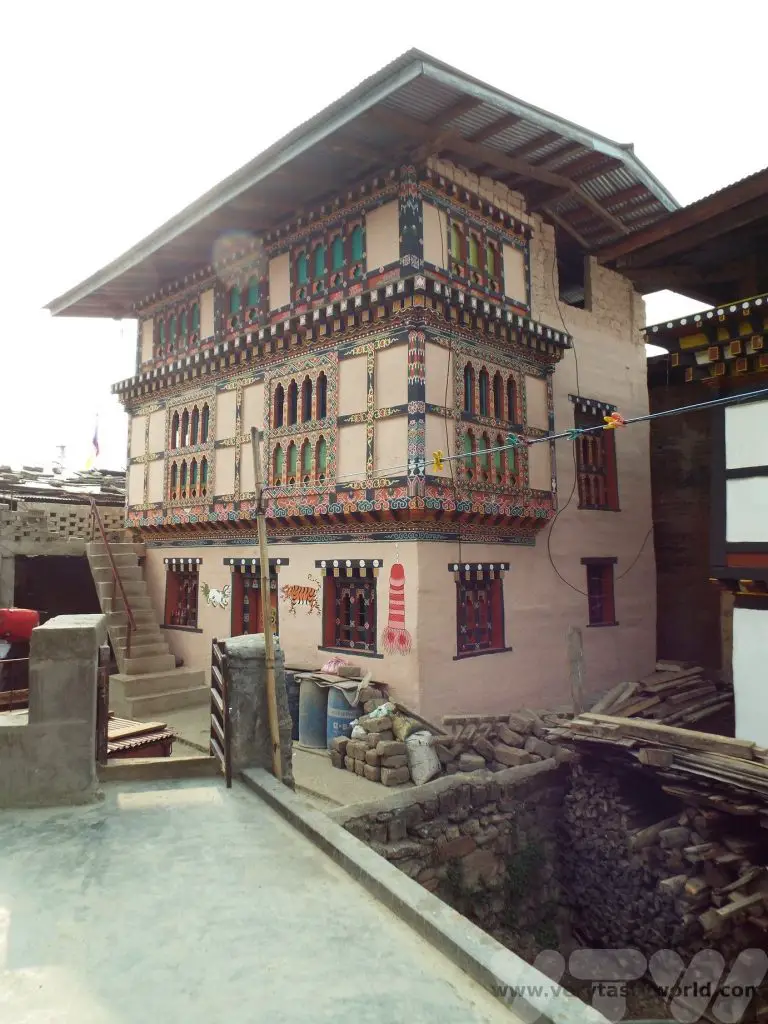
You may see lots of phallic symbols, often painted on houses. These represent fertility and protection. You may have a monk gently tap your head with a wooden phallus – this is considered to be a blessing.
Visiting Monasteries
When visiting monasteries or dzongs wear long trousers/skirt (down to the ankles) and long sleeves (down to the wrist). You will also need to take off your shoes.
When you enter the monastery, walk in a clockwise direction. Photography is generally not permitted inside the building but it is usually fine to take pictures outside. If you are unsure, ask your guide.
Try to keep your head lower than the monks if possible. When sitting, cross your legs and don’t let your feet (considered impure) point at anyone.

Bhutan for Foodies
Bhutan’s national dish is ema datshi – chilli cheese! Chilli is used as a vegetable here, rather than a condiment, although the melty cheese helps mitigate the heat – well, at least a bit!
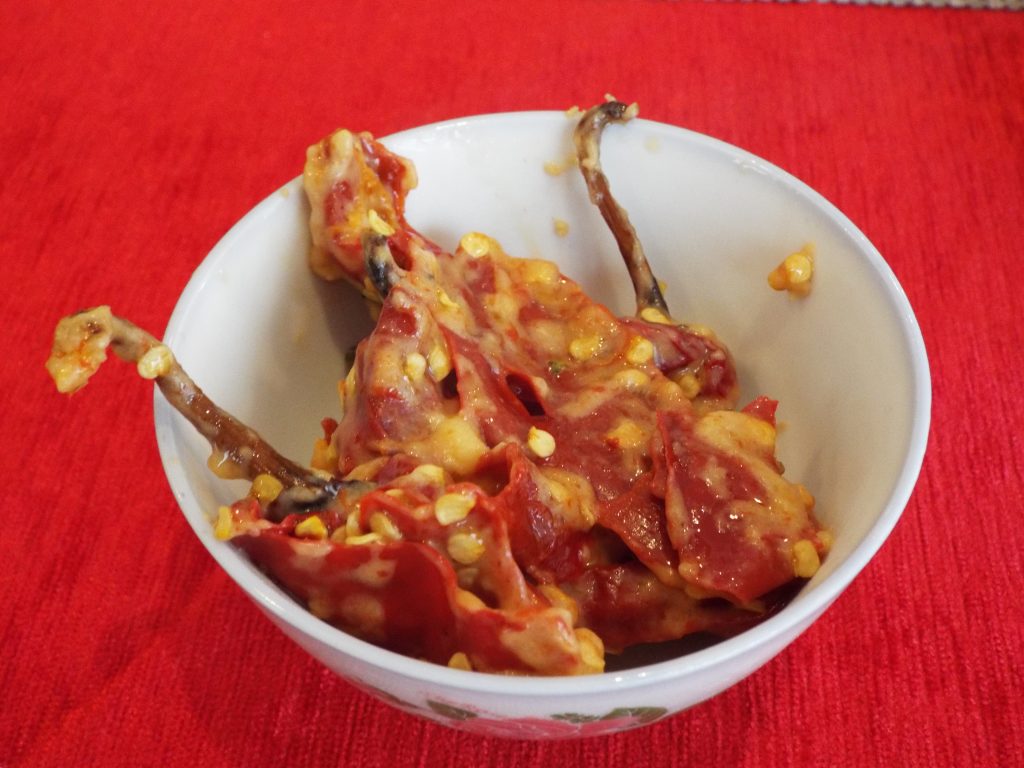
Other favourite dishes include kewa datshi, potatoes in a cheese sauce. The cheese is called datshi and it is a fermented cheese made from cow or yak’s milk.


Juma are sausages, made from beef or pork, often with the addition of blood and spices. Meat is frequently dried for long-term storage during the cold winter months. Shakam paa is dried beef, rehydrated and cooked with chillies and radish slices. Red rice, called itshum, is the staple carb. A meal will often comprise a stew with potatoes and rice. Always accompanied by chilli cheese!
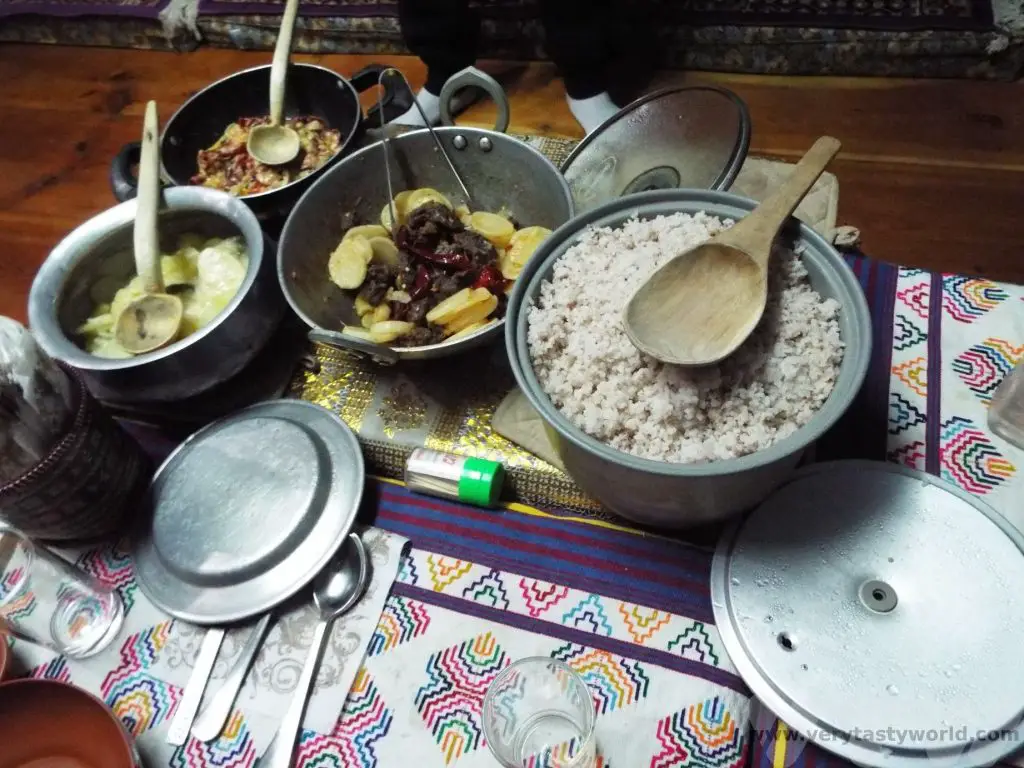
Momos are cute little dumplings that are best known as the national dish of neighbouring Nepal. In Bhutan they contain yak or beef.
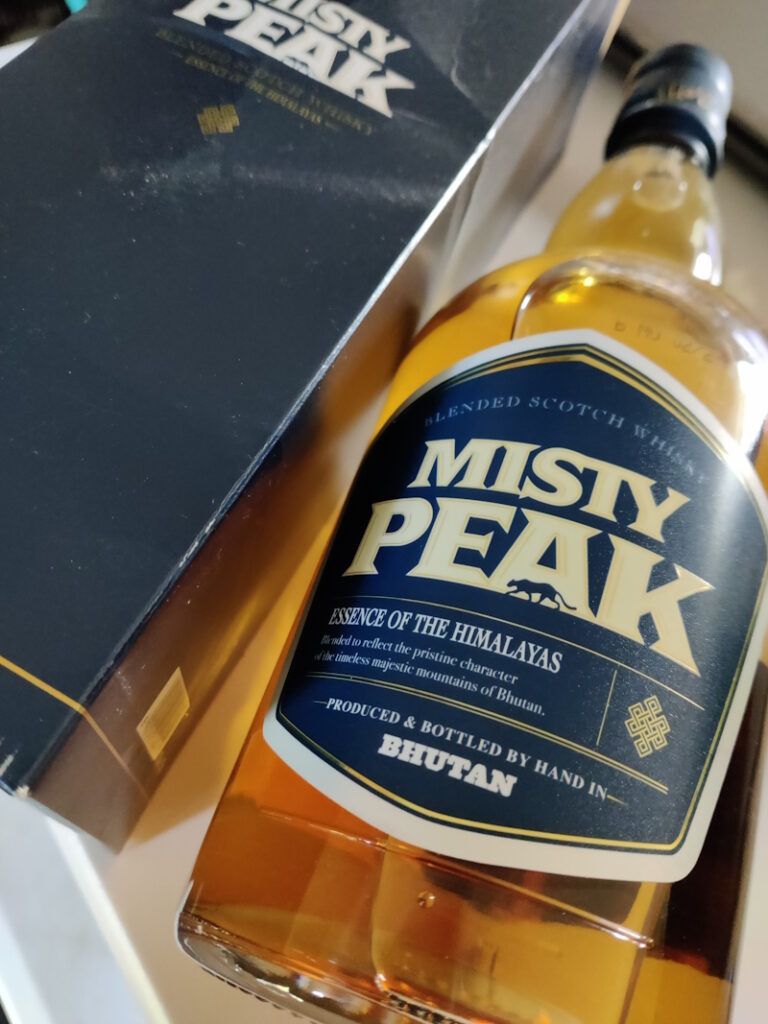
Alcohol is consumed in Bhutan. Ara (or arag) is strong spirit distilled from rice, maize or millet. It’s often home-made. Surprisingly, you can buy whiskey – Mountain Whiskey – in Bhutan! This is actually Scotch malt whisky, blended and mixed with grain spirits (produced from local rice and corn), then diluted with pure Himalayan spring water.
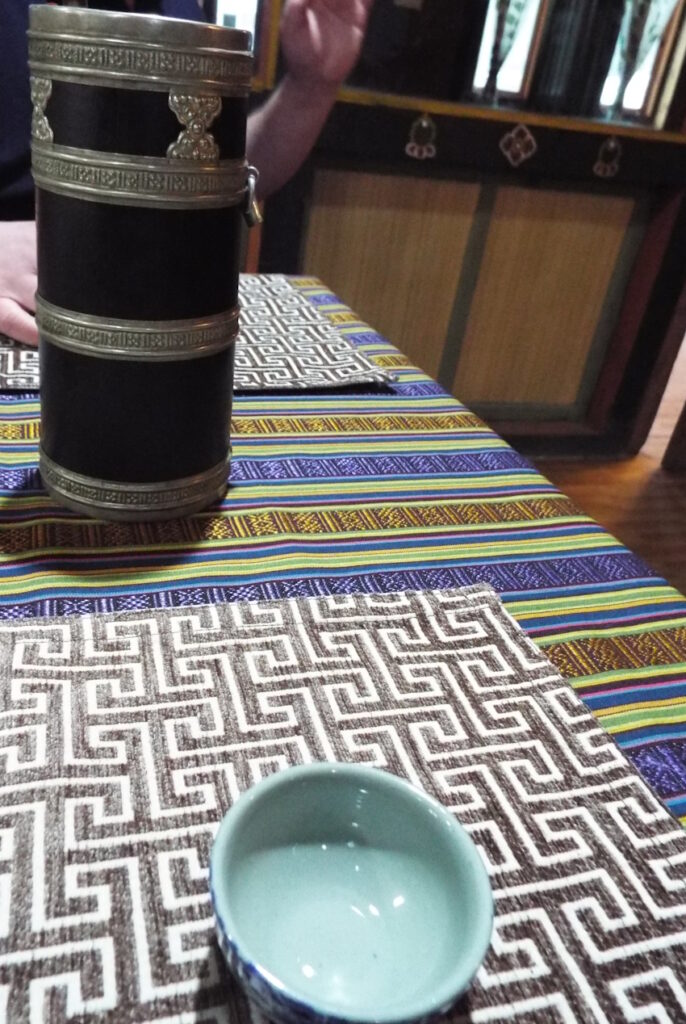
The country also has a range of beers. Red Panda (wheat beer) and Druk 11000 (a perfectly respectable lager) are popular brands. Chang is a traditional grain beer.
For non-drinkers, butter tea, known as suja, is widely available. It’s an, er, interesting combination of tea churned with yak butter and salt. It is offered to guests as a sign of hospitality, so do accept it if offered.
Basic Phrases
| Hello / Hi | kuzuzangpo la / kuzu |
| Thank you | kadriche |
| Yes / no | ing / me |
| I don’t understand | may shey |
| Do you speak English? | cho gi in ked shey ga? |
| Excuse me | gomma thay |
Packing List for Bhutan
Of course, you will know what clothes you would like to bring but here are some ideas for particular items that we suggest you include. Bring your usual clothes and toiletries.
If you take medication make sure you have enough and bring some spare, as it may be difficult to obtain in Bhutan.
The weather in Bhutan can be variable so we recommend bringing layers. You will need long trousers/skirt (down to ankles) and a long-sleeved top (covering your arms to your wrists) to enter monasteries. We found that a light summer jacket was fine for wearing inside the temples and dzongs. It can get cold in the mountains, so bring something warm. And make sure you have waterproofs with you in case of rain.
If you are visiting monasteries you will need to take your shoes off. So consider bringing footwear that is easily slip-off-and-on-able or take a shoehorn.
Bhutan is a fantastic place to go walking. If you are doing the Tiger’s Nest hike good walking boots are recommended. We do suggest taking boots with ankle support. Also we recommend wearing your boots on the plane when travelling to the country. If your luggage gets lost in transit, at least you have a comfortable worn-in pair of boots for walking.
Related Posts You May Enjoy
- Great Grinds & Best Brews – Coffee Around The World

- Things to Know Before Visiting South Korea

- Things to Do in Kuching – The Charming Cat City

- The Very Best Kuching Food

- A Splendid Three Days in Singapore Itinerary

- RECIPE: How To Make Dakgalbi

- A Marvellous 7 Day Tamil Nadu Itinerary

- RECIPE: Vegetable Biryani Tamil Nadu Style
- RECIPE: Biryani Raita Recipe
- The Leh to Manali Highway
- Places to Visit in Munnar, Kerala
- Kumarakom Houseboats on the Kerala Backwaters

Thanks so much for reading. We hope you enjoyed this article. If you’d like to keep up to date with new posts and recipes, please subscribe to our newsletter or follow us on social media – Bluesky, Facebook or Instagram. We always love hearing from you and would be delighted to read your thoughts about this article.