
Five Wonderful Places to Visit From Tokyo
Japan’s capital Tokyo is a must-visit destination for anyone making a trip to this amazing country. This vibrant and exciting city is vast and has many, many places to see and things to do. But if you are spending a few days here, there are a number of fantastic places that are easily accessible from Tokyo for a day trip or for an overnight stay. From shrines to shorelines, ramen to rollercoasters and mountains with museums, here are our top five places to visit from Tokyo.

Please note that this post contains affiliate links. If you click through and decide to make a purchase we will earn a small commission, at no extra cost to you, which will help towards the costs of running this site.
How To Travel Around the Region
We always recommend using public transport when travelling in Japan. You can get a JR Pass, which will cover all your transportation on Japan Rail services. If you are just travelling around eastern Japan, a regional JR Pass is cheaper. (Be aware that some transportation may be by private lines so would cost extra.)
There are usually multiple ways to reach these locations via public transport – we’ve indicated which are the easiest/quickest and from which station in Tokyo.
Places To Visit From Tokyo – Day Trips
The Temples of Kamakura
How To Get There: Distance from Tokyo (Tokyo station): ~50km, 55 minutes (JR Pass)
Kamakura is sometimes known as Little Kyoto – it is a delightful city with many, many temples to explore. It was effectively the capital of Japan between 1185 and 1333 and was founded by Minamoto no Yoritomo, the first ruling shogun of the Kamakura Shogunate.

The highlight is the Kotokuin Temple which contains the Great Buddha of Kamakura, the Kamakura Daibutsu. It dates from 1252, originally carved in wood but then cast in bronze. You can go inside the daibutsu for a small fee. It used to be housed in a hall but this was destroyed by a tsunami many centuries ago.


Oh, and don’t forget to check out the Buddha’s shoes!
Engakuji Temple is a Zen temple, constructed in 1282. It is a very peaceful place and one of Japan’s primary Rinzai Zen temples. If you are interested, you can join a meditation sessions early on Sunday mornings (from 6-7am, in Japanese).


Kamakura is located on the coast so if you’re after some beach time, this is a great place to visit. The beaches are broad and sandy and they are fine for swimming. Yuigahama is the closest, a short walk from the city.
The City Within A City – Yokohama
How To Get There: Distance from Tokyo (Tokyo station) 33km, half an hour direct on the bullet train (JR Pass).
Yokohama may well be part of the greater Tokyo conurbation, but is actually Japan’s second largest city. It has an important place in Japanese history. American Commodore Matthew Perry arrived at Tokyo Bay in 1853 and 1854 and demanded that Japan end its isolationist policy and open up to the world. The treaty was signed in Kanagawa, part of Yokohama.
The city is lively and bustling with plenty of things to see and do. Explore the historic dock area – Oshanbashi Pier and Yamashita Park are fantastic waterside places to visit. The city hosts Japan’s largest Chinatown.

Yokohama also boasts a delightful garden, Sankeien, which also features historic buildings from across Japan.
It also has a couple of theme parks: Cosmoworld is a theme park with loads of attractions. Entry is free, just pay for each ride. It has rollercoasters for thrillseekers, including one that goes over and then under the ocean. Hakkeijima Sea Paradise is a small park located on an island to the south of the city. It has a fun rollercoaster Surf Coaster Leviathan.

Foodies should definitely stop by the Yokohama Ramen museum where you can learn about the history of noodles and then go downstairs to an edo-style street where you can sample ramen from all over Japan! You can read about visiting the Yokohama Ramen Museum.

The Charming Historic District of Kawagoe
How To Get There: Distance from Tokyo (Shinjuku/Ikebukuro) 45 km, 30 mins to an hour. There are a couple of private lines: Tobu Railway runs from Ikebukuro to Kawagoe every 10 minutes. Seibu connects Seibu Shinjuku with Hon-Kawagoe. If you have a JR Pass and want to use that, you can travel from Shinjuku to JR Kawagoe. Hon-Kawagoe station is closest to the attractions but it isn’t too far a walk from the others.
Kawagoe is known as Little Edo because of its old warehouses and merchant homes, called kurazukuri.


It has a lovely old-world feel, albeit with lots of shops for tourists, and there are loads of foodie attractions to discover: charcoal-boiled eel in a sweet soy sauce is a speciality, as are sweet potato dishes.
One of the attractions in Kawagoe is Kashiya Yokocho – Candy Alley – a street chock full of traditional Japanese shops offering sweet temptations. Apparently a candy maker called Suzuki Tozaemon started making sweets in front of the Yojin temple. After the Great Kanto Earthquake of 1923 the area became the main supplier of sweets for Tokyo.

If you don’t have a sweet tooth, no problem. There are plenty of savoury snacks on offer as well. Takosen is takoyaki (deep fried octopus balls) sandwiched between prawn crackers.

The name combines tako (octopus) with senbei (cracker) and advertises itself as junk food. It is seriously good.
Sweet potatoes are particularly popular, in fact Kawagoe is known colloquially as the city of sweet potatoes. Once considered a staple after the war, when food was scarce, the city still makes multiple products from these tasty tubers. And if you’re given a photo opportunity to pose as a sweet potato you have to take it, don’t you?

Imo senbei snacks are thinly sliced, dried sweet potato crackers sprinkled sparsely and randomly with black sesame seeds.

The curious thing about these is that you would expect them to be either sweet or slightly salty and they are neither. They are not bland, but rely on the natural sweetness of the sweet potato and have just a hint of sesame for additional flavour. They have a lovely crunchy texture and are great to eat as an accompaniment to a cool beer.
Places to Visit From Tokyo – A Couple of Days
Although you could visit the following locations in a day, they are so interesting it is worth spending a bit more time here if you can.
The Treasures of Nikko
How To Get There: Distance from Tokyo (Asakusa station) 120km, just over 2 hours. Tobu Asakusa Station (you can buy tickets and discount passes at the Tobu Information Centre) You can also buy a Nikko Pass in advance.
Nikko is a treasure trove. While it is possible to visit as a day trip from Toyko, we recommend spending at least one night in the area which maximises your chances of seeing more of its wonders.
This region of temples and shrines dates back to 766 CE when a Buddhist monk established a temple in the mountains north of Tokyo. Over the years it became a place of worship both for Buddhism as well as Japan’s indigenous religion Shinto, which recognises spirits in all things, particularly nature.
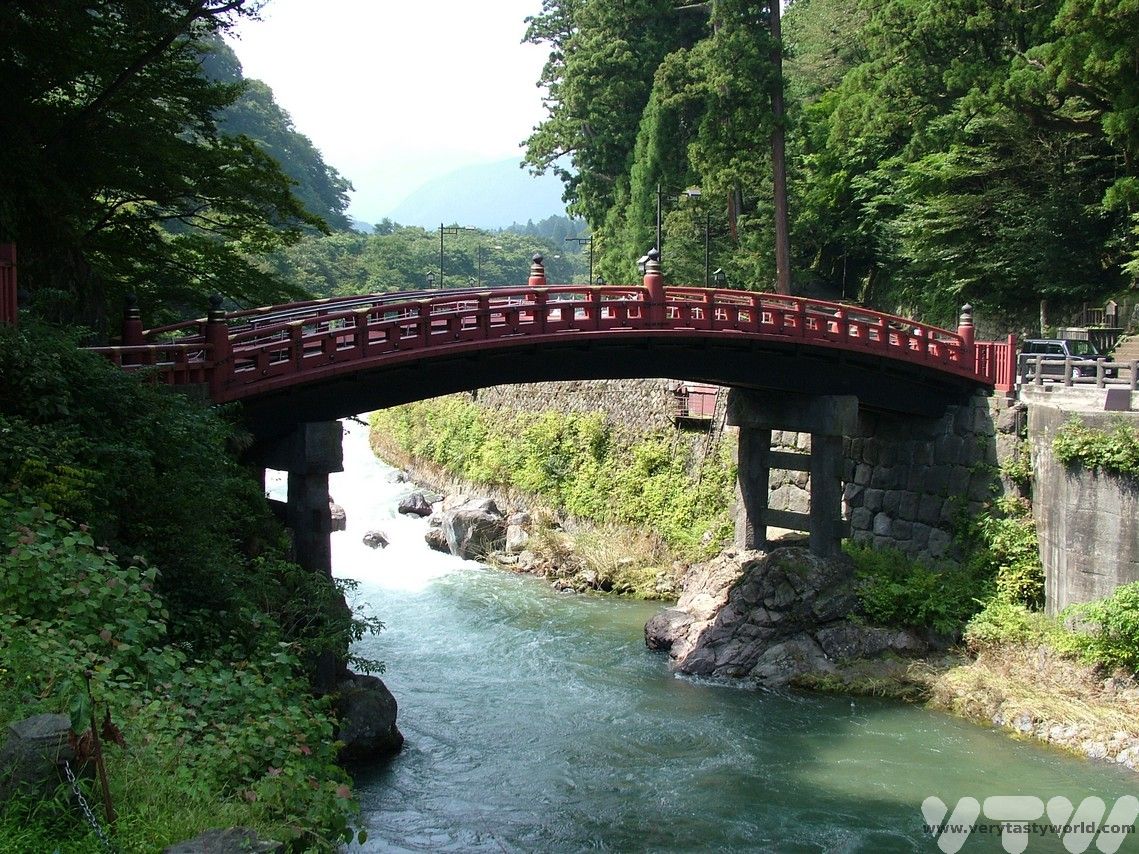
The splendid vermilion sacred bridge across the Daiya River, the Shinkyo Bridge, constructed in 1636, marks the entrance to the wonderful shrines. It is one of Japan’s top three bridges and is a UNESCO site.
There are multiple temples to visit. Toshugu is the mausoleum of Tokugawa Ieyasu, who founded the Tokugawa Shogunate, which ruled Japan for over 250 years. The temple was built in the 17th century. There are multiple buildings to explore, many exquisitely carved and decorated with beautiful gold leaf.

The three wise monkeys, see no evil, hear no evil, speak no evil – Mizaru, Kikazaru and Iwazaru -can be seen here. The Sōzō-no-Zō are called the imaginary elephants because they were carved by a sculptor who had never seen an elephant.


Toshugu also has a magnificent five-storey pagoda.

Iemetsu was the grandson of Ieyasu and his mausoleum is Taiyiun. It’s less lavish than his grandfather’s. There are Buddhist and Shinto (Japan’s indigenous religion) buildings within the complex.
Rinnoji temple was founded by Shodo Shonin who introduced Buddhism to Nikko in the 8th century. The Sanbutsudo building contains statues of three important deities: Amida, Senju-Kannon and Bato-Kannon which are thought to represent Nikko’s mountain gods.
The complex also has a treasure house and small garden.

We also recommend visiting the gorgeous natural gorge of the Kanmangafuchi Abyss. It is on the Kanman Path and you can see the 74 Jizo statues, Bodhisattvas that care for the dead.

If you are short on time, organised day trips from Tokyo will ensure that you see the major sights.
The Lakes and Mountains of Hakone
The town of Hakone and surrounding area is a fantastic place to get away from the bright lights of the city and enjoy a plethora of activities in the countryside, all overlooked by the mighty Mount Fuji… if the venerable mountain ever makes an appearance through the cloudbank that often surrounds it. As you can see, we visited when the weather was particularly vile, but that didn’t stop our enjoyment – there are loads of things to do and places to see. The region is quite large so you will need to use transportation to get between locations. The Hakone Free Pass will ensure that you can use all the public transport in the area

How To Get There: Distance from Tokyo (Shinjuku station) ~100km
Train: Get to Odawara from Tokyo on the shinkansen or the JR Tokaido Main Line (from Tokyo) or the JR Shonan Shinjuku Line (Shinjuku, Shibuya). Then you will need to change and use local trains (where you can’t use the JR Pass). A Hakone Free Pass will allow you to use all the transportation options in the area. If you don’t have a JR Pass, Odakyu Railway runs between Shinjuku and Hakone on the delightfully named ‘romance car’.
Bus: There are two Odakyu Highway Buses every hour from Shinjuku.
The Hakone Round Course is a great way of exploring the region using many different modes of transport (train, cablecar, boat, ropeway and bus). From Odawara Station take the Odakyu Line to Hakone Yumoto Station where the round course starts and ends. This will ensure that you see the main attractions.
From Hakone-Yumoto take the Hakone Tozan Railway to Chokoku-no-Mori Station. Hakone Open Air Museum is a fantastic outdoor sculpture park well worth visiting. It’s a delightful open air museum with lovely grounds and artwork everywhere. If it’s raining, the Picasso Pavilion has indoor art.


Then go on to Gora where you can explore another art museum if you are feeling arty. Take the cable car to Sounzan.
The Hakone Ropeway is an essential ride, connecting the Sounzan Station with the Togendai Station at Lake Ashi. Stop at Owakudani to see – and smell – the volcanic activities here. The name translates as Great Boiling Valley but the locals also call it Hell Valley.


Foodies will want to eat a boiled egg, cooked in the sulphurous hot springs until the shell is black.
Even Hello Kitty found it sulphurously stinky!

Gliding over the mountain offers views of the bubbling hot springs below. Togendai Station is a good place to view Lake Ashi and also Mount Fuji, if it’s visible that day. It is covered by cloud for a lot of the time. Check out the visibility guide here.
When you get to the port make sure you take a ride across the lake on a pirate ship!
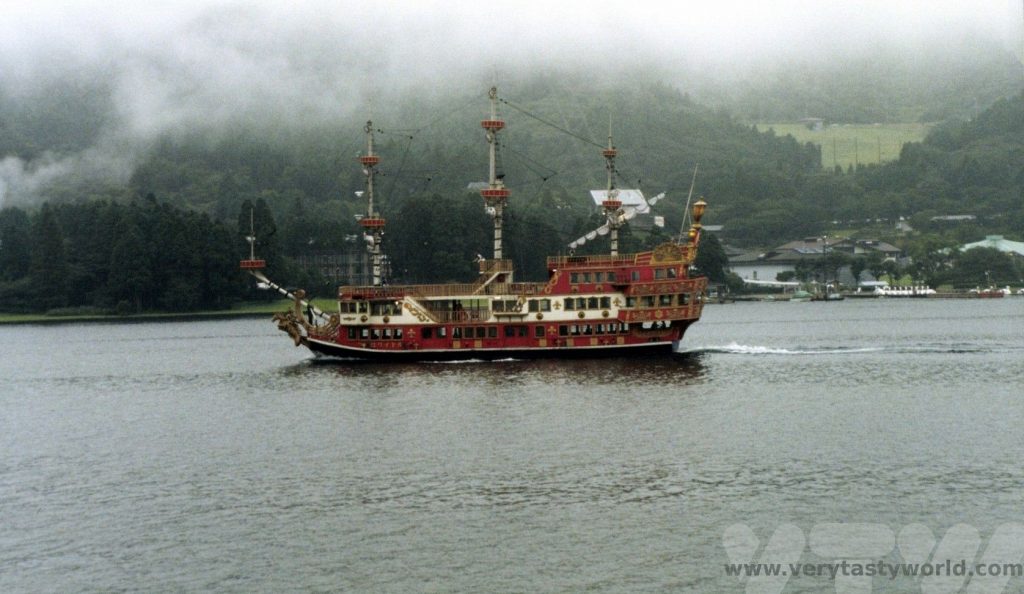
You could stop at Hakone-machi to see the Checkpoint Museum, a Palace Garden and an Ancient Cedar Avenue, or you could continue to Moto-Hakone. There is a lovely shrine at Moto-Hakone and then you catch a bus back to Hakone Yumoto.
If you want more mountains and lakes, the Fuji Five Lakes area is accessible by bus from Hakone and is another resort area with lovely countryside. If you want to visit and climb Mount Fuji the climbing season is from early July to late August.
Mix and Match Trips
If you are really short on time there are a number of tours that will cover multiple locations. Many will be able to pick you up from your accommodation or a central location in Tokyo.
Related Posts You May Enjoy



- Just for the Hell of It – The Hells of Beppu

- Five Wonderful Places to Visit From Tokyo

- Amazing Japanese Black Sesame Pudding Recipe

- How To Say Thank You For The Food in Japanese

- What To Know Before Visiting Japan
- Where To See Snow Monkeys In Japan

- Is Kanazawa Worth Visiting?

- RECIPE: How to Make Sushi Ginger – Gari

- Kobe Beef in Kobe – Is It Worth It?


- Great Grinds & Best Brews – Coffee Around The World

- Things to Know Before Visiting South Korea

- Things to Do in Kuching – The Charming Cat City

- The Very Best Kuching Food

- A Splendid Three Days in Singapore Itinerary

- RECIPE: How To Make Dakgalbi


Thanks so much for reading. We hope you enjoyed this article. If you’d like to keep up to date with new posts and recipes, please subscribe to our newsletter or follow us on social media – Bluesky, Facebook or Instagram. We always love hearing from you and would be delighted to read your thoughts about this article.




What a fascinating post. Have never been to Japan. Am inspired by your post. It’s fascinating to hear of a city within a city always puzzles me how these cities are formed. The temples of Kamakura look beautiful and the great Buddha looks massive! Mountains with museums. Lovely post and very inspiring. Great work.
There seems to be quite a lot of interesting sites close to Tokoyo and I am all ears hearing that those are only a very short train ride away. You have made sure that those day trips destinations are indeed within the range of day tripping. I would definitely have the amusement park from Yokohama at the top of my list. Spending a bit more time in Nikko for the shrines and the bridge (it reminds me of Mostar) is sound advice.
Carolin | Solo Travel Story
I like that these are all relatively close to Tokyo so you can maximise your time in each place without travel time cutting into it too much. I don’t do roller coasters but I’d be more than happy to visit the Ramen Museum and I’d definitely be up for a trip to Kawagoe to wander down Candy Alley! Nikko looks stunning – I think I’d want to spend a few days there.
Is there anywhere that Hello Kitty doesn’t infiltrate? If it’s good enough for her, I’m sold. What great day trips and longer adventures. Of all of these I find Hakone would interest me most, and anywhere that I might get good views of Fuji. But to know that they’re all possible with public transport and that’s a great way to travel around makes doing side trips like this a little less daunting
I love dried sweet potatoes and some red bean buns. I think it would be a wonderful snack companion for the trip. Fortifying the body as one would fortify the traveling soul visiting temples and sacred shrines before going up to the mountains on cable cars. As far as sulfur is concerned, I might want to have a go as well. Durian (which I like) is full of sulfur…I think Hello Kitty might be covering her nose if I get close to her. I dream of going to Japan and hope it happens soon #𝐟𝐥𝐲𝐢𝐧𝐠𝐛𝐚𝐠𝐮𝐞𝐭𝐭𝐞🥖🪽
I always enjoy your posts for the mix of attractions and treats. Tokyo is hugely overwhelming for me so I particularly enjoyed getting an idea of what’s available outside the city. I think I would want to linger in Nikko and Kamakura to soak up the beauty.
I am desperate to get to Japan. This post has only worsened that urge. I’ll be using your recommendations when I do finally book-theres so much information here!