

Is Kanazawa Worth Visiting?
Kanazawa, on the west coast of Japan, became much more accessible to visitors when shinkansen (bullet train) construction reached the city in 2015. The city is now easily accessible from Tokyo. So, is Kanazawa worth visiting? We absolutely think it is. It’s has plenty of things to see – a lively market (which has some amazing seafood restaurants), interesting museums, a castle, a koji park and one of the top three gardens in Japan.

Please note that this post contains affiliate links. If you click through and decide to make a purchase we will make a small commission, at no extra cost to you, which will help towards the costs of running this site.
Where Is Kanazawa?
Kanazawa is located on the west coast of Japan’s largest island Honshu.

How To Get To Kanazawa
Kanazawa is easily reachable on the shinkansen (bullet train). There are direct trains from Tokyo which take around 2.5-3 hours. You can also travel from Kyoto or Osaka, changing at Tsuruga.
Where to Stay in Kanazawa
Kanazawa has plenty of accommodation options for any budgets. We tend to stay in cheap business hotels so the APA Hotel Ekimae was located bang next to the railway station, which was perfect for us. The room was tiny but had all the facilities we needed, including a fridge, so we could go to the local konbini (convenience store), pick up a cheap breakfast box and store it for the morning.
Is Kanazawa Worth Visiting – Things To See
Omicho Market
Stroll down Kanazawa Ekidori Avenue from the main railway station for around 15 minutes and you’ll reach Omicho market. This extensive food market has been operating since 1721 and sells all sorts of exciting foodie ingredients. Fresh fish, meat and vegetables are the star attractions here and there are also opportunities to taste some local specialities.


It’s fascinating wandering through the stalls to see the various products on display. There are lots of snacks and goodies to taste on the go. We enjoyed loach cooked in sweet soy sauce on a stick as a snack.
Beware, some of the stall holders are understandably not fond of a constant parade of tourists taking photos of their wares and there are ‘no photography’ signs on some of the stalls. We suggest that you enjoy the experience of observing delicious ingredients rather than try to snap that perfect market food shot.
Kanazawa Castle
You can walk to the castle from the centre of Kanazawa, beyond Omicho market, and through the castle gardens.

It’s only fair to point out that many of Japan’s castles are reconstructions, the original buildings having been destroyed (sometimes several times) by fire over the centuries and Kanazawa’s is particularly modern. Originally completed in 1583, the Maeda Clan ruled from this castle. The oldest part of the castle here is the gate, which dates from 1788. The rest of the building has been rebuilt over the years, some even in this century!
The castle is mainly free to visit (some of the turrets have a fee) and has some interesting exhibitions.
Walking further past the castle gates leads to the Kenrokuen gardens.
Kenrokuen Gardens
Japan has many ‘best 3’ attractions, the most well-known is the ‘top 3 views in Japan’. Japanese gardens are wonderful places to visit and Kenrokuen Garden is one of the country’s top three. We visited in winter, just after the New Year holiday and, although we probably didn’t see it at its most glorious, it was still a delightful garden to visit. The admission fee is 320 Yen (about $2).


It is huge and beautifully designed, with large lakes, rippling streams, hidden paths and stone lanterns. Kenrokuen means “The garden of six sublimities”, which are characteristics that define the perfect garden. The sublimities are: artifice (curiously), antiquity, spaciousness, seclusion, water courses and wide panoramas.

Visit Ohno Port
A little way out of town is a toy museum and miso factory, located at Ohno machi (Ohno port), which is a bit of a journey; you can catch a bus from the Kanazawa station area (ask for the location of the bus stop at the tourist information centre inside the station concourse – it’s a five minute walk away, actually just down the road from the Apa hotel) and the port will be the very last stop. When you arrive at the sea you are there. You’ll likely be the last people on the bus.
Alternatively, you can get a taxi. The journey from the station takes around 20 minutes but the cost is considerably higher than the bus. Then just walk over the bridge to the little island.
A Delightful Toy Museum
At the far end of the island is a charming museum of mechanical toys which has a brilliant hands-on exhibition where you can spend hours playing games and enjoy viewing antique toys. The staff were absolutely delightful and very much wanted to make sure we enjoyed the exhibits. They were also very helpful when it came to supplying a timetable for the bus journey back into the centre of Kanazawa.
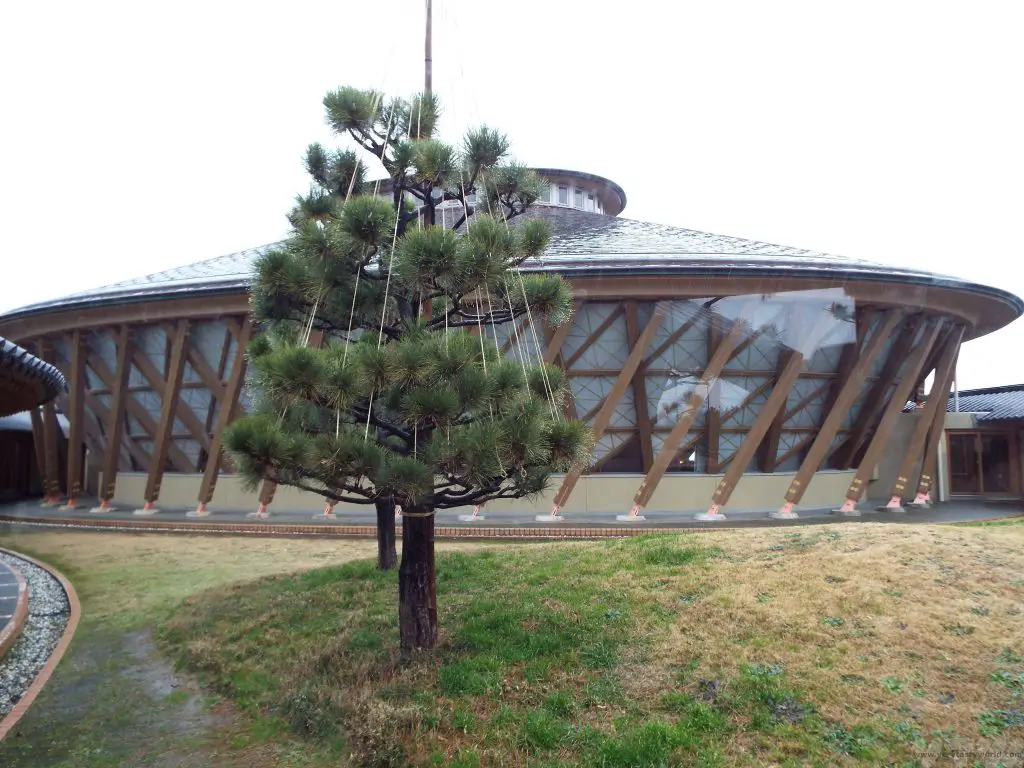
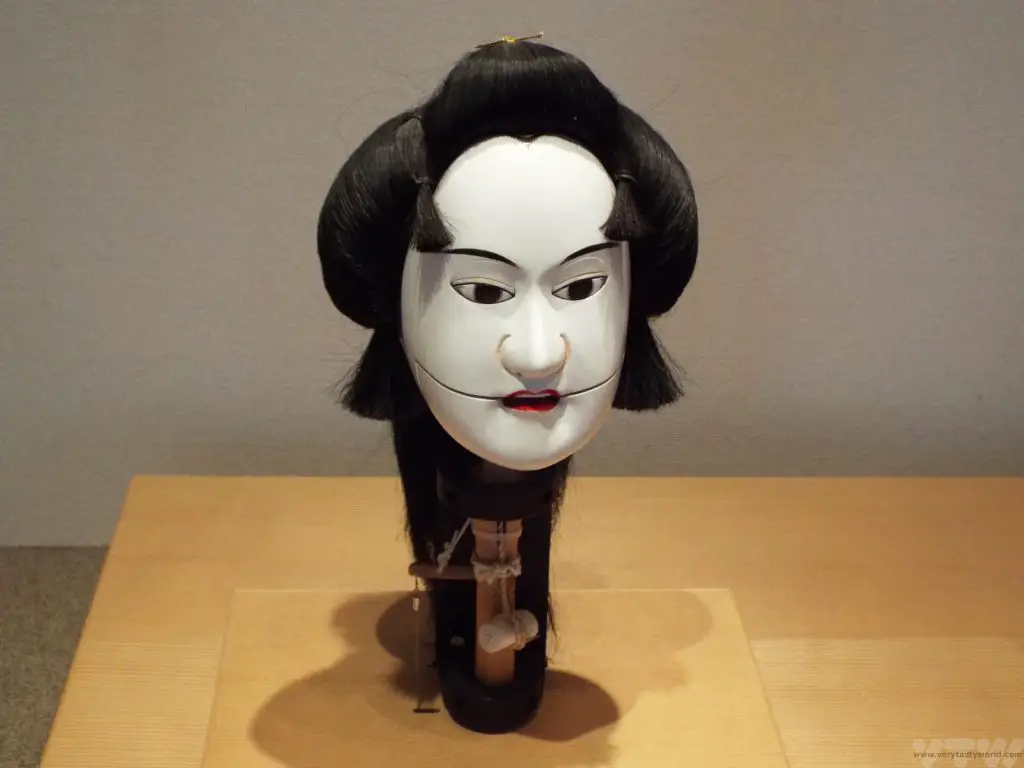
There are many historic mechanical puppets – karakuri – on display. The museum is a memorial to Benkichi Ohno,a master craftsman who lived in the area from 1831. Many of his creations can be seen at the museum.
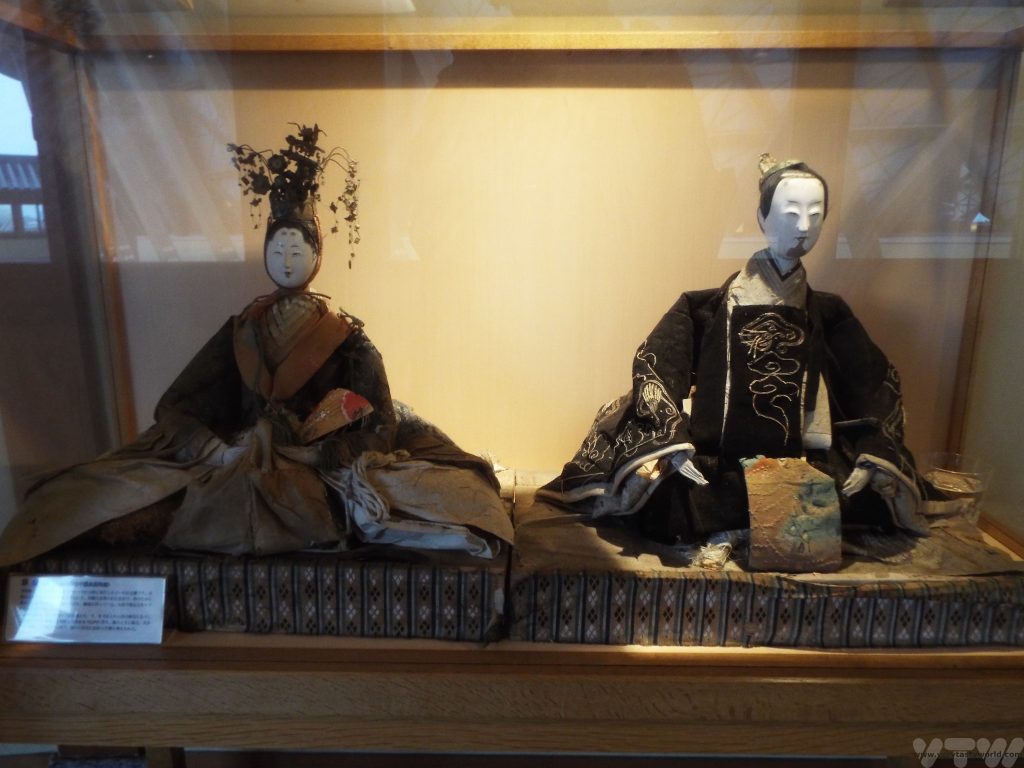
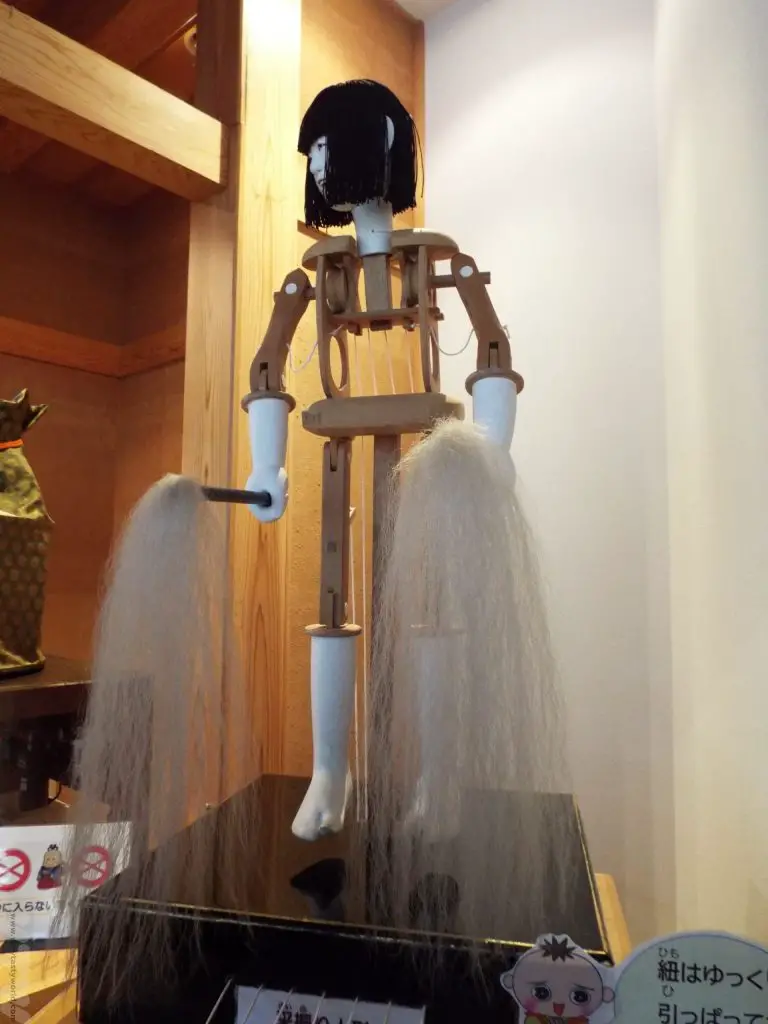
Some exhibits show you how the puppet mechanisms work.
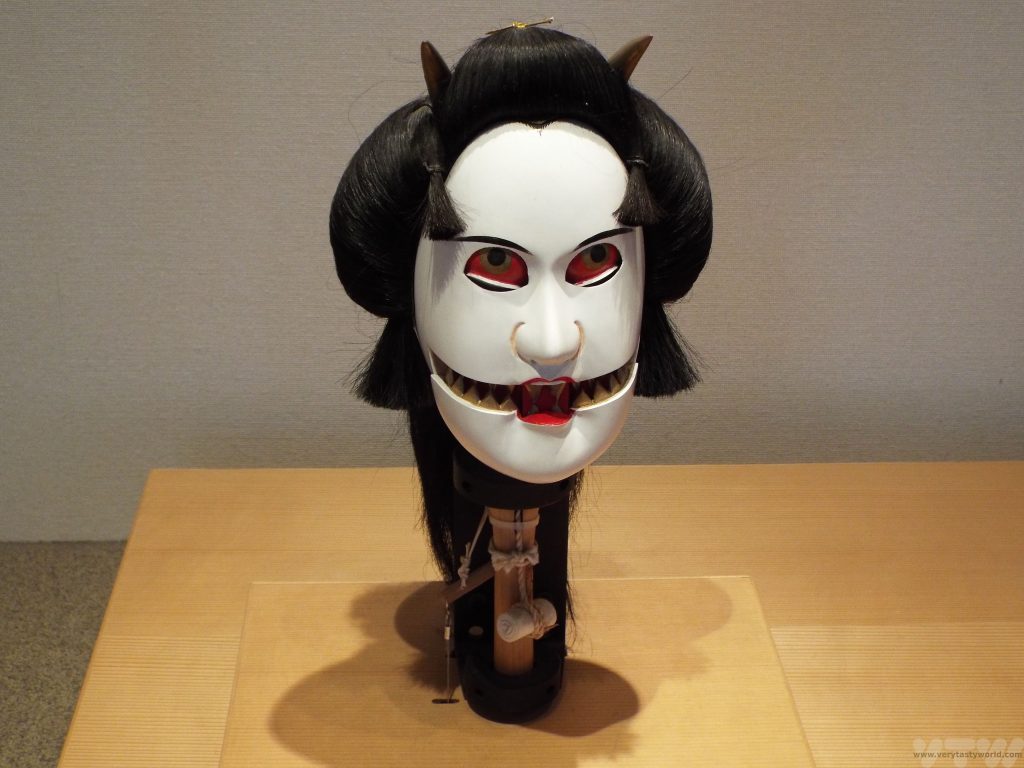
Some dolls are cute(ish) which turn into scary. (Incidentally these words are, respectively, kawaii and kowaii in Japanese, be careful not to confuse the two!)
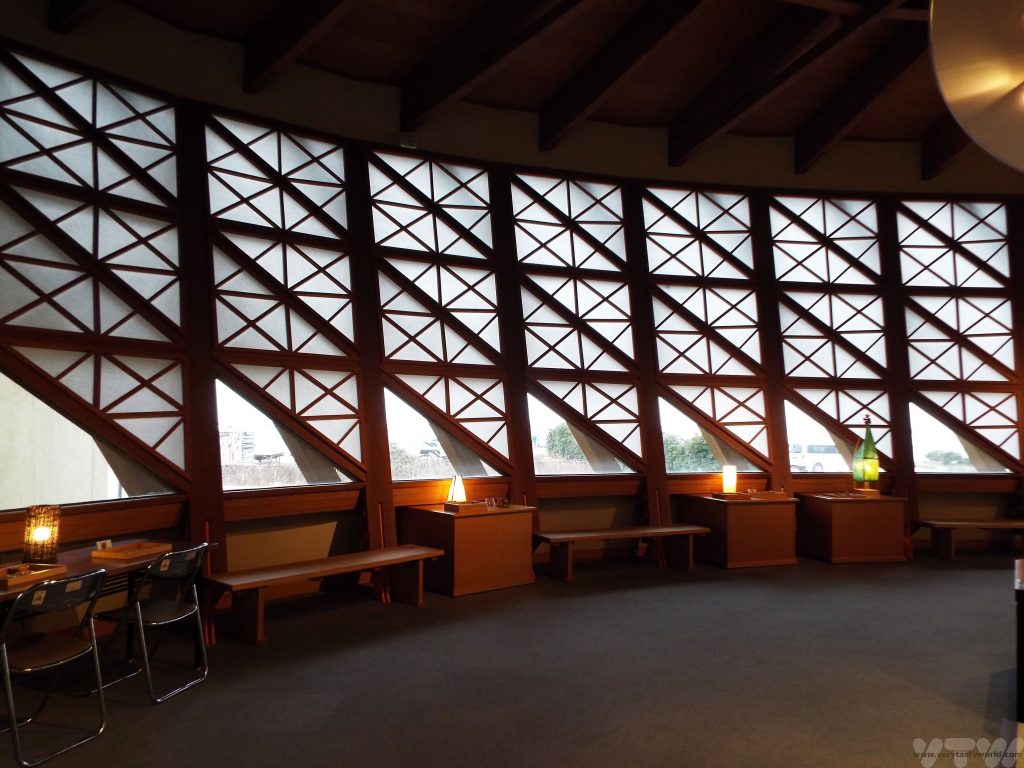
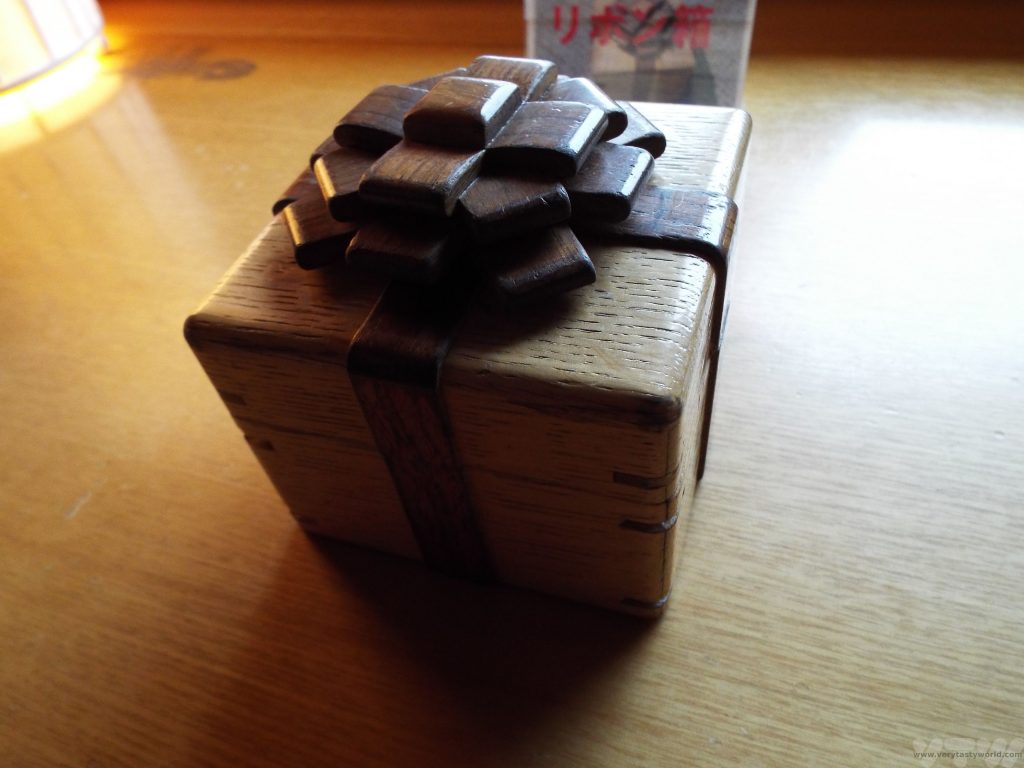
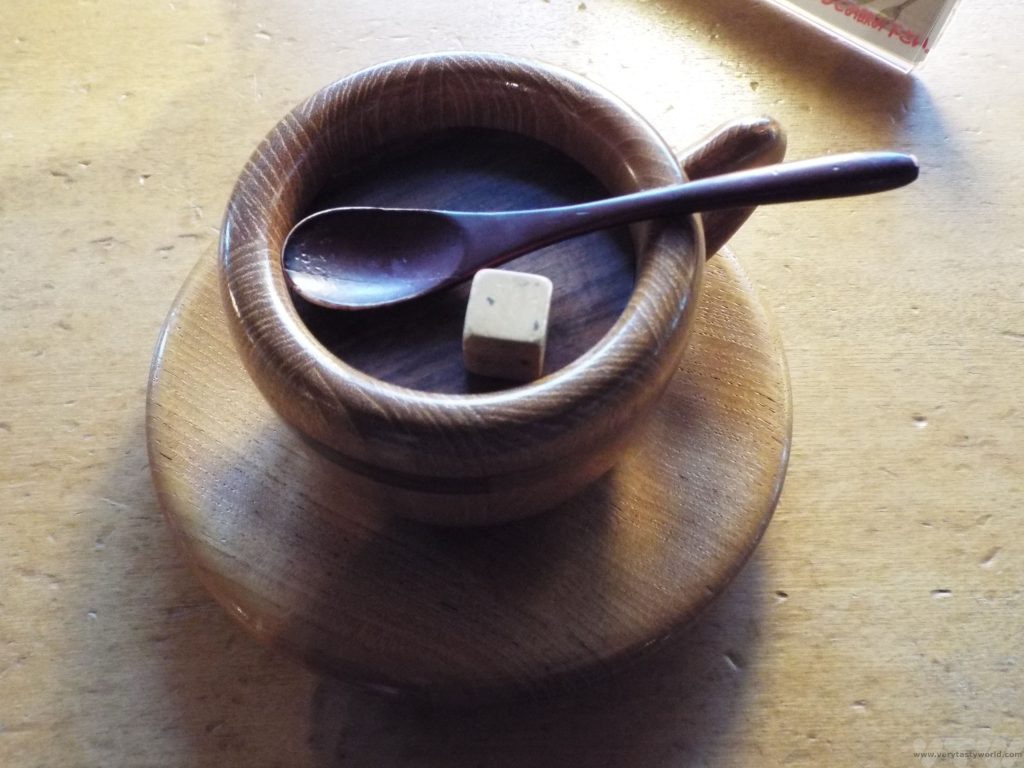
Around the circumference of the main building there are tables and chairs set out with all sorts of puzzles that you can try to solve.
It’s a really hands-on museum and it was lovely to see families with children of all ages sitting together and working out solutions to some of the puzzles.
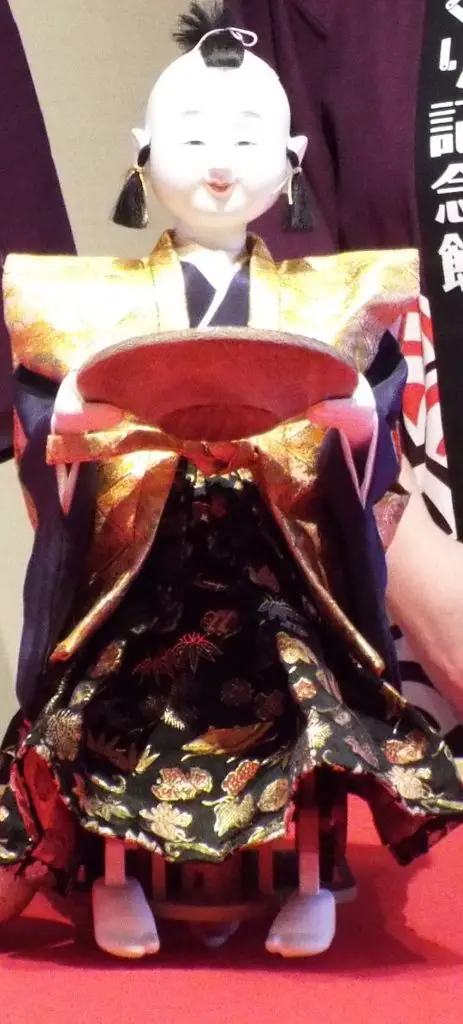
This doll is 300 years old, from the Edo period. The craftsmanship is exquisite.
Just as we were leaving the park, the heavens opened and the rain started lashing down. We started to make a dash to our next destination, but a lovely staff member ran after us, brandishing an umbrella. We thanked her kindly but explained that we were British and were used to lots of rain. No, they insisted, and gave us a brolly so that we wouldn’t get wet. We’ve experienced this sort of kindness all over Japan, a welcoming generosity that just makes us love the country more and more.
A Delicious Koji Park
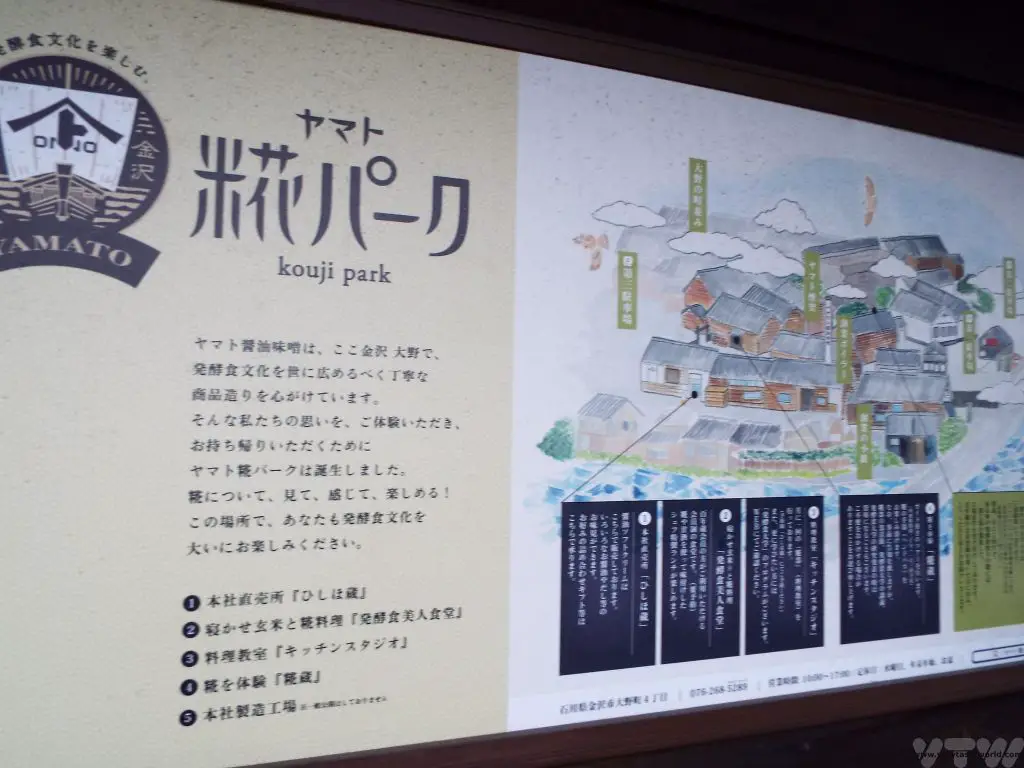
So, after a lovely diversion, it was on to the Yamato koji park, just a 10 minute walk (or 5 minute trot in the rain) away at the other end of the island. It’s part factory, part museum, part shop and part café. There weren’t any specific tours when we visited but the staff were super-helpful and directed us to a display where we could understand how miso is made.
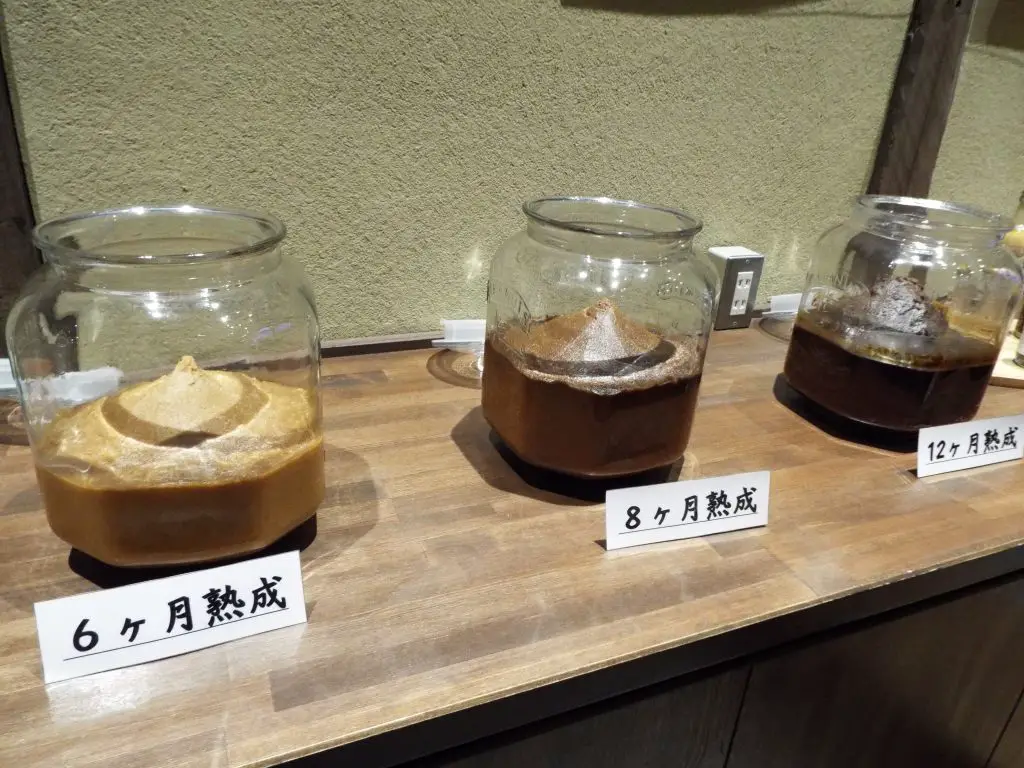
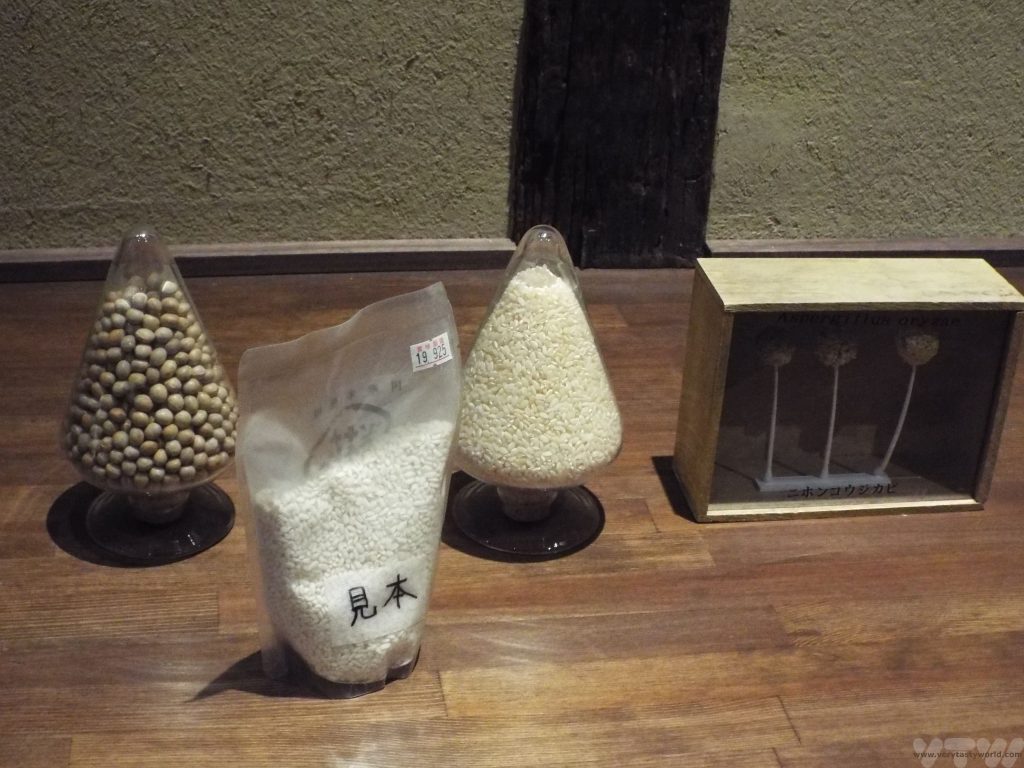
Miso basically contains five ingredients: water, koji, soy beans, rice, salt. Koji thrives on the rice. Then it is mashed with the soy beans, salt and water. After about six months yeast forms. The miso flavour develops thanks to the interactions between the yeast and the koji. Fermentation can take as long as three years.
Soy sauce is made using a very similar process and ingredients to miso but uses wheat instead of rice. A mash is formed and then it’s pressed (like olives for olive oil). After fermentation, the resulting liquid is soy sauce. It was fascinating to taste the difference between pasteurised and unpasteurised soy sauce. Unpasteurised soy has a more complex flavour because some of the heady aromas are lost in the pasteurization process.
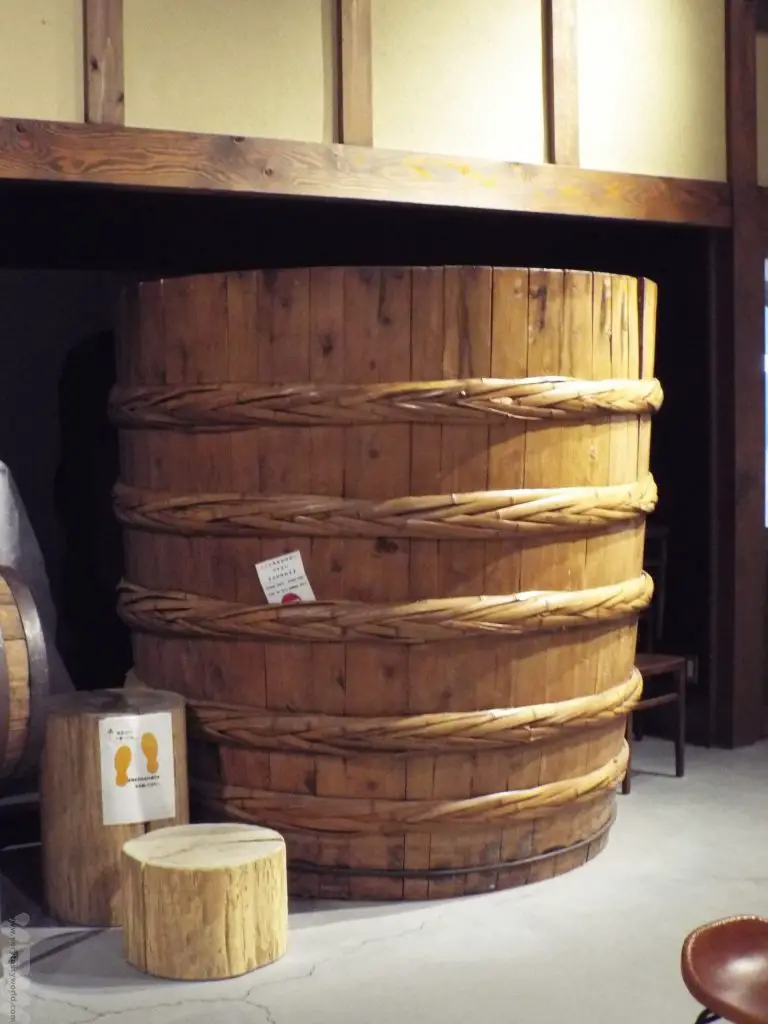
Some the the traditional fermentation vessels are enormous. This was over two metres in height.
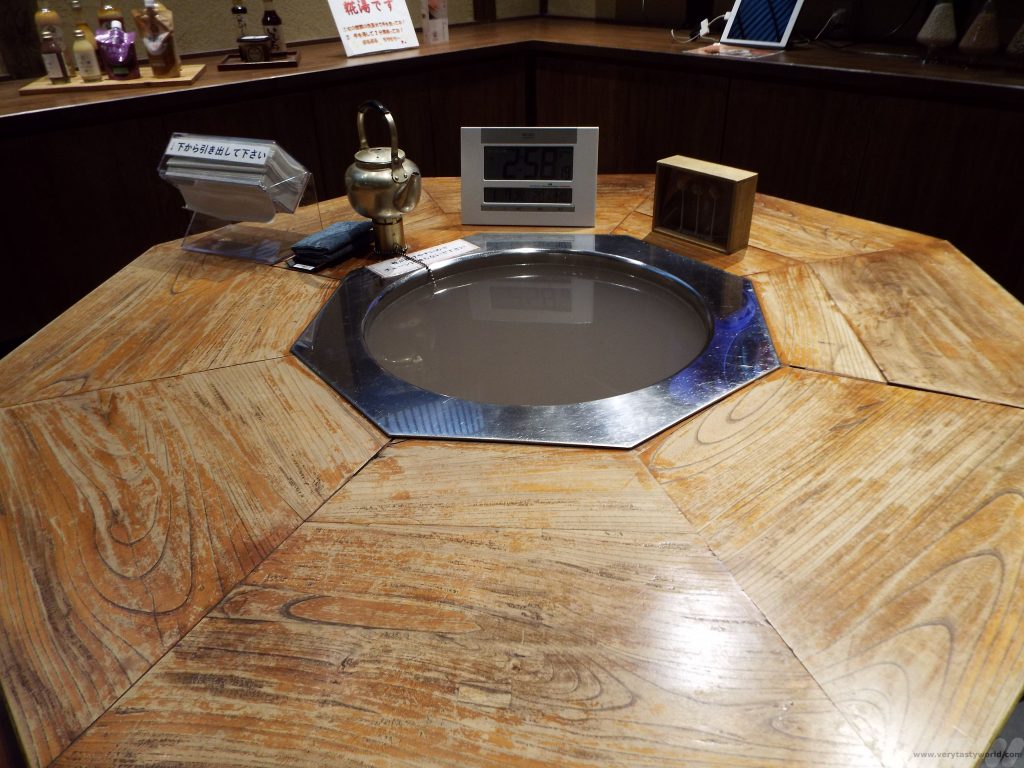
You can also dip your hands into a koji hand bath which will, apparently, give your skin a soft and delicate sheen. It’s quite nice to be able to dip your hands into a warm bath, especially on a cold, wet day. Apparently two minutes is the optimum time – there is a timer so you can check. And yes, we can confirm that our hands did emerge from the bath silky-smooth.
Foodie Souvenirs
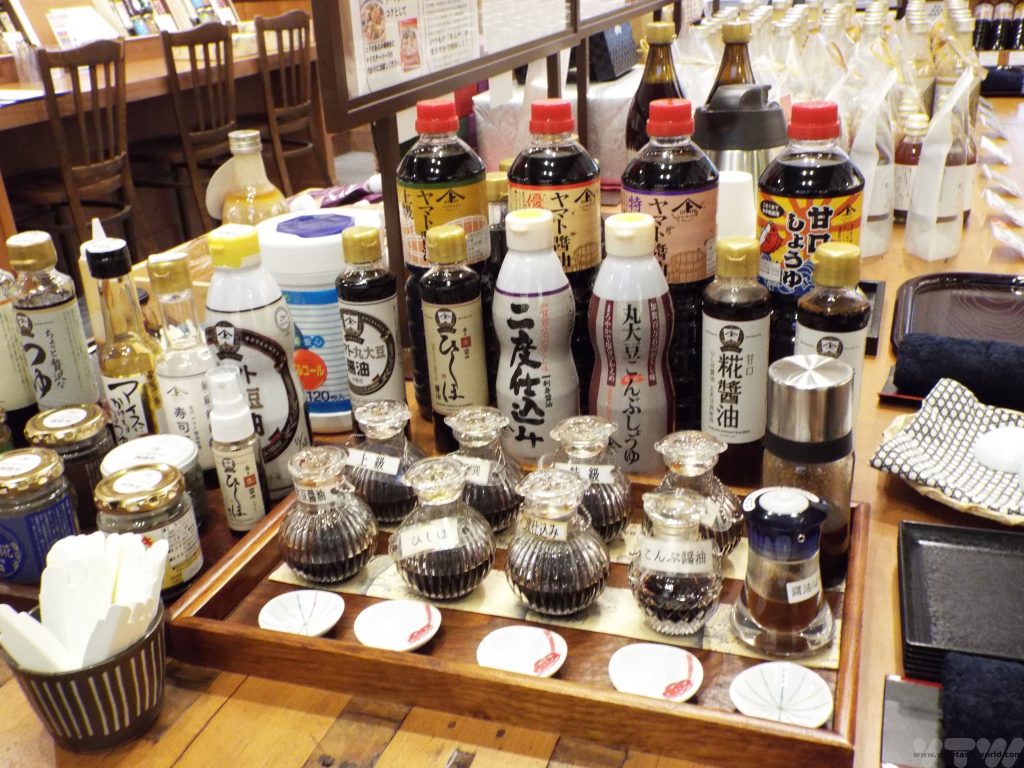
There is a shop with an extensive variety of products and you are able to sample before you buy. It was particularly interesting to be able to taste different sauces and compare the flavours.
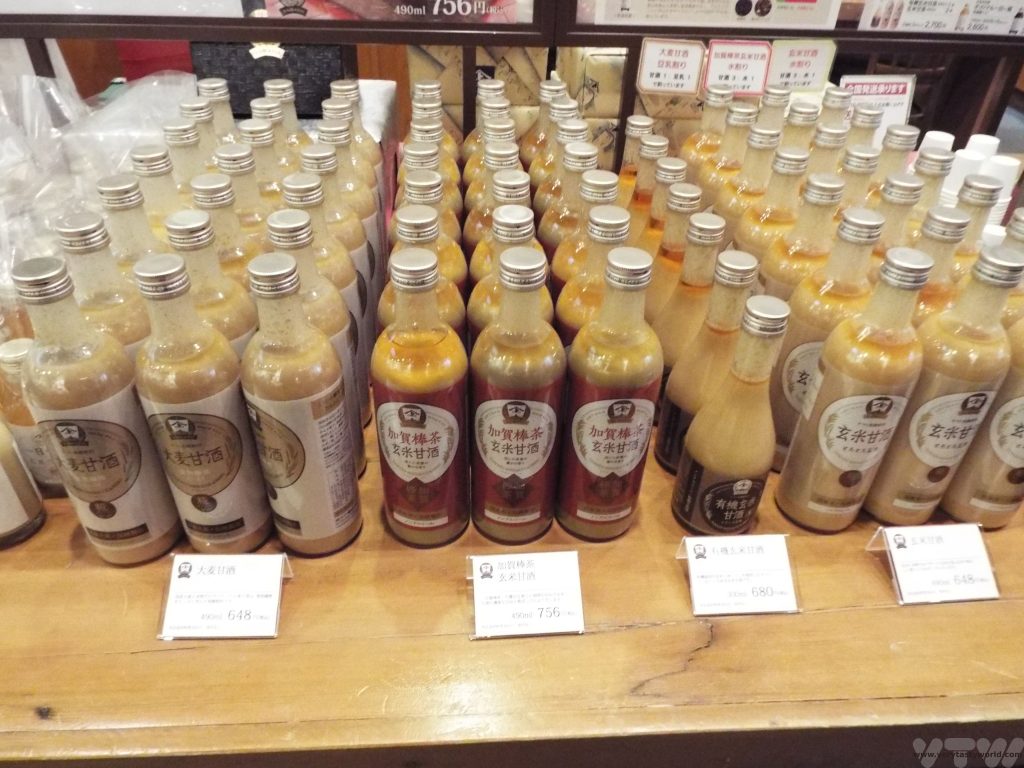
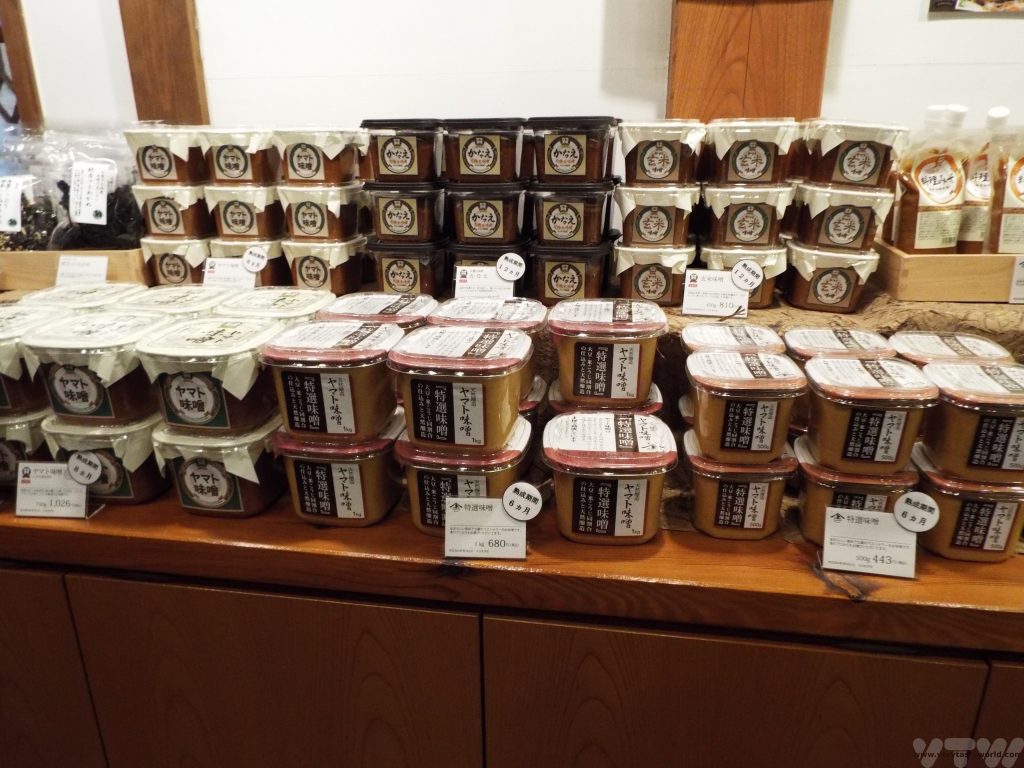
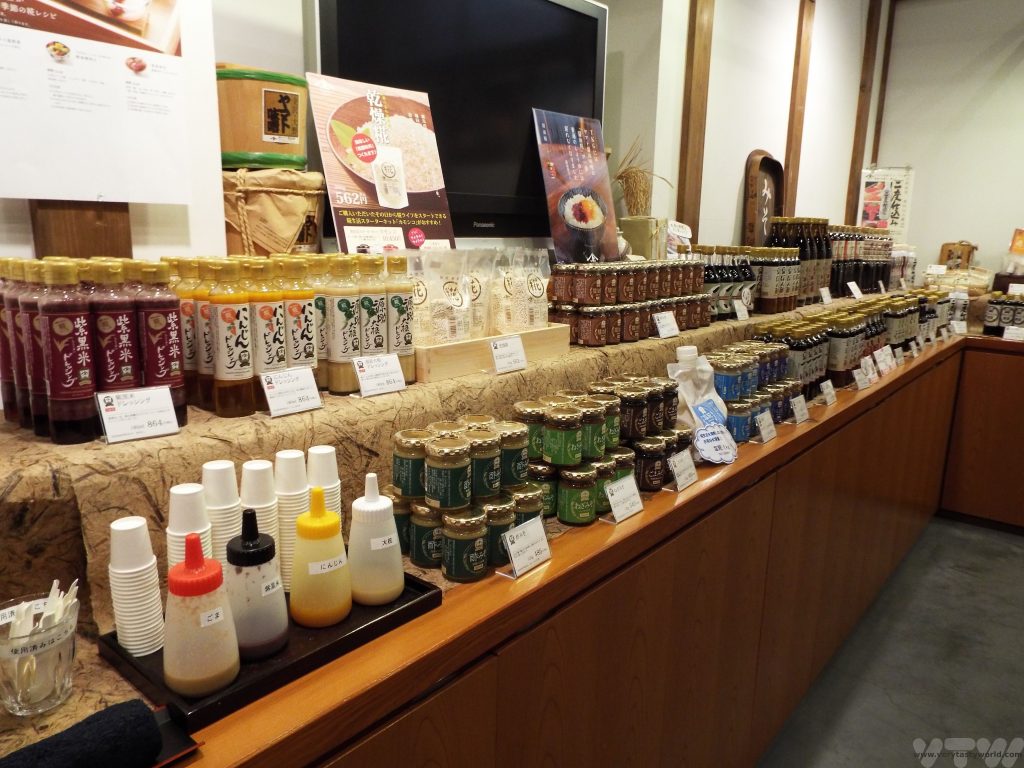
Amazake is a sweet, low alcohol drink made from fermented rice and koji. Amazake literally means ‘sweet’ (ama) ‘sake’ (sake, which can be used to describe alcohol). You can buy the paste, mix with hot water and drink. It tastes sweet and has a smooth, creamy texture. And for a delicious dressing, you can mix amazake with ponzu soy sauce (ponzu is a citrus juice comprising Japanese fruits sudachi, yuzu, and kabosu and vinegar mixed with soy sauce to give an amazingly tangy, salty flavour) in the ratio 1:1.
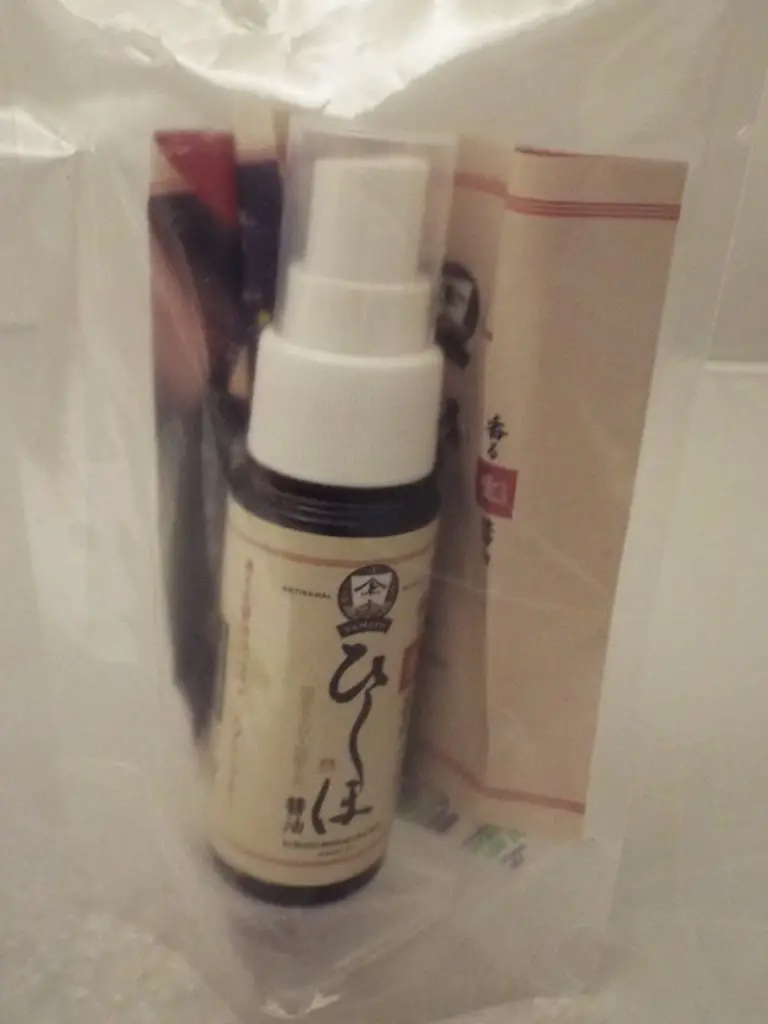
And one of the best foodie souvenirs ever – for the adventurer who cannot travel without seasoning – portable spray soy sauce, conveniently packaged in a container that would even fit into your hand-baggage.
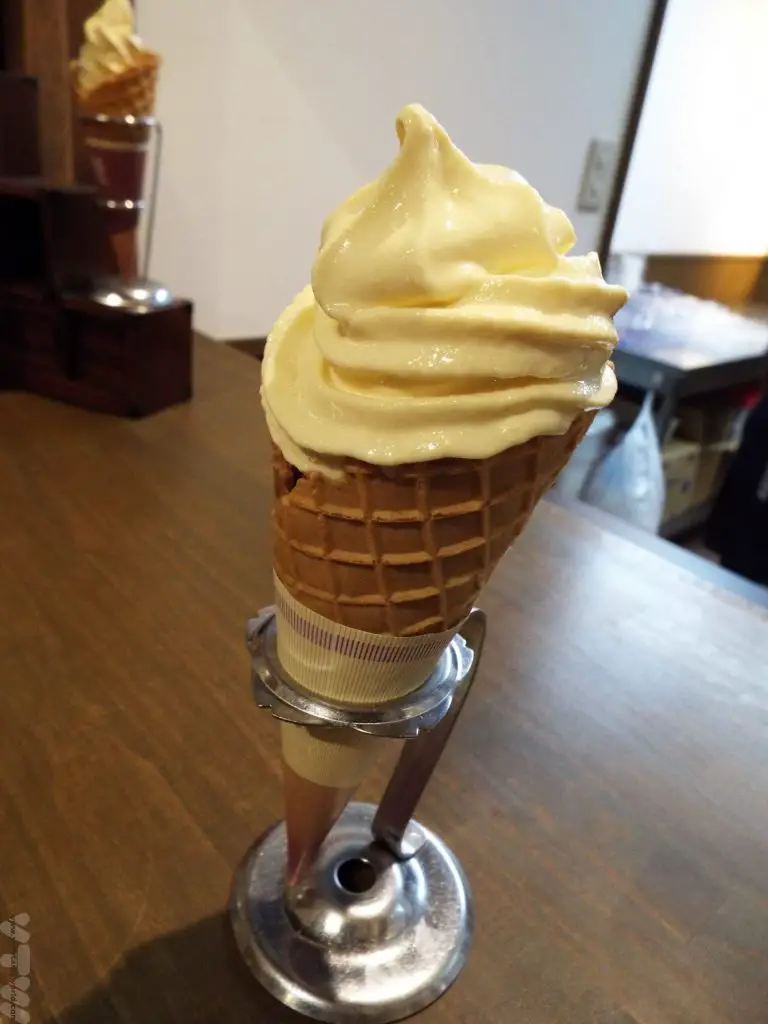
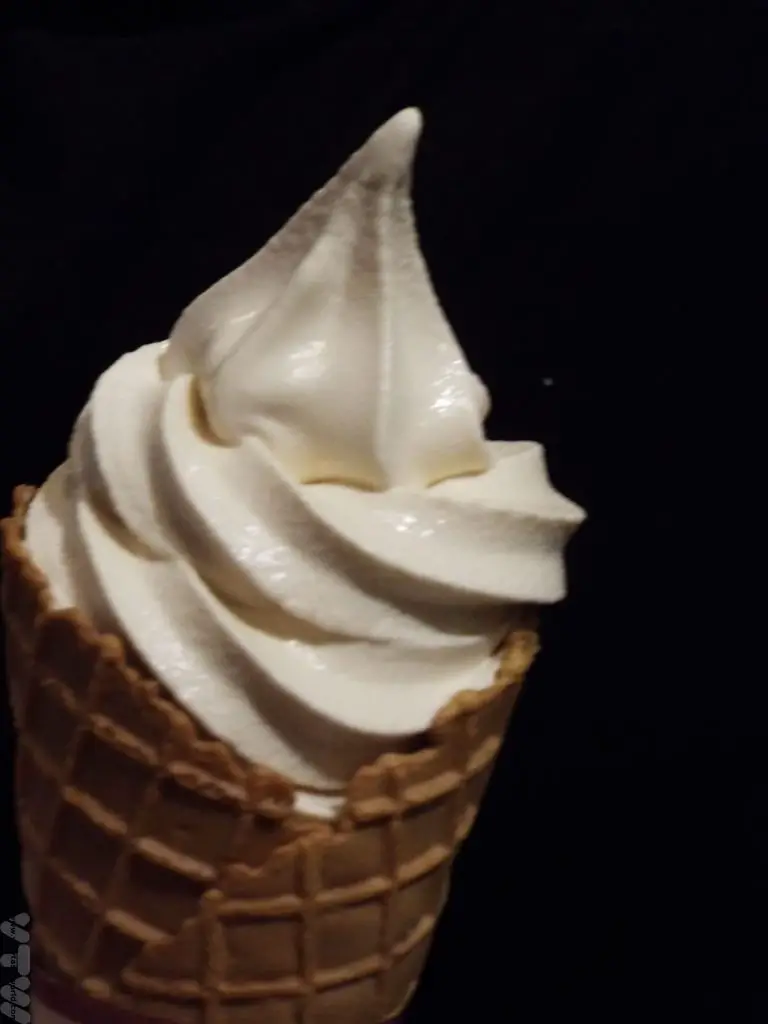
They also have a café and ice-cream maker. Amazake and soy sauce ice-cream were on offer and we tried both. Soy sauce ice cream sounds so wrong but it was delicious, full of rich umami flavour that complemented the creamy sweet ice-cream.
What was also rather lovely was that the CEO, Mr Yamato, was on site that day and came to say ‘hello.’ We can’t think of many companies where the boss would greet some very enthusiastic, albeit extremely damp, tourists.

We shopped for as many products as we could fit into our luggage. One particular packet that we were very happy to find was that of inoculated rice koji. It was also conveniently flat for packing and much cheaper than koji that we can purchase in Europe.
Making our very own miso was most definitely going to be one of our foodie missions on our return home. And this is how we made it…
Kanazawa For Foodies
Kanazawa is a fantastic location for foodies. Not only are the market and koji park great fun to visit, there are plenty of restaurants to suit all budgets, so eating out is a joy. Because Kanazawa is a port city the seafood is sublime – totally fresh and utterly delicious. We often find that you get the best quality – and often cheaper – seafood if you eat at a market.
We recommend visiting Omicho Market in the evening, after the stalls have closed. There are a number of restaurants which offer kaisendon sashimi bowls which are as beautiful as they are delicious. They comprise the freshest seafood, delicately arranged atop a bowl of rice. We ate at Yutaka which has a reputation as being one of the best in the area and it didn’t disappoint. It was extremely good value as well. This delightful bowl consisted of crab, prawn, squid, sea urchin, salmon roe, tamago, maguro, mackerel. To season, mix wasabi into a teeny bit of soy sauce, then pour it over the fish. It was accompanied by miso soup with fish and prawn heads.


Ice cream with gold leaf is another foodie treat. Why have an ordinary soft whip ice cream when you can cover it in gold leaf? We visited in winter, so didn’t indulge but we did bring home a great foodie souvenir of some gold leaf to adorn our ice creams at home.
When catching the shinkansen for onward travel don’t forget to pick up an ekiben – a bento lunchbox. Many ekiben are specific to the station you are travelling from. Kanazawa has a specialty seafood box. A thing of beauty and deliciousness!


Other Attractions in Kanazawa
The 21st Century Museum of Contemporary Art exhibits modern art in an incredibly cool building.
Ninjadera is a Ninja Temple complete with hidden rooms, secret tunnels, traps and labyrinthine corridors. Naruto fans will love this!
Kanazawa Yasue Gold Leaf Museum. Kanazawa has been producing gold leaf since 1593. This material is often used to adorn temples. It is real gold, beaten so thin that you can tear it apart just by touching it. This is a skilled craft. The museum offers a history of gold leaf craftsmanship in the area. If you are interested there are shops in Kanazawa that will offer the chance for visitors to have a go at applying gold leaf to various objects.
Out of Town
Kanazawa is located close to the Japanese Alps and, if you have a Japan Rail Pass, you can easily get around the region, although to get right into the countryside you will need to use buses or hire a car. We left our luggage at our business hotel, packed an overnight bag, and enjoyed a night away from the city in a traditional gassho farmhouse in the delightful country village of Ainokura. You can read about our gassho farmhouse stay in rural Japan.
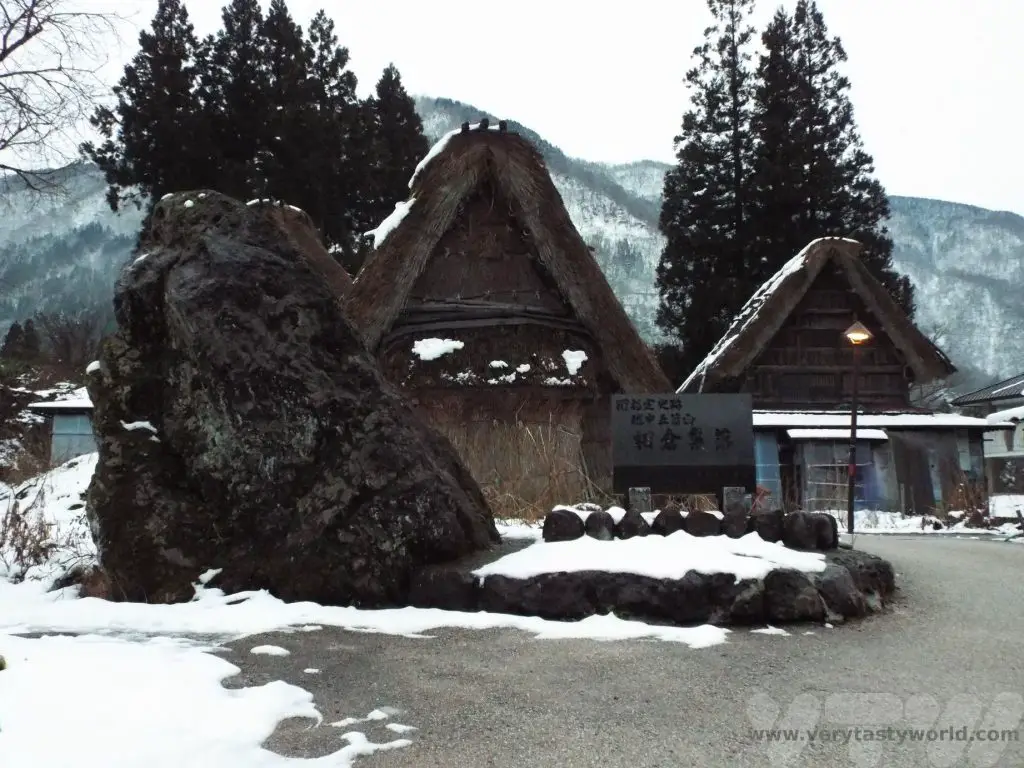
Alternatively, day trips to these lovely villages are also available.
Related Posts You May Enjoy

- Just for the Hell of It – The Hells of Beppu

- Five Wonderful Places to Visit From Tokyo

- Amazing Japanese Black Sesame Pudding Recipe

- How To Say Thank You For The Food in Japanese

- What To Know Before Visiting Japan
- Where To See Snow Monkeys In Japan

- Is Kanazawa Worth Visiting?

- RECIPE: How to Make Sushi Ginger – Gari

- Kobe Beef in Kobe – Is It Worth It?





I’d love to check out the mechanical toys museum. I love things like that. There’s something about looking at antique toys that is so fascinating to me. I’d also like to taste unpasteurized soy sauce. It’s always fun tasting new things like that. I’ve never had soy sauce ice cream, but there’s a dashi restaurant here that does miso ice cream. It is amazing!
The toy museum was just delightful – we really love museums that are so interactive. We really enjoyed the koji park. Love the sound of a dashi restaurant! Miso ice cream sounds absolutely delicious, we’d definitely like to try that.
The range and variety is huge, I never knew the product could be so versatile. The sound of soy ice cream seems weird but then until I’ve had it, I guess I shouldn’t comment. I’ll trust your approval and seek it out somewhere.
The warm hand bath to achieve silky smooth hands sounds fun. I’ve had to resort to cream a few times, but this would attract me to it in the shop.
It was fascinating learning about all the flavours and how they are used. The soy sauce ice cream sounds so wrong but was really good. It was nice that the koji park had exhibitions and the hand bath in addition to the shop.
Oh how I really wish we had the time to see Kanazawa when we were in Japan – it looks like an incredible place to go. My husband would love the museum of mechanical toys even if they creep me out haha. I’m glad they connected the shinkansen, I really wish USA embraced train travel like Japan.
I love your explorations and that you always seek out the foodie side of a destination. For Kanazawa, I have to be a bit careful. Consuming soy or fish can be fatal for me, but I would love to stroll around the market and be inspired by the offerings. The gardens look very very tranquil and I can understand that the locals may be a bit hesitant towards tourists since the bullet train made this charming city more accessible to the world. I will follow up on your miso post, I am intrigued how this worked out back home.
Carolin | Solo Travel Story
Never heard of this city until now, but I would consider visiting. I like that some of the vendors at Omicho Market don’t allow photography, and it’s understandable why, especially in a touristy setting. It’s very busy and can get quite distracting to other patrons when someone is trying to take food pictures. On the other hand, they may have incredible food that a social media influencer could snap a picture of and recommend to their followers, so it’s a double edged sword I guess. I would definitely stop there just to walk around and see if anything strikes my senses. The Kenrokuen Gardens look beautiful, especially the river area, and the Yamoto Koji Park would definitely be a stop for me, especially the soy sauce ice cream! That I would have to try!
I think I would enjoy visiting Kanazawa, based upon your explorations. I love visiting markets and gardens, so it seems I would get my fix here. The mechanical toy museum would keep me occupied for a long time.
There is a local soy sauce maker in my little village here in Canada. I have always been fascinated by the process and their sauce is the only one I buy. I will have to suggest a spray bottle option the next time I pick up a bottle. What a fabulous idea!
Lyn | http://www.ramblynjazz.com
The castle and Ninjadera would be top of my list, both sound really interesting. I think you can keep your soy sauce ice cream though no matter how delicious you say it is. It’s good to know how easy it is to get to Kanazawa (and probably other cities) by bullet train, cutting down travel time. If I ever make it to Japan at least I know I’ll be able to visit other places aside from Tokyo easily enough
This blog is helpful in visualizing why Kanazawa can be a great addition to Japan tour. I would love to explore the culture, history, and stunning gardens of this historical city of Japan.
Excellent post about a place that was totally unknown to me.
The castle is magnificent, the architecture looks like something out of an old movie.
The toy museum would be one of the places I’d really like to visit. They reflect the history and evolution of culture.
It’s interesting how in your articles there’s always a chapter dedicated to food and the peculiarities of the local cuisine… although those ice creams make my eyebrow twitch 🙂